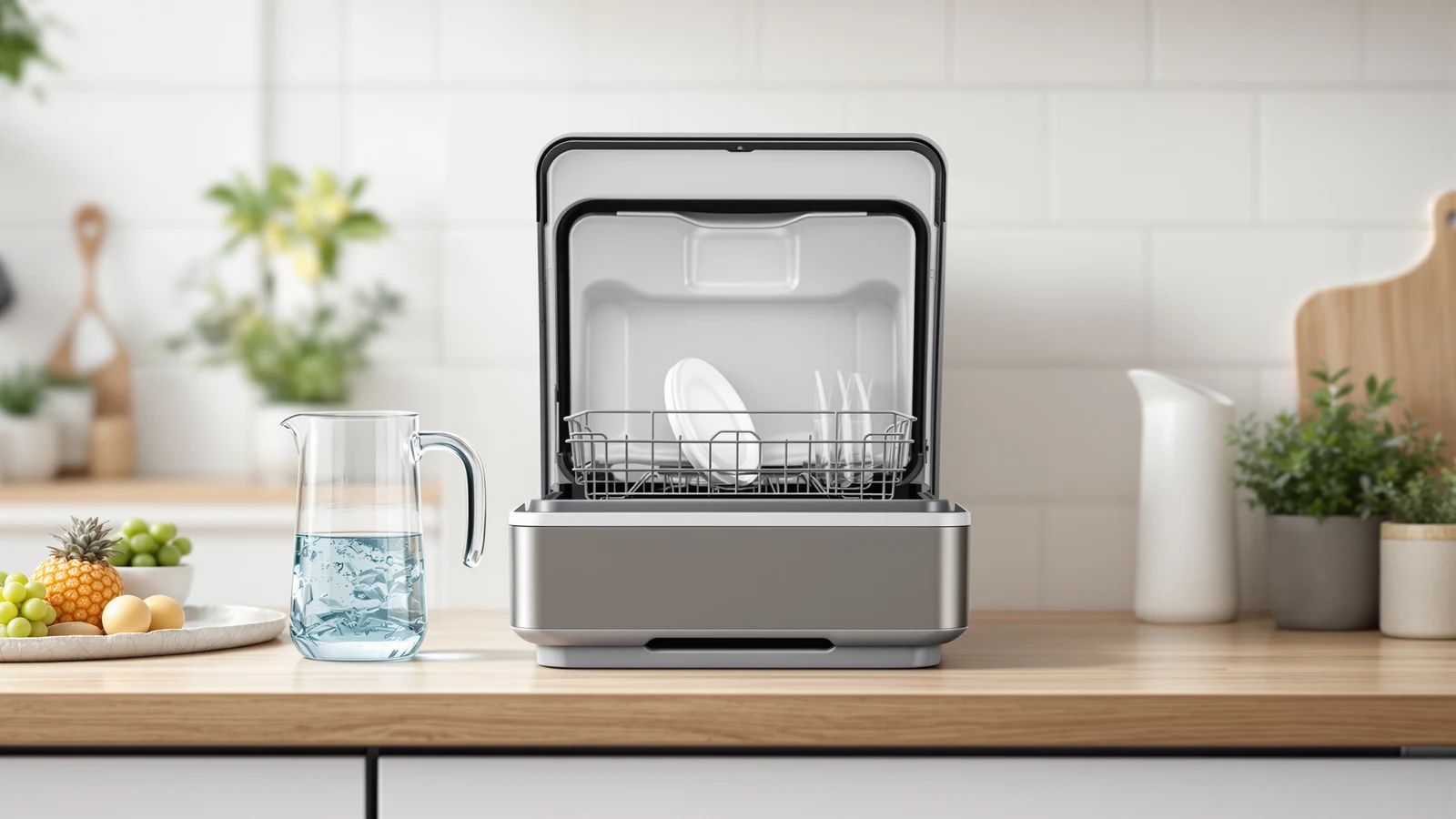
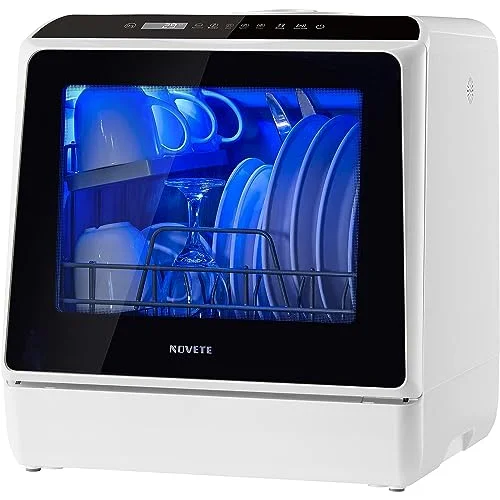
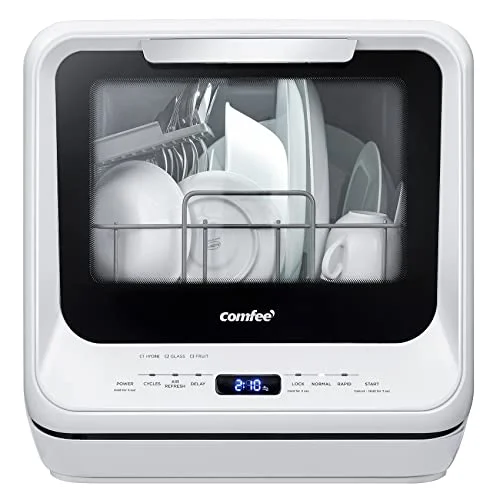
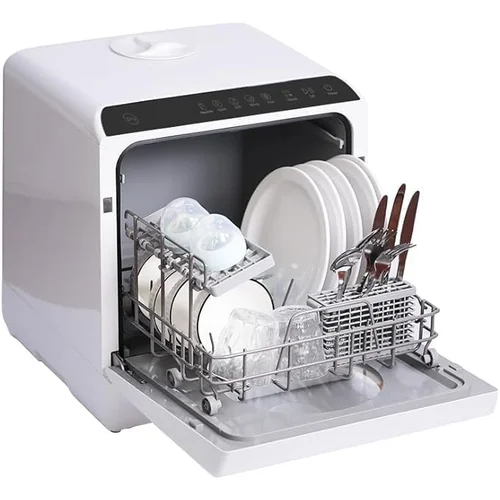
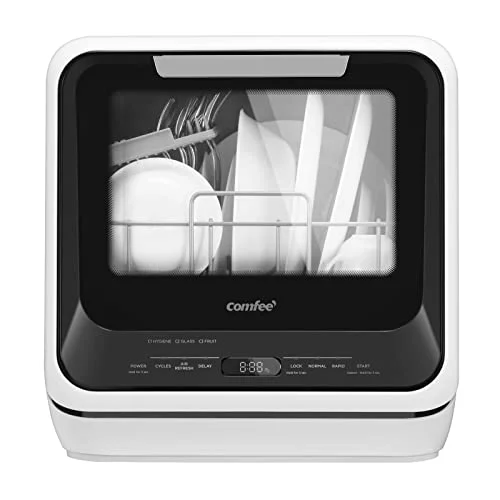
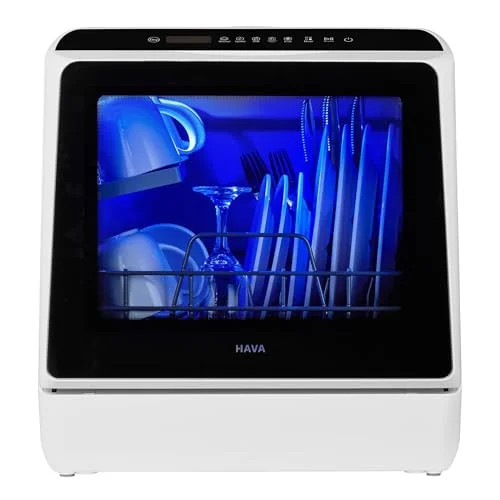
Laid out step by step, the two water sources ask something different of you at almost every stage.
Before the cycle starts
A faucet-connected machine asks you to check that your tap has a removable aerator and standard threads, attach the supplied hose, and turn the water on — a five-minute job done once, or occasionally checked. A tank machine asks you to fill a jug or a pot at the sink, pour it into the reservoir, and repeat until the fill line is reached — a job done before every single wash, with no way to skip it.
During the cycle
Once running, a faucet-connected machine draws whatever water each phase needs and never thinks about supply again. A tank machine is working from a fixed budget: everything from the first wash spray to the last rinse comes out of the same five litres, which is why tank-fed machines tend to run shorter or more conservative cycles than their faucet-fed counterparts, and why a long or high-temperature program — the kind built for baby bottles or greasy pans — spends the reservoir faster than a quick glass cycle does.
After the cycle ends
Both classes finish the same way: a pump pushes dirty water out through a drain hose and over the sink edge. The faucet machine is done and disconnects with a twist of the coupler; the tank machine is also done, but if you're running a second load, the reservoir is empty again and the whole fill step repeats.
None of this makes one class better than the other — it makes them suited to different kitchens. A faucet hookup asks less of you cycle after cycle; a tank is the only option at all when there's no faucet a machine can physically attach to. Full-size 18-inch portables, for comparison, skip the tank question entirely: every model in our 18-inch portable dishwasher guide is faucet-only, with no reservoir fallback if the tap doesn't cooperate.