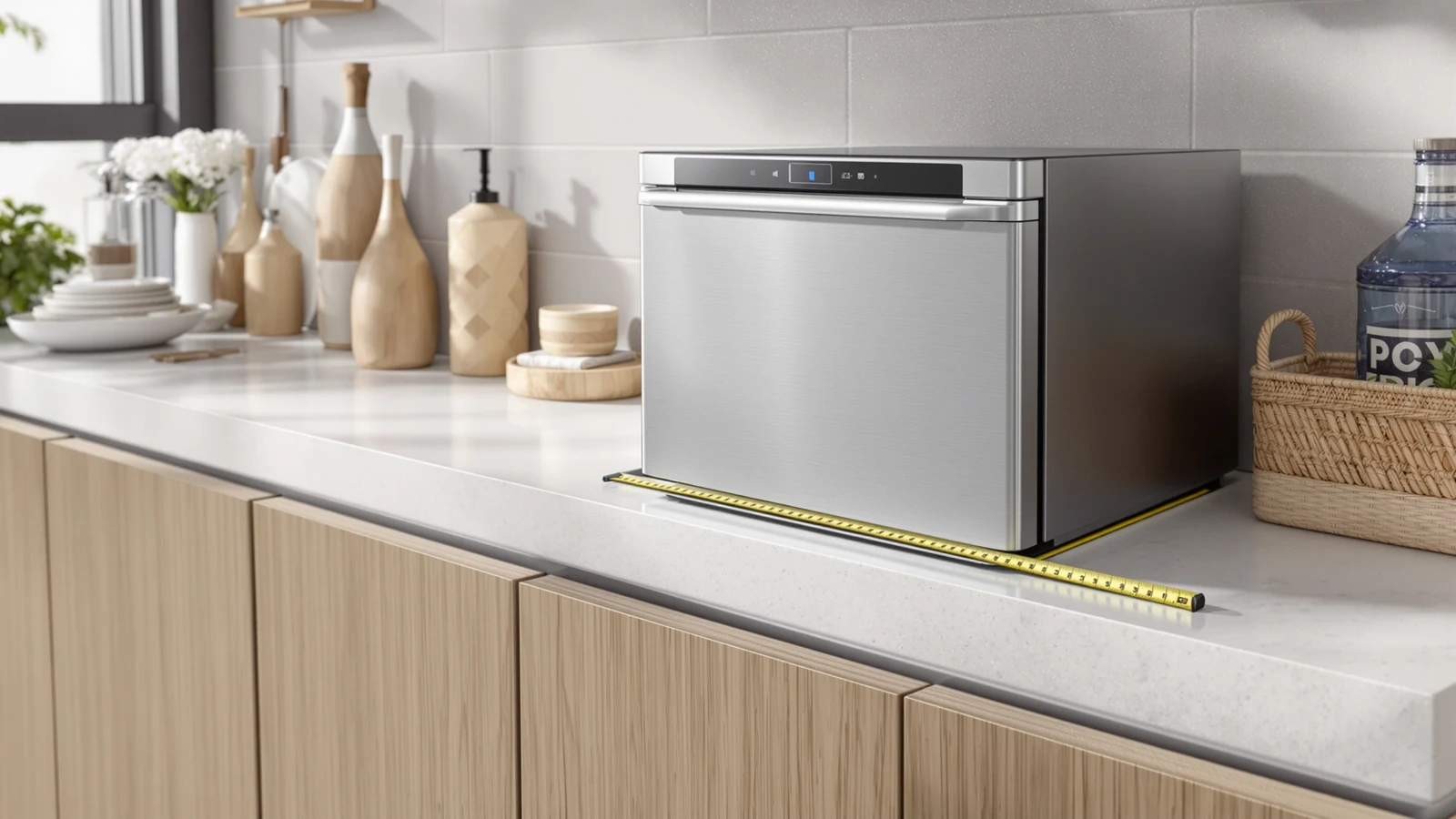
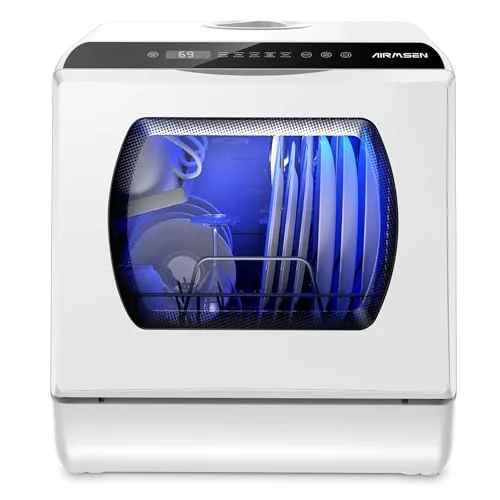
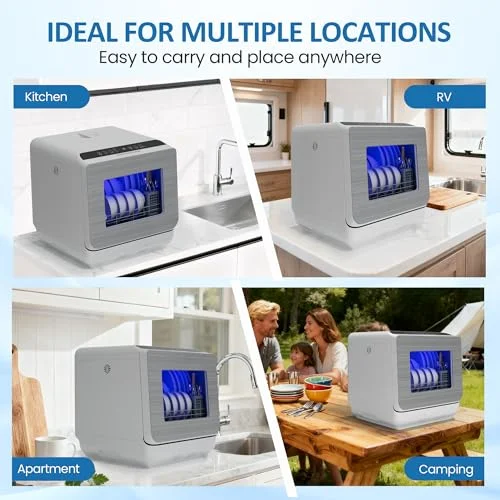
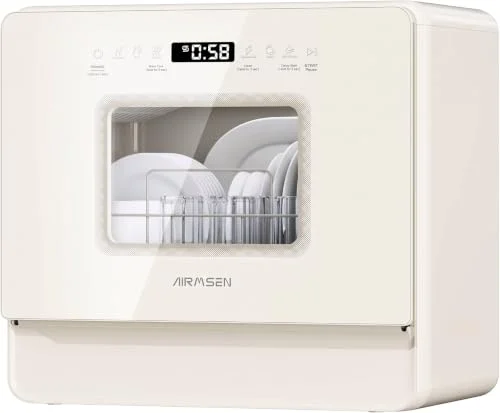
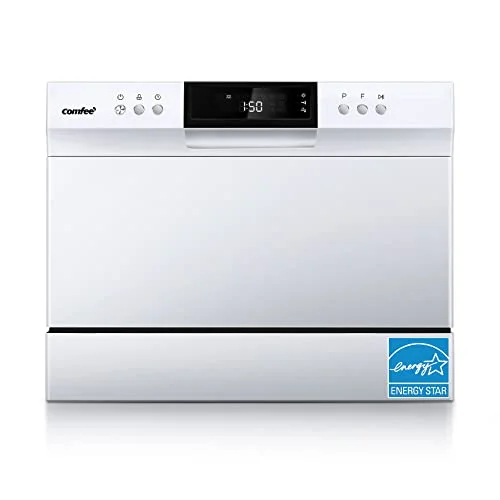
Across the countertop dishwasher category broadly, exterior depth runs from just over 14 inches on the smallest tank units to nearly 20 inches on the largest six-place machines — a six-inch spread that matters enormously on a counter that's only 24 to 25 inches deep to begin with. Width, by contrast, tends to cluster in a much narrower band, because a machine has to be wide enough to hold a stack of plates side by side regardless of how compact the maker wants it to look. That's the trap: two machines with nearly identical widths on the box can differ by several inches in how far they reach toward you.
Depth decides three things width doesn't touch. First, whether the machine sits flush against the backsplash or hangs over the counter's front edge — an overhang isn't just unsightly, it's a machine you can catch a hip on and a door that, when it swings open, ends up in the walkway rather than over the counter. Second, whether it clears the edge of an under-cabinet microwave, a spice rack, or anything else mounted above a rental counter that wasn't designed with a dishwasher in mind. Third, whether the drain and inlet hoses at the back have anywhere to go without kinking against a wall.
And yet, of the four machines in this guide, only one — the COMFEE' 6-place model below — carries a full exterior depth figure in our database. The other three are sold primarily on width, tank size, and place-setting count, with depth left for the shipping-dimensions field Amazon shows lower on the page. That's not a flaw specific to these four listings; it's how this entire product category is marketed, and it's the single best argument for measuring your own counter before you click buy, which we walk through at the end of this guide.