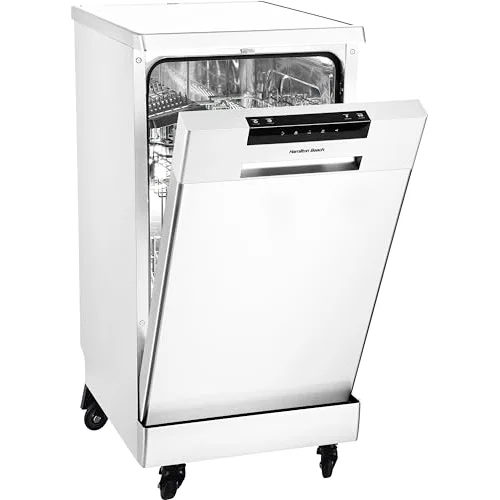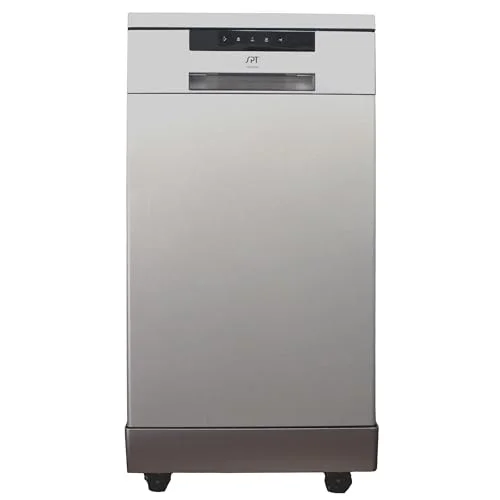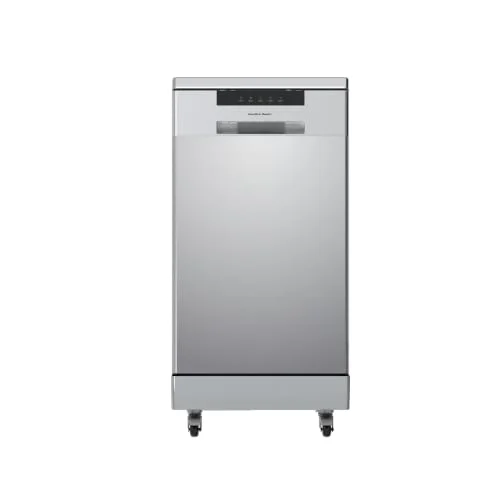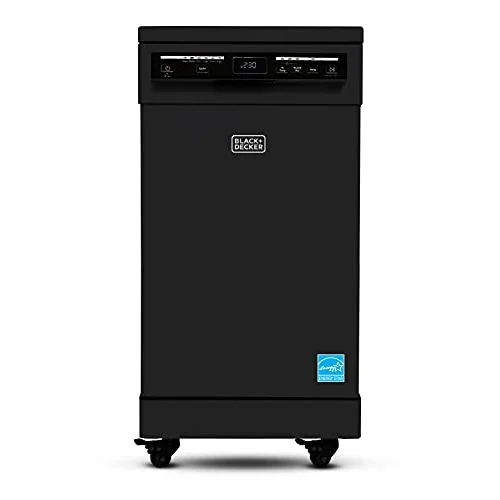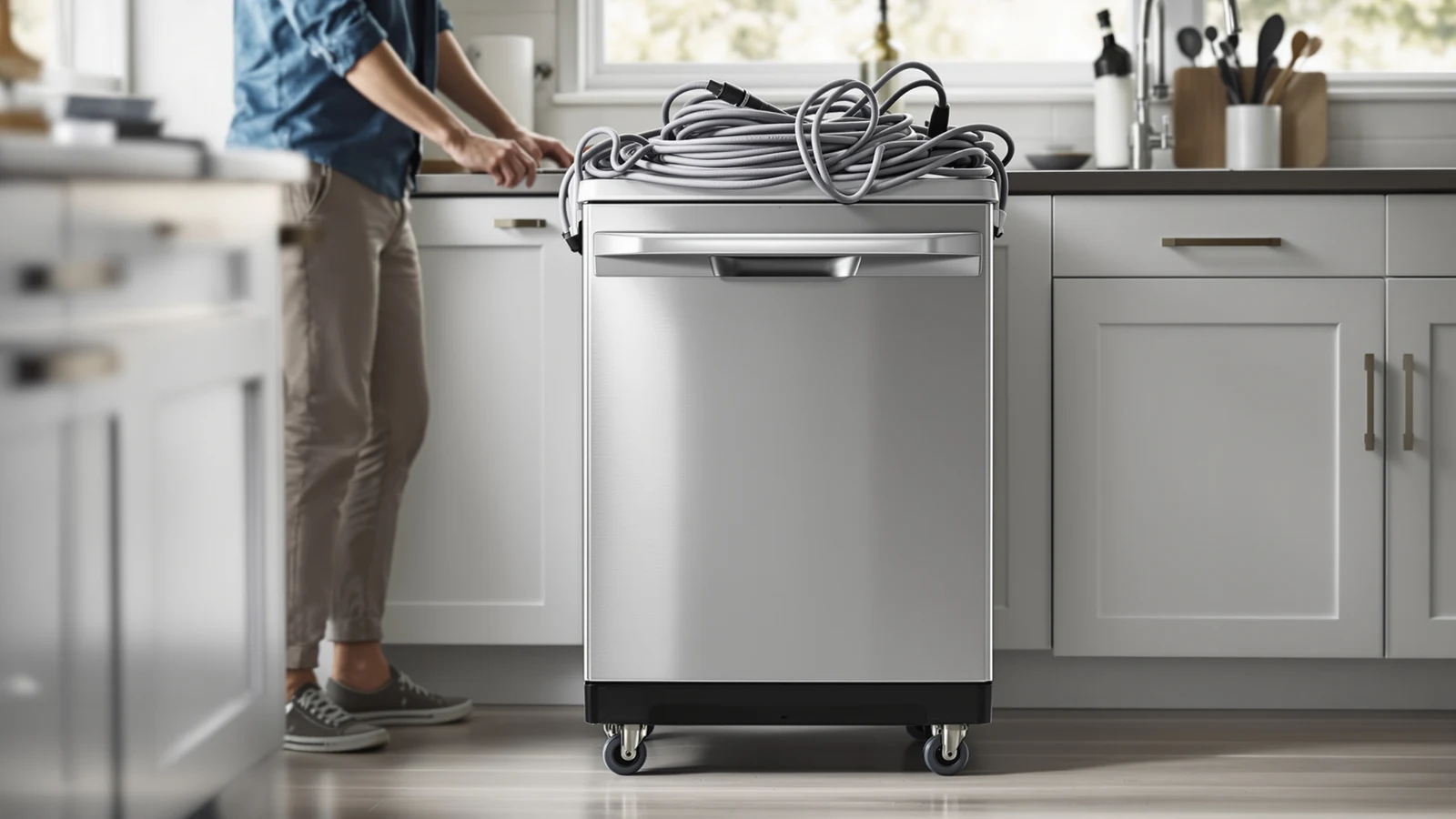
Castors roll well on hard, flat, continuous surfaces — sealed hardwood, vinyl, tile with minimal grout-line depth, and laminate. They roll poorly to not at all on thick carpet, deep-pile rugs, and uneven or heavily textured tile, and they stop dead at thresholds and transition strips higher than roughly a quarter inch. If your path from storage spot to sink crosses any of those, "portable" may mean "portable in theory" — check the actual floor path before assuming the machine will glide as easily as it does in a product video shot on a showroom floor.
Hard flooring that rolls well is not automatically flooring you want a heavy appliance rolling on repeatedly. Hardwood in particular can dent, scratch or lose finish under repeated caster traffic on the same path, especially if grit gets trapped under a wheel. A caster mat, a runner rug with a low, dense pile, or simply varying the path slightly each time reduces the wear pattern. None of the four machines in this comparison lists rubber-tired versus hard-plastic castors as a spec, so the manufacturer photos are the only way to check before buying — hard plastic castors are harder on wood floors than rubber-rimmed ones.
Water is the other floor consideration. A machine that leaks slightly at the coupler, or that gets rolled before it has fully drained, drips on whatever floor it crosses. On hardwood or laminate — materials that swell and warp with repeated moisture exposure — this matters more than on tile or vinyl. If your kitchen floor is wood and your storage spot is more than a few feet from the sink, a small towel kept at the parking spot and a quick wipe of the coupler before rolling are worth the ten seconds they take.