Reader-supported: we may earn a commission when you buy through the links on this page, at no additional cost to you. As an Amazon Associate, we earn from qualifying purchases.
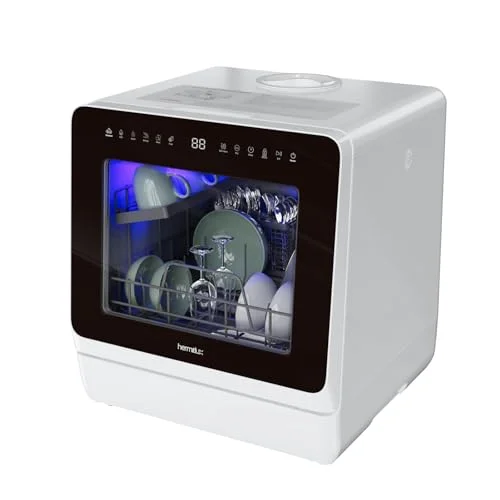
A full-size built-in dishwasher can absorb a fair amount of hard water abuse before anyone notices: a bigger heating element, a bigger tub, more water flushed through on every cycle. A portable or countertop machine has none of that margin. It reuses a smaller volume of water, concentrates the same dissolved minerals onto a smaller heating surface, and runs that surface through more heat-up cycles per gallon washed. The result is the same appliance failing for a boring, entirely preventable reason: scale.
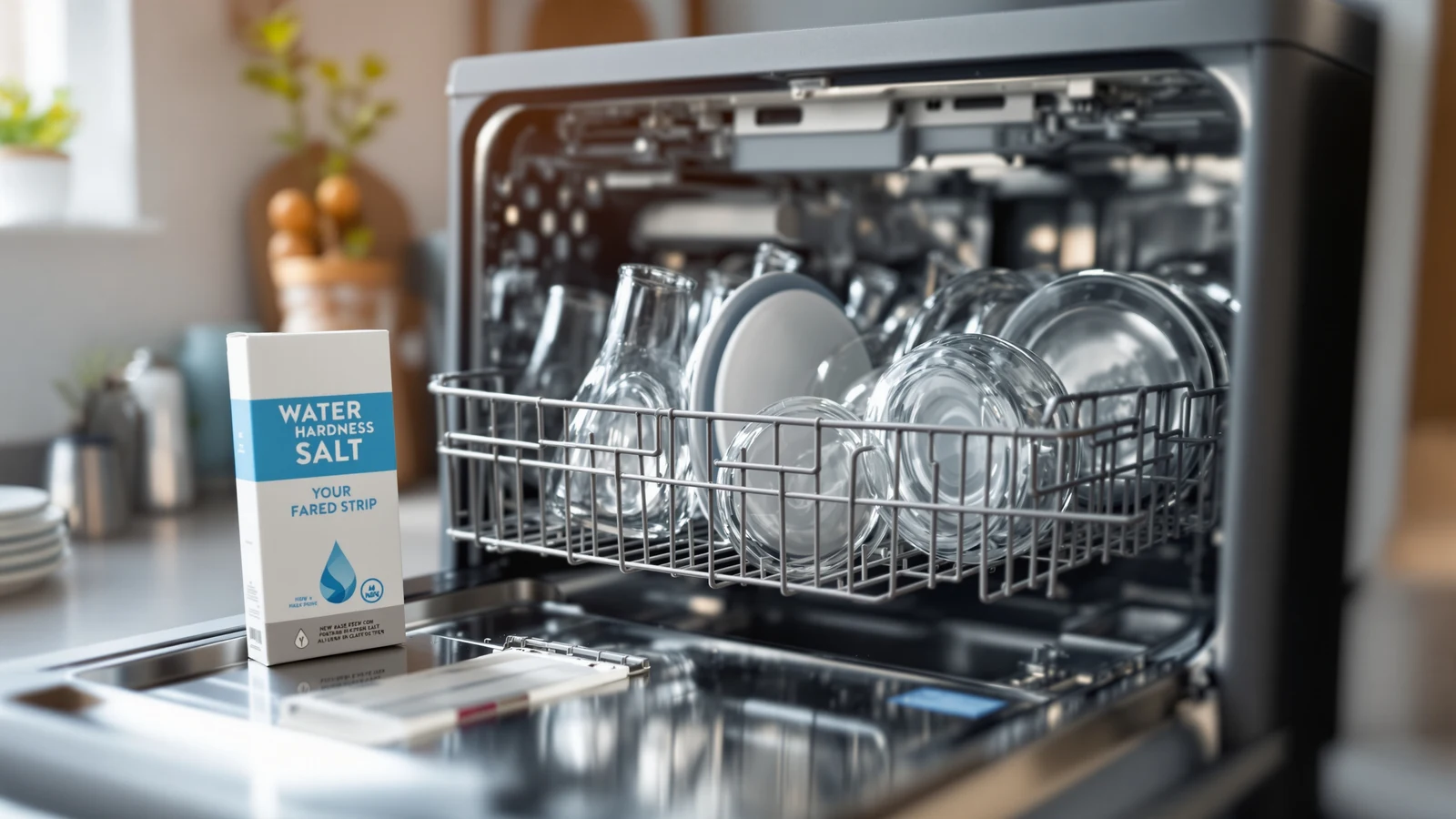
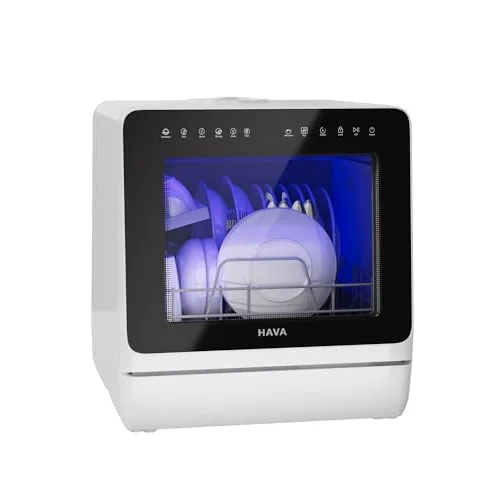
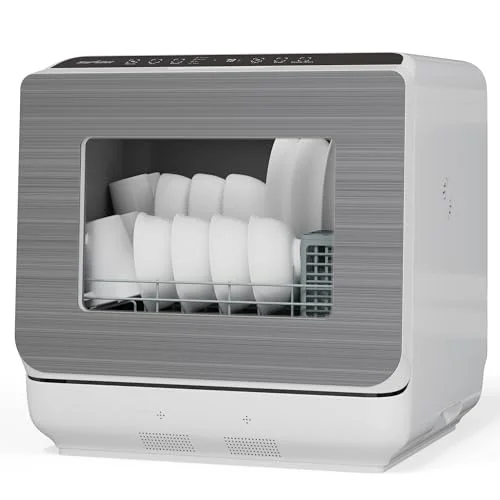
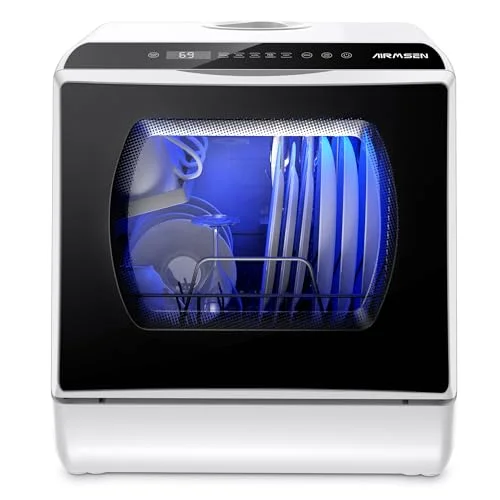
This guide covers what actually delays or prevents it — how to size up your water without buying a test kit, where scale forms first inside a compact tub, how a built-in softener works and what it costs to keep running, what rinse aid and dishwasher salt each actually do (they are not the same thing, and conflating them is the most common mistake), the four machines worth knowing about, and the descaling routine for the three of them that don't have a softener at all.
How this page is built
We compare published specifications, what's in the box, water source, price and general water-chemistry facts that apply to this class of appliance regardless of brand. We do not physically test these machines, we do not run a testing lab, and we do not publish star ratings or review counts we cannot verify — Amazon's product data returns none for these listings. Where we describe how a feature works mechanically, that's general engineering knowledge about ion-exchange softeners and rinse aids, not a claim about an undocumented spec on any one of these four products.