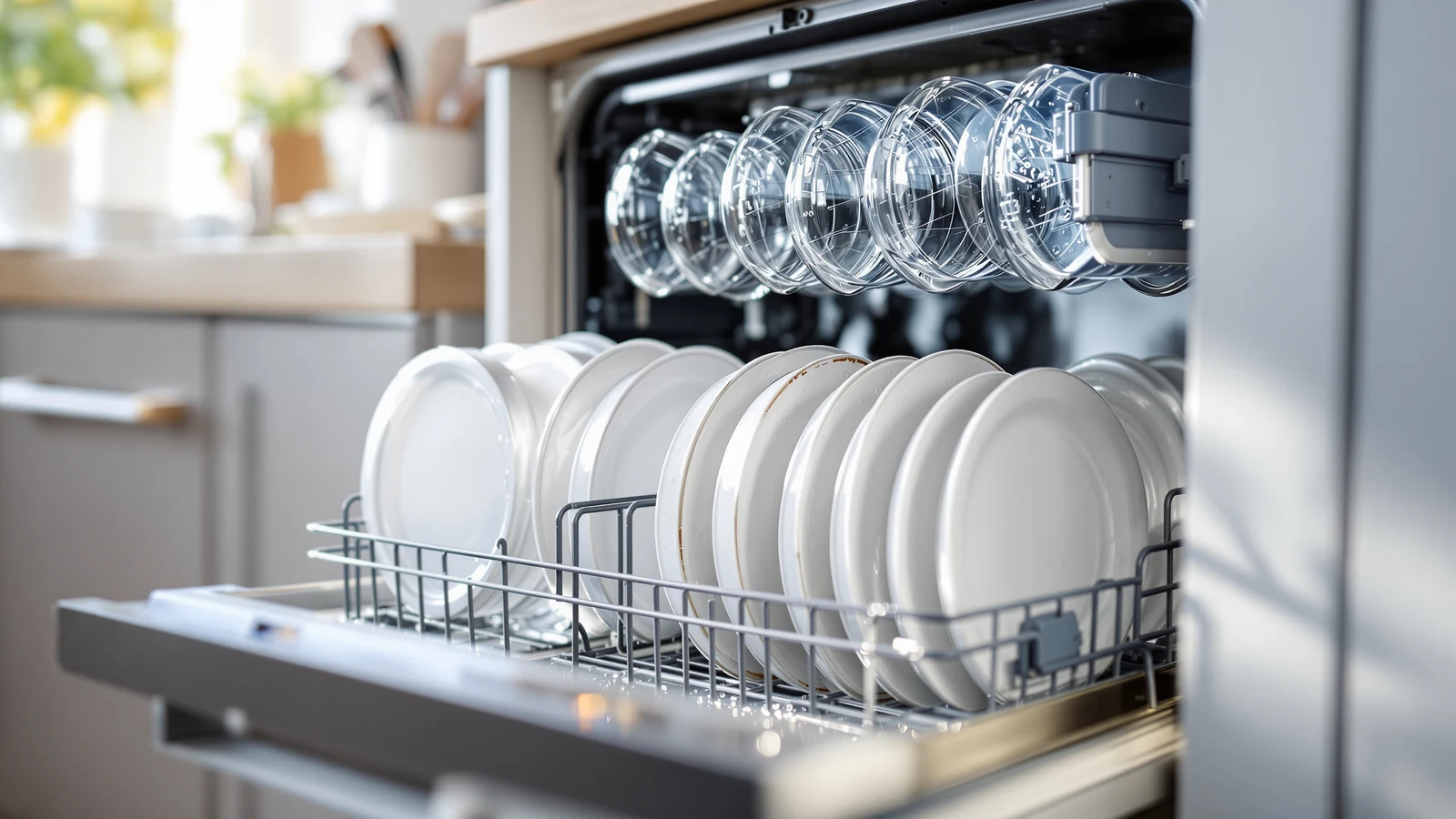
If one item comes out of every cycle still wet, it's plastic — a tumbler, a food-storage lid, a kid's cup, a cutting board. This isn't inconsistent bad luck; it's physics working exactly as expected, and it's the clearest single illustration of why condensation drying struggles.
Ceramic, glass and metal all have a meaningfully higher specific heat capacity than most plastics, and they're also generally thicker relative to their surface area. In practice that means a ceramic plate absorbs more heat during the hot final rinse and holds onto it for longer once the cycle ends, so water sitting on its surface keeps evaporating for a few extra minutes after the tub goes quiet. A thin plastic cup absorbs less heat to begin with and sheds it almost immediately once the hot water stops hitting it — plastic's own low thermal mass means it cools back to room temperature within moments, well before the machine's tub has finished venting its humidity. Once that surface is cool, any water on it, or in it, is beading and staying rather than evaporating, and the surrounding humid air has nowhere better to condense than the coolest surface in the tub, which by then is almost always the plastic.
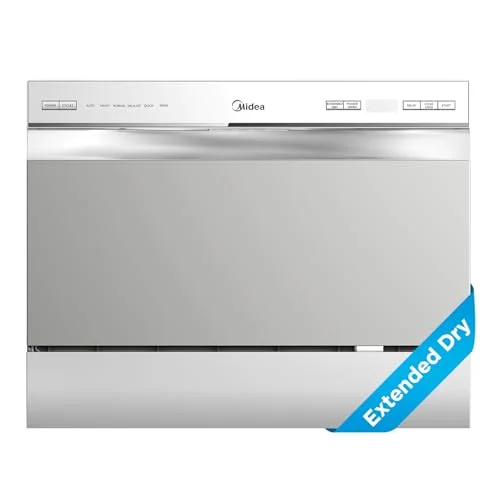
None of this is a defect in your specific machine, and no drying cycle marketed by any manufacturer changes the underlying physics — a machine without a heating element cannot force evaporation on a surface that has already cooled. What it means practically: expect plastic to need a hand-dry or an extra few minutes of air-out time on every single load, budget for that instead of troubleshooting it, and don't buy a "with extra-dry cycle" machine expecting the plastic problem to disappear — extra-dry cycles mostly add rinse time and a longer vent step, and neither one changes how fast a thin plastic wall loses heat.