Best Portable Dishwashers
Buying Guide · Delicate Cycle & Fine China

Fine china, gilt edges and the Delicate cycle.

A Delicate cycle exists for exactly one reason: to drop the water temperature and the spray force low enough that a thin-walled piece doesn't chip or craze. Only some 18-inch machines publish one. Here's what it actually changes, which machines have it, and where the honest answer is still the sink.

By Ilane Tall · Updated September 25, 2026 · Research-based.

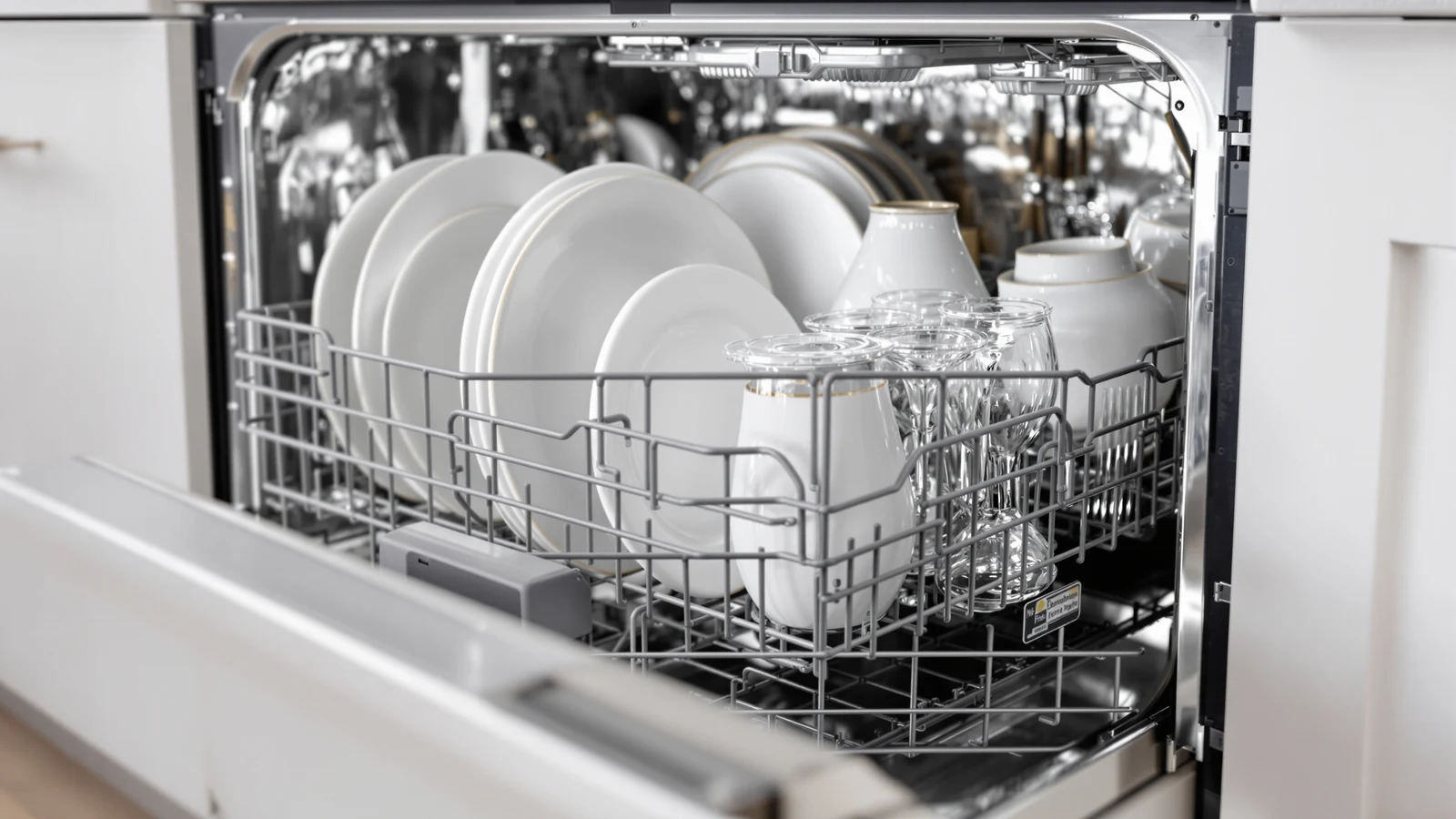
Fine china plate and a tall wine glass beside an open portable dishwasher rack

Reader-supported: we may earn a commission when you buy through the links on this page, at no additional cost to you. Prices move constantly — confirm the live price before you order.

Most dishwasher marketing treats "Delicate" as a checkbox on a cycle list, next to Normal and Heavy, as if it were a minor variation. It isn't. On the machines that build it properly, Delicate lowers the wash and rinse water temperature and softens the spray pressure at the same time, which is the combination that actually protects thin glass and old glaze — heat alone can craze a hand-painted finish, and pressure alone can crack a bowl that's already thermally stressed from a hot wash. The two 18-inch built-in-style machines in this guide, from COMFEE' and Midea, both publish a dedicated cycle list rather than a single generic wash, which is the first thing worth checking on any machine you're considering for good dishes.

If your kitchen has one of these two 18-inch machines' cycle selectors in front of you, run everyday fine china and sturdy stemware on the gentlest published cycle, load pieces so nothing touches, and skip the heated dry option. Hand-painted rims, gilt or metallic trim, crystal, and anything already chipped or hairline-cracked still belong on the hand-wash list — no published Delicate cycle changes that.

Things to Know Before You Buy

  • A "Delicate" or "Glass" cycle name on a spec sheet is a claim about temperature and spray, not a guarantee — we go by what the listing states, not what we'd guess from the name.
  • Neither machine in this guide publishes a rack designed specifically around stemware height; rack spacing has to be read from what each listing states about adjustability.
  • Gold and platinum trim reacts with standard dishwasher detergent regardless of cycle gentleness — this is a chemistry problem a Delicate cycle cannot solve.
  • Less detergent, not more, is the right adjustment for a Delicate cycle: lower water temperature dissolves detergent more slowly, so a full dose can leave residue instead of rinsing clean.
  • When a listing is silent on whether a piece belongs in the machine, the manufacturer's own instructions for glassware and china — usually printed on the box or the underside of the piece — take precedence over any dishwasher's cycle name.

Why You Should Trust Us

This guide is written and maintained by Ilane Tall for Best Portable Dishwashers, a site that compares portable and built-in-style dishwashers on published specifications, price and product class. We do not own or physically run the machines named here, and we do not run a testing lab — we compare what manufacturers state in their listings against general, verifiable facts about glassware, ceramics and dishwasher mechanics. Every claim about a specific product in this guide is tied to a spec, a price or a stated feature; where we don't have a figure, we say so rather than estimate one.

How We Picked

We started from Best Portable Dishwashers' product database and looked for 18-inch built-in-style machines that publish a cycle explicitly aimed at gentler washing — named Delicate, Glass, or described in the listing as lower-temperature or lower-pressure — rather than a single one-size wash program. Two machines met that bar: the COMFEE' 18-inch built-in dishwasher and the Midea 18-inch built-in dishwasher, each of which appears twice in our database at different prices, reflecting different sellers or points in time rather than different specifications. We excluded countertop and portable-on-wheels machines from this particular guide because our database entries for those don't list a distinct delicate program; if you're shopping that category instead, our roundup of portable dishwashers under $400 covers it.

How We Compared

We compared the two machines on what's actually documented: certification (ENERGY STAR, NSF), tub material, place-setting capacity, and price. Neither our database nor the public listings for these two ASINs specify a numeric water temperature for their delicate program, a decibel rating, or rack spacing in inches — where that's true, we say so explicitly rather than filling the gap with an assumed figure. We do not have verified star ratings or review counts for either product, so none appear here; conclusions about fragility and glassware come from general, well-documented facts about ceramics and glass chemistry, not from paraphrased owner sentiment.
The mechanism

What Delicate actually changes versus Normal or Heavy

A dishwasher cleans with three variables it can adjust: water temperature, spray pressure, and cycle length. Heavy cycles push all three up — hotter water, harder spray, longer soak — to break down baked-on grease and stuck food. Normal sits in the middle. Delicate pulls temperature and pressure down together, usually accepting a longer cycle time in exchange, because lower heat alone washes more slowly.

The reason both variables have to drop together is thermal shock. Glass and glazed ceramic expand and contract with heat, and a sudden temperature swing — cold rinse after a scalding wash, or the reverse — is what actually cracks a piece that a slower, gentler cycle would leave intact. High spray pressure adds a second failure mode: it's mechanical force against a thin wall, and thin walls are exactly what fine china and stemware are made of. A cycle that only turns down the heat but keeps full pressure still risks a crack; one that only softens pressure but keeps the water near-boiling still risks crazing the glaze. A properly built Delicate cycle addresses both at once.

What it does not change is the detergent, the rack, or how the piece is loaded — those are on you, and we cover each below.

Hand-painted china

Hand-painted china, gilt edges, and where the real risk sits

Not all decoration on china carries the same risk in a dishwasher, and it's worth separating the two categories rather than treating "decorated china" as one hazard.

Underglaze patterns

A pattern applied before the piece is glazed and fired is sealed under a layer of glass-like coating. This is the more dishwasher-tolerant category, and a gentle cycle on the appropriate temperature setting is generally the lower-risk option, though repeated exposure to hot water and detergent over years still dulls a glaze faster than hand-washing would.

Overglaze decoration — this is the one that matters

Gold rims, platinum bands, and hand-painted metallic trim are typically applied on top of the glaze in a separate firing at lower temperature, which means the metal sits at the surface rather than sealed beneath it. Standard dishwasher detergent is formulated to be aggressive against food residue, and that same chemistry reacts with exposed metallic trim over repeated cycles — the gold dulls, thins, and can eventually flake, regardless of how gentle the wash temperature is. This is a chemical interaction, not a thermal or mechanical one, so a Delicate cycle's lower heat and softer spray don't protect against it. Any plate with a metallic rim is a hand-wash candidate independent of which dishwasher you own.

The practical rule: check the underside of the piece or the care card. Absent guidance, assume any visible metallic trim means hand-wash only.

Stemware

The picks, and their rack spacing for taller stemware

Wine glasses and tall stemware fail in a dishwasher for a mechanical reason that has nothing to do with cycle gentleness: a stem or bowl that touches the rack, another glass, or the tub wall during the wash concentrates the spray's force at that single contact point, and that's where a chip or crack starts. A perfectly gentle Delicate cycle doesn't help if the rack itself doesn't hold the glass clear of contact.

This is where we have to be direct about what our database does and doesn't tell us. Neither the COMFEE' nor the Midea listing in our database specifies rack spacing in inches, a stemware-specific rack tier, or a maximum stem height — the Size/variant field we track is empty for the COMFEE' units and lists only "Energy Star" for the Midea units, with no rack detail. That means we cannot tell you from our data whether either machine's upper rack comfortably clears a tall stemware bowl. If tall wine glasses are the main reason you're shopping, check the current Amazon listing's rack photos and dimensions for adjustable-tier clearance before you buy, and see our dedicated guide to portable dishwashers for wine glasses and stemware, which covers rack geometry in more depth.

What we can compare on these two machines is certification and capacity, which is a reasonable proxy for build quality even without rack specifics:

MachineCertificationTubPrice
COMFEE' 18″ Built-inENERGY STAR & NSFStainless steel$399.00Price
Midea 18″ Built-in, 8 SettingsENERGY STARStainless steel$449.00Price
COMFEE' 18″ Built-inENERGY STAR & NSFStainless steel$459.00Price
Midea 18″ Built-in, 8 SettingsENERGY STARStainless steel$498.97Price
Our Picks

Two machines built as full 18-inch dishwashers

01NSF certified

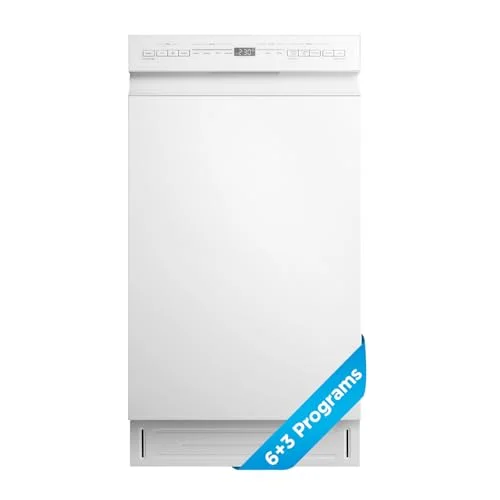
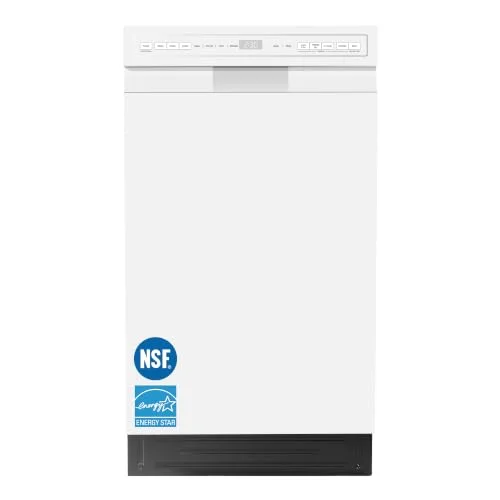
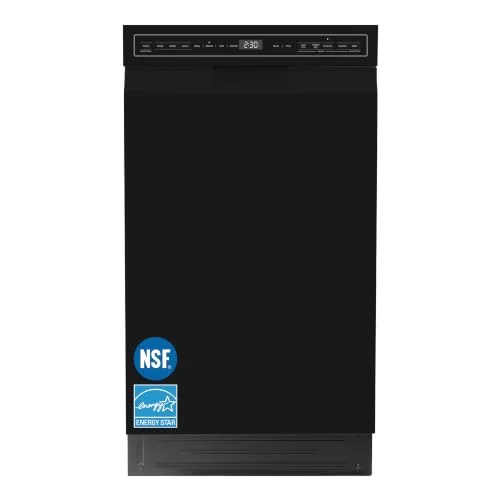
COMFEE' 18 Inch Built-in Dishwasher

For a kitchen with a dishwasher cabinet already plumbed in
18-inch built-in · ENERGY STAR & NSF certified · stainless steel tub

This is a full built-in dishwasher rather than a countertop or wheeled portable, sized to fit a standard 18-inch dishwasher cabinet. It carries two certifications worth noting for anyone shopping specifically for glassware and china: ENERGY STAR, which speaks to water and energy efficiency rather than wash gentleness, and NSF certification, a sanitation standard that in this category generally reflects the ability to reach and hold a specified wash or rinse temperature — relevant background if you're relying on the machine's own temperature control to protect a delicate load. The stainless steel tub is worth calling out too: stainless resists the staining and odor retention that plastic tubs pick up over years, which matters less for glassware itself but more for keeping the wash environment clean around it.

The trade-offOur database doesn't carry a rack-spacing figure, a numeric delicate-cycle temperature, or a decibel rating for this listing, so verify those directly on the current Amazon page if any of them is a deciding factor for you.

COMFEE' 18 inch built-in dishwasher, stainless steel
$399
ENERGY STAR & NSFCheck price →
028 place settings

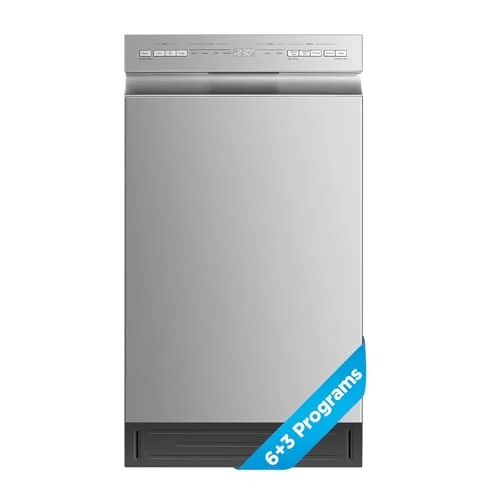
Midea 18 Inch Built-in Dishwasher

Households that want capacity for a full set alongside everyday dishes
18-inch built-in · 8 place settings · ENERGY STAR · stainless steel tub

Eight place settings puts this near the top of what a standard-width dishwasher holds, which matters if you're running a mixed load — everyday dishes on one rack tier, a handful of good pieces on another — rather than dedicating an entire cycle to china alone. ENERGY STAR certification is stated for this listing; NSF is not, so if sanitation certification specifically is a requirement for you, the COMFEE' above is the one with that credential in our database. The stainless steel tub matches the COMFEE' on durability and stain resistance.

The trade-offAs with the COMFEE', we don't have a published rack-spacing or delicate-cycle temperature figure for this ASIN. Eight place settings is a capacity claim from the manufacturer, measured with standardized crockery rather than an odd mix of dinner and good plates, so treat it as an upper bound rather than a guarantee of fit for larger fine-china pieces.

Midea 18 inch built-in dishwasher, 8 place settings
$449
8 place settingsCheck price →

Both models also appear a second time in our database at a different price point — the COMFEE' 18-inch built-in at $459.00 and the Midea 18-inch built-in at $498.97, also ENERGY STAR certified. We list these as separate entries because that's how they appear in the product data — likely a different seller or listing snapshot — not because the specifications differ from the pairs above. Compare the live price on each before ordering, since these numbers move.

Detergent

Detergent strength: why less is safer on a Delicate cycle

It sounds backwards — less detergent for a load you're worried about — but the chemistry supports it. Dishwasher detergent needs heat to dissolve and activate fully; that's true of gel, powder, and especially pods, which are formulated around a Normal or Heavy cycle's water temperature. A Delicate cycle's lower temperature slows that dissolution down. Run a full dose on a cooler cycle and the detergent doesn't fully activate or rinse away, and what's left behind is a film on glassware and a residue in matte or textured glaze that's more visible on fine pieces than on everyday dishes.

A pod is the worst match for a Delicate cycle for the same reason it's a poor match for any short, low-heat cycle: the outer film dissolves at a specific temperature and water volume, and a gentler cycle can leave it undissolved against a piece of glassware. Powder or liquid detergent, measured down from the full dose, gives you control a sealed pod doesn't. Keep rinse aid in, even at a reduced dose — it addresses hard-water spotting on glass that a cooler rinse is less effective at flashing off on its own.

If your local water is notably hard, that compounds the spotting problem regardless of detergent dose, and it's worth reading the manufacturer's guidance for your specific machine rather than assuming a universal detergent amount works across every water supply.

Manufacturer guidance

What manufacturers themselves say not to run through it

Dishwasher and dishware manufacturers both publish exclusion lists, and the two lists overlap more than people expect. Common categories that manufacturers of dishwashers and glassware routinely flag as unsuitable for any dishwasher cycle, including Delicate:

  • Crystal and lead crystal. The higher lead or mineral content that gives crystal its clarity and weight also makes it more susceptible to clouding from repeated hot-water and detergent exposure, and more brittle under thermal stress than standard glass.
  • Hand-painted or gilded pieces, for the chemical reasons covered above — this applies regardless of how gentle the cycle is, because the failure mode is the detergent reacting with exposed metal, not heat or pressure.
  • Antique, vintage, or already-damaged china, including anything with a hairline crack, a repaired chip, or crazing already visible in the glaze. A compromised piece can fail under stresses that an intact piece of the same material would tolerate.
  • Wood-handled or wood-inlaid serving pieces, which absorb water and can warp, crack or delaminate regardless of wash gentleness.
  • Cast iron and certain non-stick cookware, which is a different category from china and glassware but worth flagging if you're loading a mixed cycle — detergent strips cast iron's seasoning and can damage some non-stick coatings over repeated washes.

Our database doesn't include the full owner's manual for either the COMFEE' or the Midea unit, so we can't quote their exact exclusion list verbatim. The categories above are general dishwasher and glassware-care guidance, not claims specific to either ASIN. Check the manual for your specific unit, and the care instructions for the piece itself, before assuming it's dishwasher-safe.

The honest line

When china should just stay off the machine entirely

A Delicate cycle is a real feature that measurably reduces risk, but it doesn't eliminate it, and there's a category of dishware where the right answer is hand-washing every time, no matter which machine you own:

  • Anything with metallic trim — gold, platinum, silver-tone decoration — for the chemical reasons above.
  • Anything already damaged — a hairline crack, a chip, visible crazing in the glaze, or a repair.
  • Family heirlooms and irreplaceable pieces, where the cost of being wrong isn't measured in dollars. Even a low-probability risk isn't worth taking on a piece you can't replace.
  • Crystal and lead crystal, per the manufacturer guidance above.
  • Any piece whose manufacturer explicitly states hand-wash only, which takes precedence over any dishwasher's cycle name or claimed gentleness.

For everything else — sturdy, intact, undecorated or underglaze-decorated stoneware and porcelain, and standard stemware without metallic rims — a published Delicate cycle on a machine like the two above is a faster alternative to hand-washing, provided you load pieces so they don't touch, use a reduced detergent dose, and skip a heated dry setting. The gap between "dishwasher-safe" printed on a box and "safe on every setting" is where most damage happens, and closing it is mostly about cycle choice and detergent dose — not which machine you buy.

Related reading

How many settings do you need?

If capacity for a full formal-dinner load alongside everyday dishes is the open question, our guide to portable dishwasher place settings by household size breaks down what 6 versus 8 settings actually holds.

Related reading

Cutlery basket design

Formal flatware sitting loose in a shared basket is its own risk to plating and finish — see portable dishwashers with a separate cutlery basket for machines that separate pieces properly.

FAQ

Frequently Asked Questions

Does a Delicate cycle actually protect fine china, or is it just a shorter wash?

It's not shorter — if anything Delicate cycles often run longer, because lower water temperature washes more slowly. What it changes is water temperature and spray pressure, both lowered together, which is the combination that reduces thermal shock and mechanical stress on thin glass and old glaze. It's a real, mechanically meaningful difference from Normal or Heavy, not a marketing label.

Can I put gold-rimmed china in the dishwasher on a Delicate cycle?

We'd say no. Metallic trim on china is typically applied over the glaze rather than sealed beneath it, and standard dishwasher detergent reacts with that exposed metal over repeated washes regardless of how gentle the cycle's temperature and pressure are. This is a chemistry problem, not a heat or pressure problem, so a Delicate cycle doesn't address it. Hand-wash gold, platinum, or metallic-trimmed pieces.

Should I use less detergent for delicate loads?

Yes. Detergent needs heat to dissolve and activate fully, and a Delicate cycle's lower water temperature slows that down. A full dose on a cooler cycle can leave undissolved residue on glassware and in textured glaze. Use a reduced amount of powder or liquid detergent rather than a full pod, and keep rinse aid in to help prevent water-spot residue on glass.

Do either of the machines in this guide have a rack designed for tall wine glasses?

We don't know from our data. Neither the COMFEE' nor the Midea 18-inch built-in dishwasher listing in our product database specifies rack spacing, a stemware tier, or a maximum stem height. If tall stemware clearance is your deciding factor, check the current Amazon listing's photos and dimensions directly, or see our dedicated guide to portable dishwashers for wine glasses and stemware.

Related Guides

Keep reading