Best Portable Dishwashers
Guide · Certification

UL and ETL certification: what the safety mark actually tests.

A handful of portable dishwasher listings carry a UL or ETL mark alongside Energy Star. It gets read as one more "this one's good" badge, but it tests one specific, narrow thing — and it isn't cleaning performance, efficiency, or sanitation.

By Ilane Tall · Updated November 2, 2026 · Research-based.

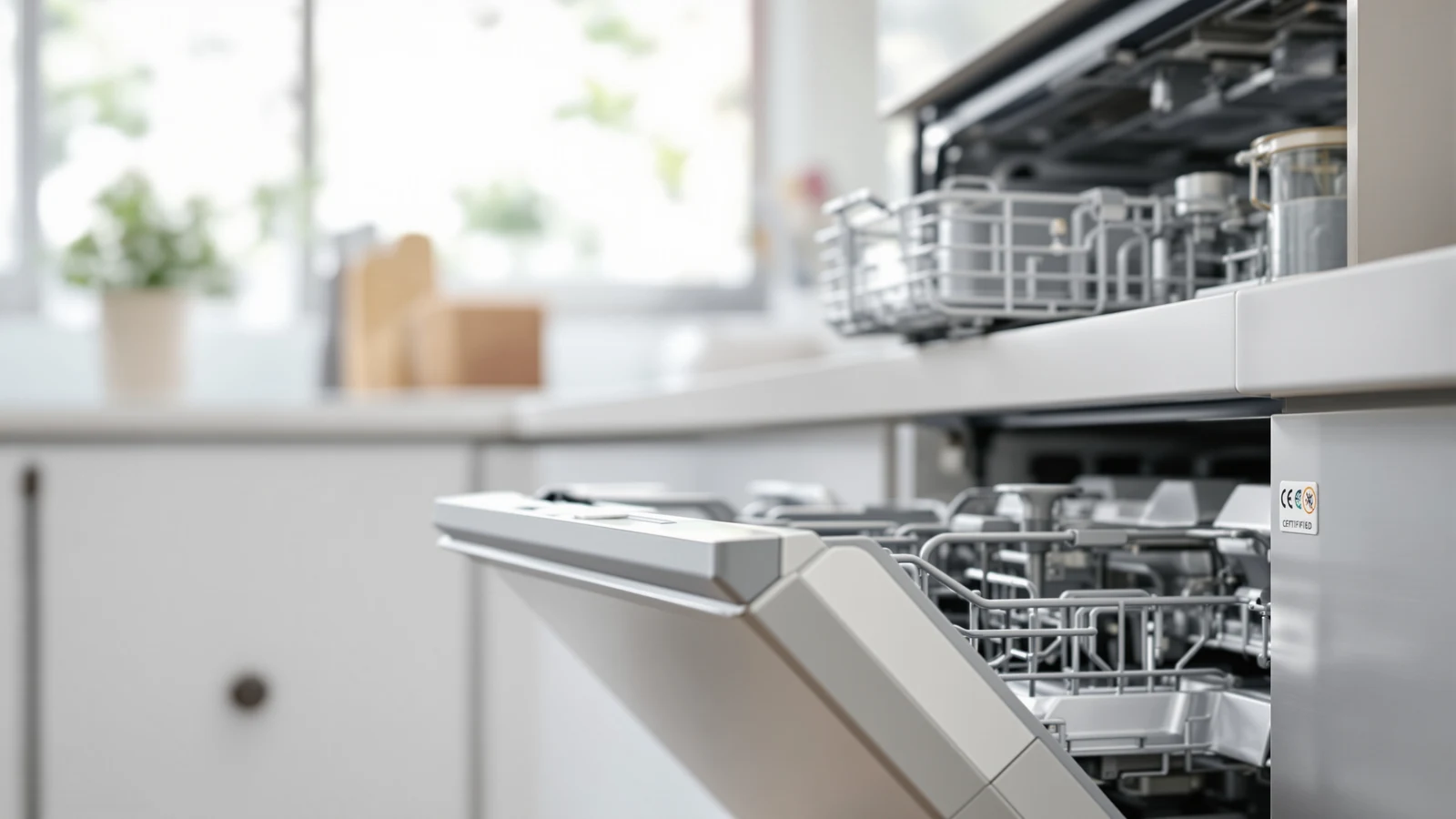
Close-up of a UL safety certification mark on the rating label of a stainless steel portable dishwasher

Reader-supported: we may earn a commission when you buy through the links on this page, at no additional cost to you. Prices move constantly — confirm the live price before you order.

Quick answer

UL and ETL are safety certifications, not cleaning or efficiency ratings. Underwriters Laboratories (UL) and Intertek's ETL mark are both Nationally Recognized Testing Laboratories (NRTLs) that test electrical appliances — portable dishwashers included — against UL 749, the published safety standard for household dishwashers. The test covers electric shock hazard, grounding, fire risk from overheating, and mechanical hazards. It says nothing about how clean your dishes get, how much water or energy a cycle uses, or whether a cycle sanitizes. Of the three products in this guide, only the KoolMore 18-inch model states a UL mark in its listing, alongside Energy Star; the two countertop units carry no certification in the data we have, which is not the same as having failed one.

A UL or ETL mark shows up occasionally on a portable dishwasher listing, usually printed right next to an Energy Star badge in the bullet points, or in one case stitched straight into the model name — KoolMore's KM-DW1852-PR literally spells out "UL and Energy Star Certified" in its title. Shoppers tend to read every badge on a listing page the same way: as one more seal that means "this one passed something, so it's good." That reading skips the most useful fact about UL and ETL, which is that each tests a narrow, specific thing, and it is not the thing most buyers assume when they see the logo.

This guide works through what the UL/ETL mark on a dishwasher actually certifies, why that is a safety claim rather than a cleaning or efficiency claim, which of the three products in our database carry it, how it differs from the Energy Star and NSF marks that show up on the same listings, why most budget listings in this category skip stating any certification at all, and whether a missing certification should worry you.

The standard

What UL and ETL actually test — and what they don't

UL (Underwriters Laboratories) is an independent testing and certification organization that has written electrical safety standards for well over a century. Intertek's ETL mark is a separate company's equivalent certification, and both are recognized by the US Occupational Safety and Health Administration as Nationally Recognized Testing Laboratories — meaning federal workplace-safety regulation treats either mark as equivalent evidence that a product meets the relevant electrical safety standard. To a buyer, UL and ETL are functionally interchangeable: different accredited labs, tested against the same written standard.

For household dishwashers specifically, that written standard is UL 749, the Standard for Household Dishwashers. It covers the chassis, internal wiring, heating element, motor and control electronics against a defined set of hazard scenarios: electric shock risk to the person operating the unit, grounding and leakage-current limits, fire risk from a component overheating or a short circuit, and mechanical hazards such as sharp interior edges or a door latch that could trap something. A manufacturer does not get to self-certify this. A unit goes to an accredited lab, gets tested against the written requirements, and the certifying body either lists it or doesn't — which is the structural difference between a UL/ETL mark and a marketing phrase: one has an outside party checking the work.

What the test does not do is run a wash cycle with dirty plates and grade how clean they came out afterward. UL 749 testing is built around failure-mode checks — does the unit trip safely if water reaches somewhere it shouldn't, does the heating element have a thermal cutoff, is the enclosure grounded correctly, does the power cord meet the gauge and insulation requirements for the current it carries — not performance checks. A dishwasher can pass every one of those safety tests and still run a mediocre wash cycle, because the two things are evaluated on entirely separate axes by design.

What it isn't

Why this is a safety certification, not a cleaning or efficiency claim

Part of the confusion is layout. On a typical listing page, a UL mark sits in the same cluster of badges as "Energy Star," "5+1 wash programs," and a decibel figure, which makes it easy to read all of them as one undifferentiated trust signal: this machine is good. They are not measuring the same thing, and lumping them together obscures what each one actually promises.

UL and ETL answer exactly one question: will this specific unit, as wired and assembled, present an unreasonable electric shock, fire, or mechanical hazard under foreseeable use. It does not test cycle performance, the water temperature actually reached inside the tub, detergent compatibility, drying method, or how many place settings genuinely fit on the rack. Those are separate claims a manufacturer makes in the listing copy, and nothing about passing UL 749 requires any of them to be accurate.

The KoolMore listing is a useful example of how many separate claims get bundled under one model name. "ADA Panel Ready" is an installation-compatibility note — the door is built to accept a cabinet panel sized to match surrounding cabinetry, aimed at a built-in-style install rather than a countertop placement — and has nothing to do with UL. "52 DB" is a noise figure, and like every decibel claim in this category it is a manufacturer measurement taken under conditions the listing doesn't disclose, not an independently audited one; treat it as a comparison point, not a guarantee. "8 Place Settings" is a capacity claim. None of those three facts were checked by the same lab, or the same standard, that checked the electrical safety of the unit. A feature like automatic cycle control or automatic detergent dispensing describes what a wash cycle does, which is a functional claim entirely separate from whether the chassis is safe to plug into a wall.

The picks

The picks, and which certification each carries

Three listings from our database are relevant to this guide. Only one states a UL mark. Figures are manufacturer specifications; prices move.

01States a UL mark

KoolMore 18 in. ADA Panel Ready 8 Place Settings Dishwasher (KM-DW1852-PR)

Buyers who specifically want a documented UL mark alongside Energy Star, in a full-size unit
18 in. · ADA panel ready · 8 place settings · 52 dB claimed · stainless steel · UL & Energy Star certified

Among the three listings in this guide, this is the only one whose title states a UL certification, paired with Energy Star. "ADA Panel Ready" means the door is designed to accept a cabinet panel sized to match surrounding cabinetry — a detail aimed at a built-in-style install rather than a free-standing countertop placement. Eight place settings puts it near the top of the capacity range covered in our guide to the highest-capacity portable dishwashers. The 52 dB figure and the 8-place-setting count are both manufacturer claims rather than figures we measured, so treat them as a basis for comparison rather than a verified promise. Our database doesn't give us a stated water source for this ASIN, so check the current listing for hookup specifics before assuming it runs from a tank.

The trade-offAt $643.07 it is by far the most expensive of the three products in this guide — well over double either countertop unit — and the certification is part of what that price is paying to confirm, not the whole of it. If capacity and a built-in-style install aren't what you need, the premium is harder to justify on the UL mark alone, since UL certification testing costs roughly the same amount for any model that submits to it.
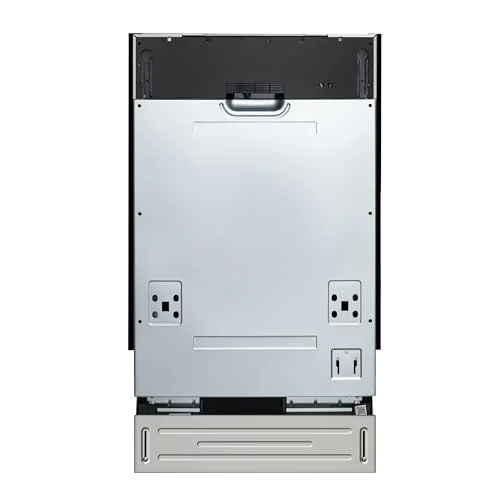
KoolMore 18-inch ADA panel ready dishwasher in stainless steel, UL and Energy Star certified
$643
UL & Energy StarCheck price →
02No certification stated

Countertop Dishwasher with Delay Start, 5+1 Wash Programs

Buyers comparing a standard budget countertop unit against the certified option above
Countertop · 5+1 wash programs · delay start · no certification stated

This is a standard compact countertop unit, and its listing leans on feature count — five wash programs plus one, a delay-start timer — rather than any certification mark. Nothing in the listing data we have states a UL, ETL, or equivalent NRTL mark, which is typical at this end of the category: generic-brand countertop units are far more likely to compete on program count and price than on a documented safety test, a pattern our separate guide on what generic-brand portable dishwashers give up walks through in more detail. The absence of a stated mark here is a gap in the listing's published specifications, not evidence the unit lacks any underlying compliance — plenty of small appliances sold in the US meet UL's published requirements without the specific NRTL mark appearing in the Amazon bullet copy.

The trade-offAt $229.49 it sits in the normal range for a countertop unit this size, and the delay-start timer is a genuine convenience feature. If a documented certification mark specifically matters to your decision, this listing doesn't give you one to point to — you'd need to check the physical unit's rating label or packaging rather than the online listing.

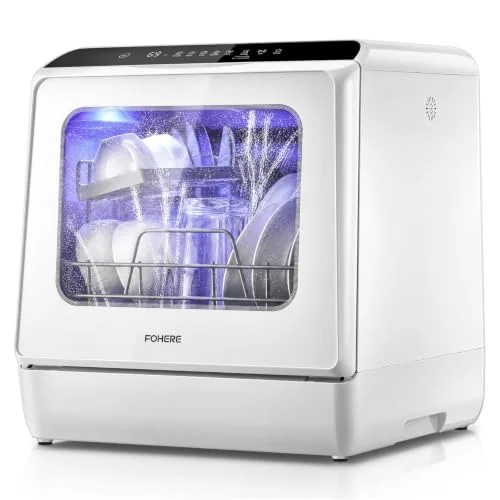
Countertop dishwasher with delay start and 5 plus 1 wash programs
$229
5+1 programsCheck price →
03No certification stated

Portable Countertop Dishwasher 5+1 Programs, Mini

Buyers weighing a smaller countertop unit against the standard-size model above
Mini countertop · 5+1 wash programs · no certification stated

Same program count as the standard-size countertop model above, in a smaller footprint, and priced about $10 higher — a reminder that "mini" doesn't automatically mean "cheaper," and worth comparing the live price rather than assuming the smaller unit wins on cost. Like that model, no UL, ETL, or equivalent mark appears anywhere in this listing's stated specifications. This is also the pattern you'll see across a single brand's lineup generally: the differences between a maker's models are usually size, control type, or a listed feature, not a safety certification one carries and the other doesn't — see Silonn's two countertop dishwashers and Hamilton Beach's three-model lineup for two other brands where that holds.

The trade-offAt $237.99, this mini unit costs more than the larger-sounding countertop model above despite no stated capacity advantage. Pay the small premium only if literal counter footprint, not price, is the deciding factor — neither this nor the standard-size model gives you a certification mark to point to if that's part of your decision.

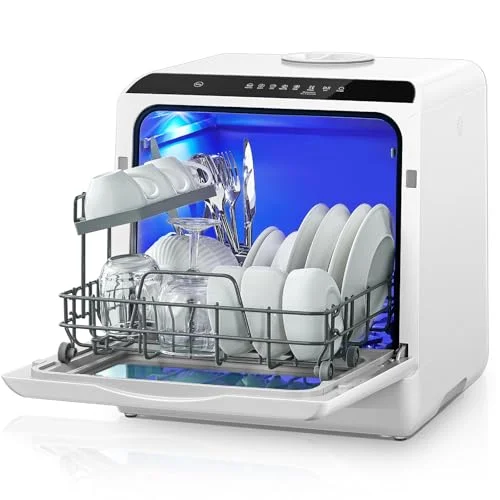
Portable countertop dishwasher, mini, with 5 plus 1 wash programs
$238
5+1 programsCheck price →
At a glance

The three dishwashers, side by side

All figures are manufacturer specifications; prices are approximate and keep moving.

DishwasherTypeCertification statedPrice
KoolMore 18″ ADA Panel Ready18-inch, built-in-styleUL & Energy Star$643.07Price
Countertop, Delay Start, 5+1CountertopNone stated$229.49Price
Portable Countertop, Mini, 5+1Mini countertopNone stated$237.99Price
Different marks, different claims

How this differs from Energy Star and NSF, which measure something else entirely

A single dishwasher listing can, in principle, carry up to three separate marks, each verified by a different body against a different written standard, and none of them substitutes for another.

  • UL / ETL tests electrical and mechanical safety — shock hazard, grounding, fire risk, sharp edges — against UL 749, verified by an OSHA-recognized NRTL (UL itself or Intertek).
  • Energy Star tests energy and water consumption per cycle against an efficiency threshold set by the EPA and Department of Energy. It is a resource-use claim, not a hazard claim, and it is administered by a different body entirely.
  • NSF tests sanitization performance or food-contact material safety, typically under the ANSI/NSF 184 standard for residential dishwashers, verified by an accredited lab against NSF's own written requirements. Our separate guide to soil-sensing wash cycles covers a different functional claim that, like NSF testing, has nothing to do with electrical safety.

The KoolMore model in this guide states two of the three — UL and Energy Star — not NSF. That is a normal combination: a unit can be electrically safe and energy-efficient without anyone having specifically tested its sanitization performance, because nothing requires a manufacturer to pursue all three marks together. Seeing one badge on a listing tells you nothing about whether the others were tested and simply not advertised, or never pursued at all.

The practical upshot: if a listing shows Energy Star but not UL, that tells you about the cycle's resource use, not about the chassis's electrical safety, and the reverse is equally true. Each mark answers its own narrow question and leaves the others unanswered.

Why so few have it

Why most budget listings skip stating any certification at all

Look across a database of countertop dishwashers and a stated UL or ETL mark is the exception, not the rule — two of the three products in this guide carry none in their listing data. That is mostly a function of cost and marketing incentive, not a quality signal against the countertop class specifically.

Submitting a model to UL or Intertek for UL 749 testing is not free, and the cost repeats per model, and again for any significant design revision, plus ongoing follow-up inspection fees to keep a listing authorized to carry the mark. For a countertop unit sold under a storefront brand name at $250 to $300 with thin margins, that is a meaningful chunk of the unit's cost to recoup, especially in a category where the same basic chassis is frequently relabeled and sold under several different brand names — the pattern our guide to generic-brand portable dishwashers covers in depth.

There's a second, less obvious reason a mark can be absent from the online listing specifically: sellers write bullet points to sell features, not to enumerate every compliance mark that technically exists somewhere on the physical product. Small appliances commonly carry a stamped NRTL mark on the power cord or the plug itself — the component most directly regulated — without the brand ever mentioning it in the marketing copy, because a cord stamp doesn't move units the way "5+1 wash programs" does. A missing badge in the Amazon bullets is evidence about what the seller chose to advertise, not necessarily evidence about what's stamped on the unit.

The honest answer

Does the absence of a listed certification mean a machine is unsafe?

No, not directly — and this is worth separating from the question of whether you have a verifiable fact to check. Absence of a stated UL or ETL mark on a listing means exactly that: the listing doesn't state one. It does not mean the unit failed a safety test, and it does not mean no testing was ever performed. A manufacturer can choose not to submit a model, or choose not to advertise a mark that exists on a component, for reasons that have nothing to do with the unit's actual safety.

What the absence does mean, honestly: you don't have an independently verified claim from a specific accredited body to point to. For a buyer making a decision partly on safety grounds, that is a real information gap, and the right response is to check further rather than assume either way. Two concrete things to check before assuming a mark's absence from the Amazon listing means its absence from the product: look at the physical unit's rating label (usually on the back or inside the door) and the packaging for a printed UL or ETL logo, and check the power cord and plug — appliance cords routinely carry a stamped NRTL mark even when the appliance body's own listing copy doesn't mention one.

We haven't physically inspected either countertop unit in this guide, so we won't claim either way that it is or isn't compliant with a safety standard — that would be exactly the kind of invented claim we avoid making. What we can tell you is what each listing states and what the gap in that data does and doesn't mean. We compare published specifications and prices; we do not run a testing lab, and we have no way to confirm a certification a seller didn't state.

Our top picks

Our top picks from this guide

FAQ

Frequently asked questions

Does a UL or ETL mark mean a portable dishwasher cleans dishes better?

No. UL and ETL certify electrical and mechanical safety against UL 749 — shock hazard, grounding, fire risk, mechanical hazards — not cleaning performance. A dishwasher can pass every safety test in that standard and still run a mediocre wash cycle, because cleaning performance and electrical safety are evaluated on entirely separate axes. Capacity, water temperature, and cycle design are the specifications that actually relate to how clean your dishes get.

Is ETL the same as UL?

Functionally, yes, for a buyer's purposes. UL (Underwriters Laboratories) and Intertek's ETL mark are both Nationally Recognized Testing Laboratories recognized by OSHA, and both test household dishwashers against the same written standard, UL 749. The difference is which accredited lab performed the test, not what was tested or what standard it was tested against.

Does a missing certification mean a portable dishwasher is unsafe?

No. Absence of a stated UL or ETL mark on a listing means the listing doesn't state one — it does not mean the unit failed a test, and it does not mean no testing was performed anywhere on the product. Certification testing costs money per model, and many budget listings simply don't pursue or advertise it. If certification specifically matters to your decision, check the physical unit's rating label and power cord for a stamped mark rather than relying only on the Amazon bullet points.

How is a UL/ETL mark different from Energy Star or NSF on the same listing?

Each tests a separate thing, verified by a separate body, against a separate written standard. UL/ETL covers electrical and mechanical safety. Energy Star, administered by the EPA and Department of Energy, covers energy and water consumption per cycle. NSF, where it appears, typically covers sanitization performance or food-contact material safety under ANSI/NSF 184. A listing can carry any combination of the three, or none, and one mark's presence says nothing about whether the others were tested.

Keep reading

Next, from this site