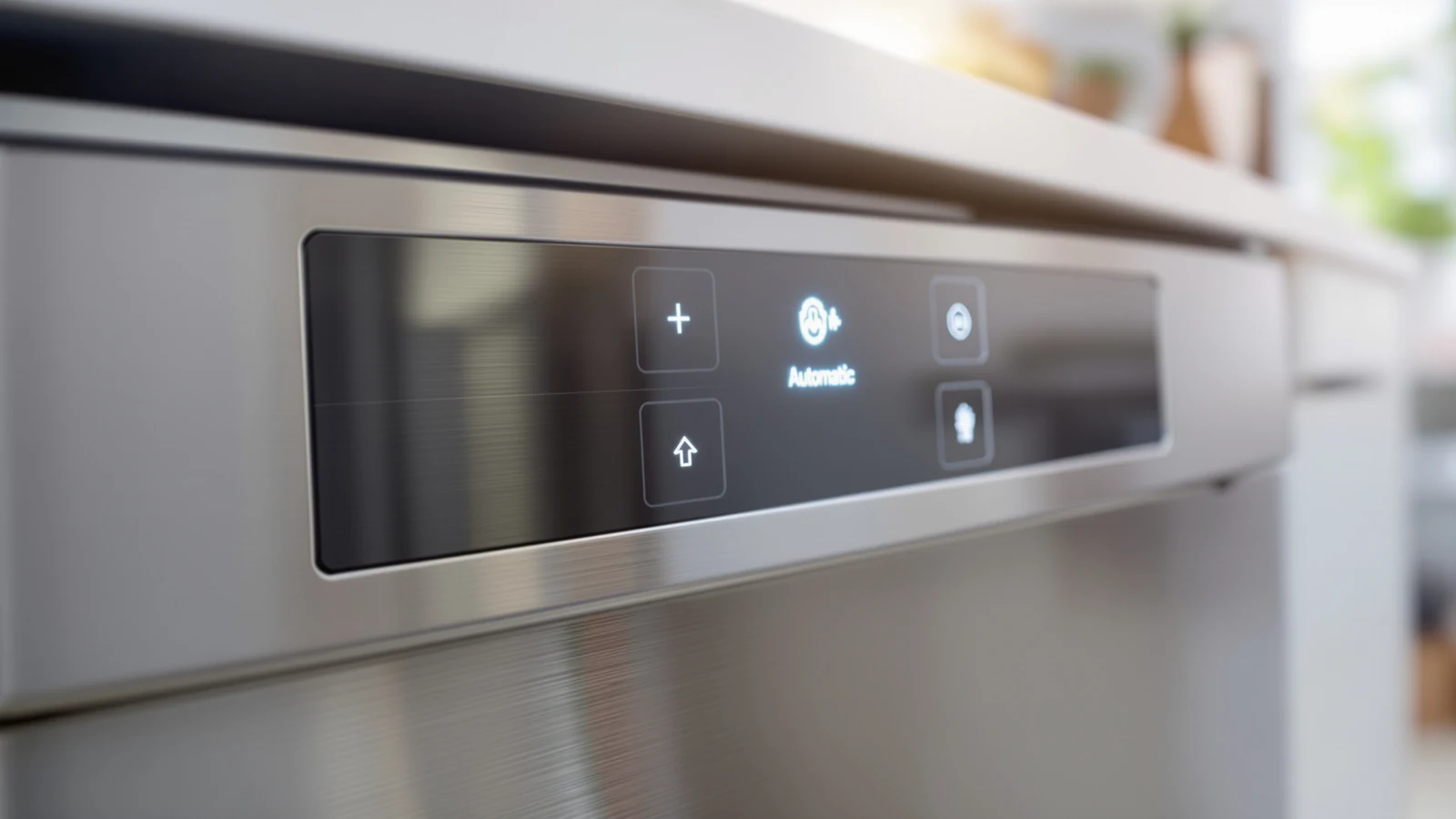
A turbidity sensor is a real component — an emitter, a receiver, a wiring run to the control board and firmware to interpret the reading — and that cost has to be justified against the price of the machine it's going into. Three things explain why it clusters on the pricier end of this category rather than on $200 countertop tank dishwashers.
Control-board complexity scales with price
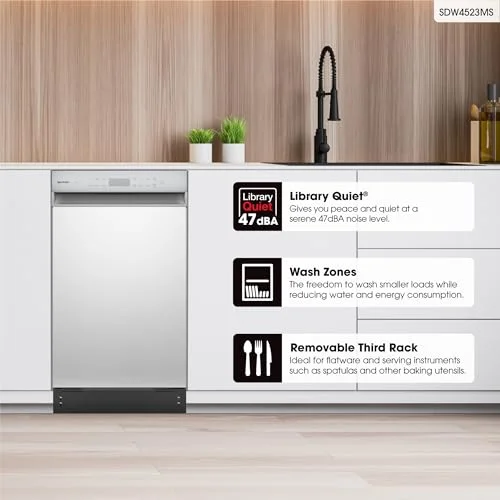
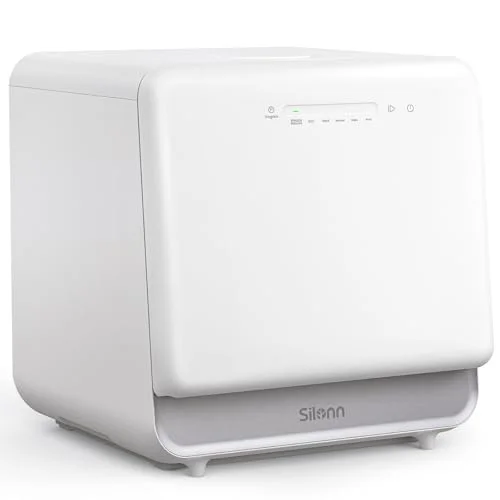
A basic countertop machine like the Silonn in this guide runs a fixed sequence of programs selected by a dial or button: Normal, Heavy, Glass, Quick. The electronics only need to execute a timer and switch a pump and a heating element on and off at the right points. Adding a sensor means adding a feedback loop — read a value, branch the program logic based on it — which is a more capable (and more expensive) control board than a simple sequencer needs. That cost is easier to absorb on a machine already priced like the Sharp SDW4523MS, a built-in-style 18-inch unit at $699.00, than on a $216.99 tank-fed countertop unit competing mostly on price.
A 5-litre tank doesn't give the sensor much to work with
The Silonn runs from a 5-litre built-in tank with no plumbing connection. A turbidity sensor needs a meaningful volume of circulating wash water to produce a stable reading — the more water, the more averaging happens and the less a single stray particle skews the result. A full-size or near-full-size 18-inch machine connected to a faucet, like the Polo or the Sharp, moves and refills water in a way a 5-litre tank simply doesn't. Adding a sensor to a tank-fed design is possible, but it is solving a smaller, noisier measurement problem for a feature the target buyer is less likely to pay extra for anyway.
It's a differentiator at the price point where buyers compare specs line by line
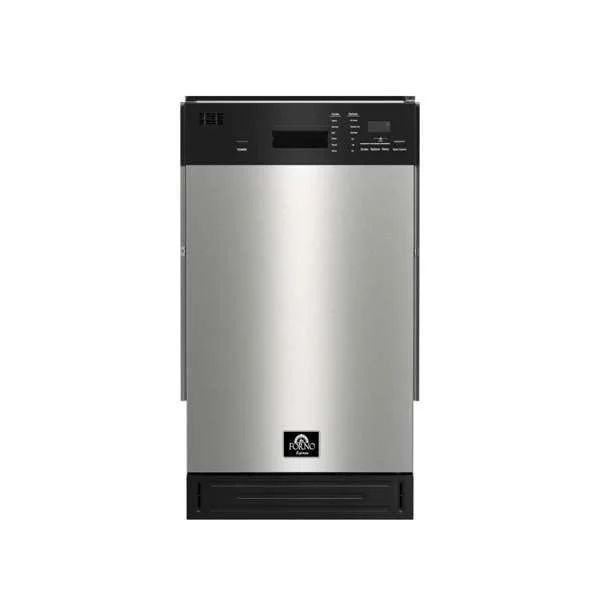
Buyers shopping $500-plus built-in-style portables are already comparing cycle counts, noise ratings and certifications feature by feature — that's the price band where an ENERGY STAR badge or a published decibel number moves a purchase decision, as it does for the Polo at 52 dBA and the Sharp at 47 dB. A sensor-driven Auto cycle is another line item in that comparison, alongside the place-setting count that drives most of the capacity conversation in this category — see our guide to the highest-capacity portable dishwashers for how far that number actually stretches. At the budget end, the comparison is dominated by price and tank-versus-faucet, and a sensor doesn't move that decision the way it does further up the price ladder.