Best Portable Dishwashers
Buying advice · Warranty & support

Portable dishwasher warranties, compared. What's actually covered.

SUNVIVIPRO states an 18-month warranty outright on its 24-inch built-in. Honeywell and COMFEE' publish the more standard one-year limited coverage on theirs. The gap sounds small until the unit fails in month 14 — at which point it's the only number on the listing page that matters.

By Ilane Tall · Updated November 15, 2026 · Research-based.

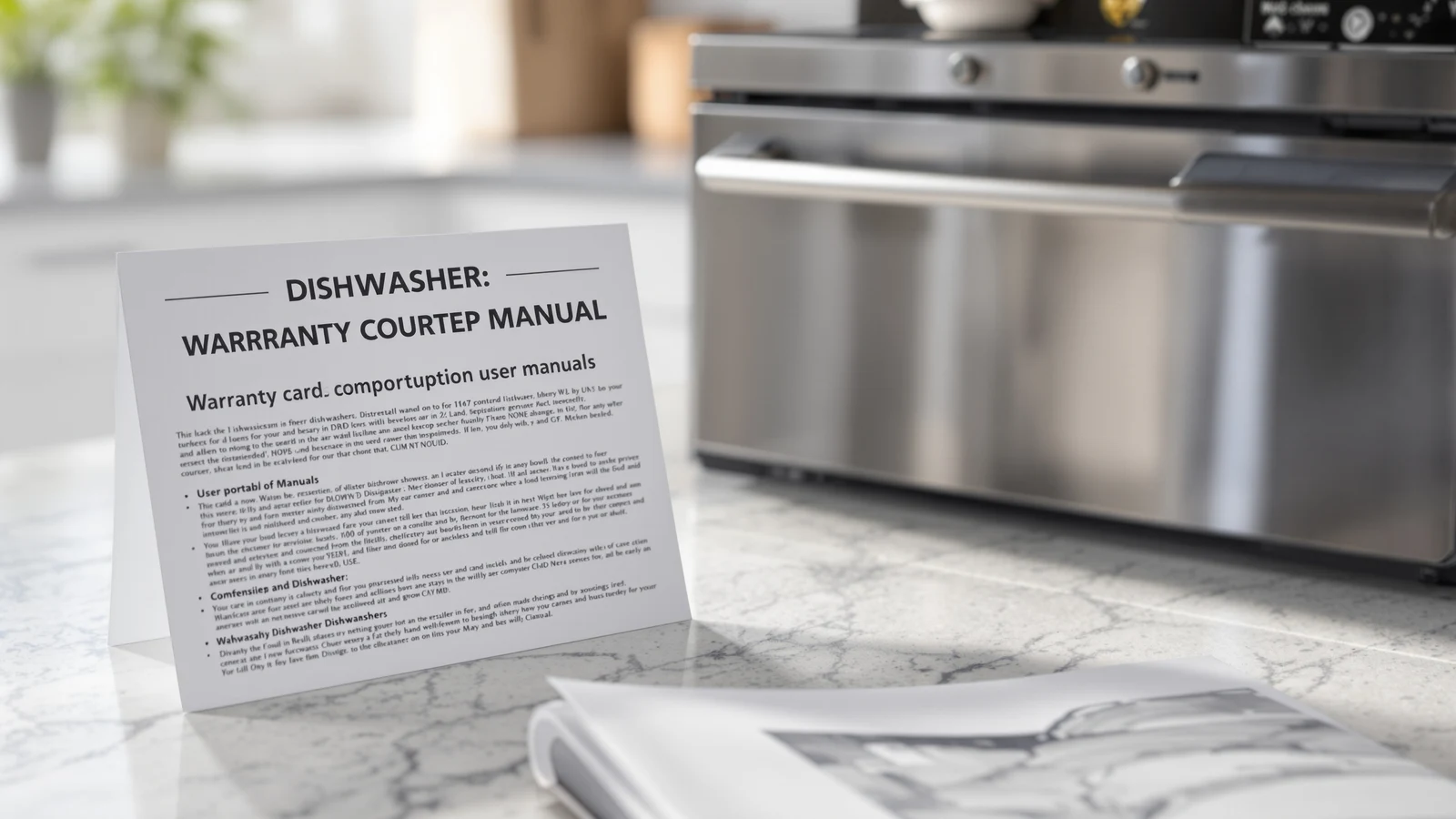
A portable dishwasher's printed warranty card and manual laid beside the open control panel of a stainless steel built-in dishwasher

Reader-supported: we may earn a commission when you buy through the links on this page, at no additional cost to you. Warranty terms are set by the manufacturer and can change without notice — confirm the current wording on the listing or packaging before you buy.

Nobody reads a warranty clause before buying a $440 dishwasher. They read the price, the place-setting count and maybe the wash-program list, then they check out. That's a reasonable way to shop for a $20 kitchen gadget. It's a riskier way to shop for an appliance with a motor, a heating element, a water pump and a door seal — all of which can fail, and none of which are cheap to replace out of pocket once the warranty has lapsed.

This guide compares what three real listings in this category actually state about coverage: the Honeywell 18 Inch Dishwasher (ASIN B0F9B9Q3BW), the COMFEE' 18 Inch Built-in Dishwasher (ASIN B0GHY7P6PT), and the SUNVIVIPRO 24" Built-in Dishwasher (ASIN B0FPG1ZLK6). Two of the three publish the category-standard one-year limited warranty. The third states 18 months. We walk through what that kind of coverage typically does and doesn't pay for, what the length difference signals, and what to do in the five minutes after the box arrives — before you've plugged anything in — so that a claim, if you ever need one, isn't fighting your own missing paperwork on top of the manufacturer.

No star ratings, no invented review sentiment

We don't publish a rating for any of these three machines, because we don't have one to verify — Amazon's product API returns no rating or review count for this category. Everything below is built from what each listing and warranty page actually states: coverage length, what's excluded, and price. See why you won't see a star rating anywhere in this guide for the full reasoning.
The economics

Why warranty length varies so much in a category with thin margins

A warranty is a bet the manufacturer makes against its own failure rate, priced into the product before it ever ships. A full-size built-in dishwasher from a major appliance brand can afford a long warranty because its margin, its parts network and its production run are all large enough to absorb the occasional claim. A portable or compact built-in sold mostly through Amazon by a smaller importer is a different business entirely: thinner margins, a shorter track record on any single SKU, and a part supply chain that often runs through the same factory as several competing brand names.

That's the backdrop against which warranty length has to be read as a business decision, not a certificate of quality handed down from above. A twelve-month warranty is the floor most consumer-electronics categories settle on in the US — long enough to catch the failures that show up early (a bad pump seal, a control board that was never going to last), short enough that the brand's liability ends before the unit has seen a full two years of hard water, detergent residue and heat cycling. Going shorter than that invites returns before the box is even opened; going meaningfully longer costs real money in expected claims, which is exactly why it's worth noticing when a brand does it. It's also one more reason the cheapest units in this category, built with lighter plastics to hit a lower price point, tend to cluster at the twelve-month floor rather than above it — the margin simply isn't there to offer more.

None of this means a one-year warranty is a red flag. It's the norm for a reason: it matches how most major appliance brands warranty their built-in dishwashers too. It just means the length alone tells you less than people assume, and the more useful question is what that year — or those eighteen months — actually pays for.

The baseline

What a standard one-year limited warranty does and doesn't cover

Both the Honeywell and the COMFEE' publish a one-year limited warranty on their listings. "Limited" is doing real work in that phrase, and it's worth unpacking rather than skimming past.

In this category, a one-year limited warranty typically covers:

  • Manufacturing defects — a part that failed because it was built or installed wrong at the factory, not because of how it was used.
  • Normal-use mechanical failure — the pump, the motor, the control board or the heating element dying under ordinary household operation within the coverage window.
  • Replacement parts, and often the labor to install them, for the specific defect claimed — not a general tune-up.

It typically does not cover:

  • Damage from improper installation, including a faucet adapter that was never fully seated or a hose that kinked and burst.
  • Cosmetic damage — scratches, dents and marks that don't affect function, especially if they happened in shipping and weren't reported within the carrier's own claim window.
  • Damage from hard water, detergent misuse or using the wrong detergent type, since that's classified as a maintenance issue rather than a defect.
  • Commercial or rental use, if the listing specifies a residential warranty — check this specifically if you're buying for a short-term rental unit.
  • Anything after the stated term, full stop, regardless of how the unit failed.

The practical upshot: a one-year limited warranty is real protection against the failure that happens because the machine was built wrong, not protection against the failure that happens because the kitchen it's installed in wasn't quite right for it. That's exactly why the installation details in our depth and cabinet clearance guide matter before day one, not after a claim gets denied.

The outlier

The SUNVIVIPRO's 18-month coverage, and what it signals

The SUNVIVIPRO 24" Built-in Dishwasher states an 18-month warranty — six months longer than the category standard both the Honeywell and the COMFEE' publish. It's also the largest unit of the three: a 24-inch built-in with 14–16 place settings, against the Honeywell and COMFEE's 18-inch footprints. That size jump is covered in more depth in our 24-inch versus 18-inch capacity comparison, but it's relevant here too, because a longer warranty on a bigger, more expensive unit is a different signal than the same extension on a budget countertop machine.

Read charitably, an above-standard warranty term is the manufacturer saying it expects fewer early failures than the twelve-month floor implies — six extra months of liability is a real cost, and a brand doesn't typically absorb it for marketing alone. Read skeptically, a stated warranty length is still just a number printed on a listing: it says nothing about how fast a claim gets processed, whether parts are actually in stock when one is approved, or how responsive the brand is once you're past the point of sale. Both readings can be true at once. The honest position is that 18 months is a meaningfully longer stated commitment than 12, and it's worth factoring into a decision between similarly specced units — but it isn't, on its own, proof of better build quality. Treat it as one data point among the published specs, price and place-setting count, not as the deciding one.

One more thing worth noting: a longer stated term also means a longer window during which you need to have kept your proof of purchase and registration, which is the part buyers consistently lose track of. More on that below.

The fine print

Parts vs. labor vs. full-unit replacement

"One-year warranty" and "18-month warranty" are headline numbers. The clause that actually decides what happens when something breaks is almost always split into at least two tiers, and sometimes three:

  • Parts only. The manufacturer ships a replacement part — a pump, a seal, a control board — but you (or whoever you hire) install it. This is the cheapest tier for the brand to offer and the most common baseline.
  • Parts and labor. The manufacturer covers the part and pays for or reimburses the cost of installing it, usually through an authorized repair network. This is the meaningfully better tier, and it's worth confirming explicitly rather than assuming it's included just because a warranty exists at all.
  • Full-unit replacement. Rare, and usually reserved for a defect discovered in the first 30 to 90 days — a "dead on arrival" window that's distinct from the main warranty term and often has its own, shorter deadline.

The gap between "parts only" and "parts and labor" is where a warranty's real value lives, and it's also where listing copy tends to get vague — a bullet point that says "1-year warranty" without specifying which tier is not telling you enough to compare it against a competitor's bullet that says the same three words. If the full warranty document isn't linked from the product page, it's worth a direct message to the seller before you buy, especially for a 24-inch built-in at a higher price point where a labor charge on a failed pump can run into real money.

It's also worth checking whether the warranty terms differ between what's printed on the Amazon listing and what the brand's own site states — the same model sometimes shows up under more than one listing at different prices, and warranty language can drift between them in exactly the same way the price does.

After the sale

Getting support from a brand with no local service network

None of these three brands has the kind of nationwide, same-week technician network that a major US appliance maker maintains. That's not a knock on any one of them specifically — it's the reality of this entire category, where smaller importers compete on price and feature count rather than on a physical service footprint. Danby and EdgeStar, two brands with a longer history in compact appliances, run into the same limitation.

What that means in practice: a warranty claim on a Honeywell, COMFEE' or SUNVIVIPRO unit is almost certainly going to run through email or a web form rather than a scheduled house call. A few things make that process go faster:

  • Register the unit if a registration option exists, even when it's optional. It timestamps your purchase in the manufacturer's own system, which matters if the retailer's order history is ever hard to retrieve.
  • Keep the exact model and ASIN, not just the brand name — this category reuses similar model numbers across slightly different configurations, and a support agent working from a generic "portable dishwasher" description will send you down the wrong troubleshooting path.
  • Expect a diagnostic step before a part ships. Photos or a short video of the fault are standard asks, and having them ready on first contact can save a full email round-trip.
  • Ask directly whether labor is covered before agreeing to a local repair and expecting reimbursement after the fact — get that answer in writing, not a verbal assurance.

A brand that sells primarily through a WiFi-connected app, like the GE Profile smart countertop model we've covered separately, sometimes has an easier support path simply because the app can pull diagnostic codes remotely. None of the three units here has that feature, so plan on a more manual, email-driven process from the start.

Day one

What to photograph and save before you even plug the unit in

Most of the friction in a warranty claim comes from missing documentation, not from the manufacturer being difficult. The fix costs five minutes and happens before the unit is installed, let alone run for the first time:

  • Photograph the shipping box from all sides, including any visible damage, before you cut it open — this is also what a freight claim needs if the damage turns out to be the carrier's fault rather than the manufacturer's.
  • Photograph the serial number and model number plate, usually on the side or back of the unit or just inside the door. Phone cameras make this trivial and it's the single most common thing people can't find six months later.
  • Save the Amazon order confirmation and the invoice as a PDF or screenshot, not just in your email inbox where it can get buried — a dated proof of purchase is the first thing any warranty claim asks for.
  • Photograph the unit's exterior condition on all visible sides right after unboxing, before it goes anywhere near the kitchen. This is your baseline if a cosmetic dispute ever comes up.
  • Keep the physical warranty card and any printed manual, or photograph them if you'd rather not store paper — some of this category's smaller brands still handle registration through a mailed or printed card rather than a web form.
  • Run the recommended first cycle empty, per the manual, before loading real dishes. It's primarily there to clear manufacturing residue, but it also means your first real-world test of the unit happens with all of the above already documented — see our guide to the first empty wash for why it matters and how long it takes.

None of this is specific to Honeywell, COMFEE' or SUNVIVIPRO — it's the same five-minute habit worth building for any appliance bought primarily through Amazon rather than from a brand with a local showroom. The warranty term printed on the listing is only as useful as the paperwork you can produce when you need to use it.

At a glance

The three warranties, side by side

Warranty terms are as stated on the listing at time of writing and can change — confirm current wording before you buy.

DishwasherSizePlace settingsWarrantyPrice
Honeywell 18 Inch Dishwasher18 Inch8 settings1-year limited$339.98Price
COMFEE' 18 Inch Built-in18 InchNSF & Energy Star1-year limited$399.00Price
SUNVIVIPRO 24" Built-in24 Inch14–16 settings18 months$489.99Price
The three units

Where warranty fits into each decision

011-year limited

Honeywell 18 Inch Dishwasher

Stainless tub, 8 place settings, 6 programs, built-in style
18 Inch · 8 place settings · 6 washing programs · stainless steel tub · UL & Energy Star

Honeywell publishes the category-standard one-year limited warranty here, which puts the burden on you to confirm whether labor is included before you'd need to use it. At $339.98, it sits almost exactly between the COMFEE' and the SUNVIVIPRO on price while matching the COMFEE' on warranty length, so the deciding factor between the two is more likely to be the place-setting count and cycle list than the coverage term.

The trade-offA standard one-year term on a unit at this price point is neither a red flag nor a differentiator — it's simply the floor. Save your documentation from day one rather than counting on the warranty length to do the work.

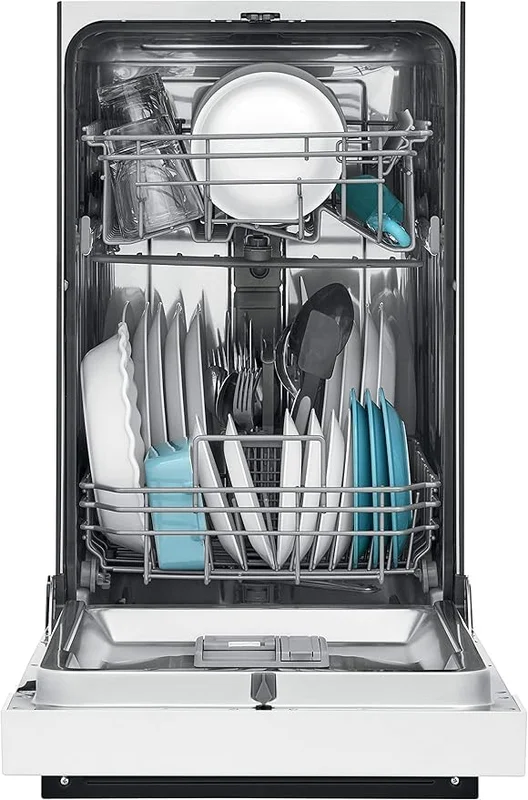
Honeywell 18 inch built-in style dishwasher in white
$339.98
1-year limitedCheck price →
021-year limited

COMFEE' 18 Inch Built-in Dishwasher

NSF-listed, Energy Star certified, stainless steel tub
18 Inch · Energy Star & NSF · stainless steel tub · built-in style

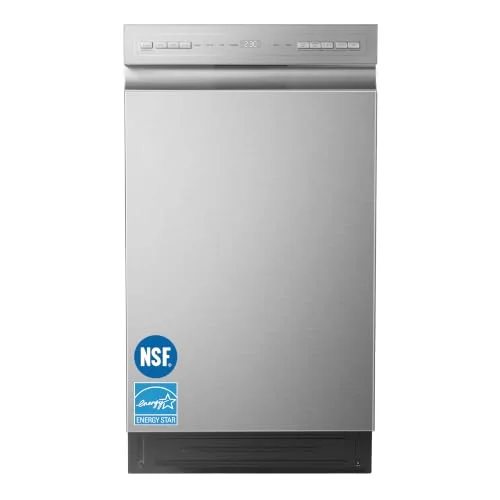
Same warranty term as the Honeywell — the standard one year — at a slightly higher $399.00. The NSF listing is a certification worth noting on its own terms, independent of the warranty question, since it speaks to sanitation standards rather than coverage length. As with the Honeywell, the warranty term here doesn't differentiate the unit; the specification sheet does.

The trade-offNothing in the published warranty term sets this unit apart from the Honeywell. If warranty length specifically is the deciding factor for you, it points toward the SUNVIVIPRO instead — though that comes with a size and price jump of its own.

COMFEE' 18 inch built-in dishwasher with stainless steel tub
$399.00
1-year limitedCheck price →
0318 months

SUNVIVIPRO 24" Built-in Dishwasher

A 24-inch, 14–16 place-setting unit with an above-standard warranty term
24 Inch · 14–16 place settings · stainless steel · 8 wash programs · Energy Star certified

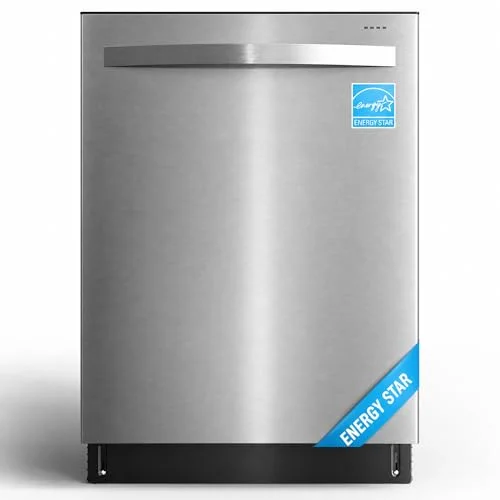
The only unit of the three stating more than the twelve-month standard, at $489.99. It's also the biggest machine here by a wide margin — 14 to 16 place settings against 8, a full-size 24-inch footprint rather than 18-inch. The warranty term and the size increase arrive together, which makes sense given the economics covered above: a bigger-ticket unit can more easily absorb the cost of a longer coverage window.

The trade-offAn 18-month stated term is longer, not necessarily backed by a larger service network — treat it as one favorable data point, confirm what tier of coverage (parts, or parts and labor) it actually includes, and register the unit promptly so that extra six months is actually usable if you need it.

SUNVIVIPRO 24 inch built-in dishwasher in stainless steel
$489.99
18-month warrantyCheck price →
FAQ

Common questions about portable dishwasher warranties

Does a one-year warranty mean the whole machine is covered for a year?

Not unconditionally. A standard one-year limited warranty on units like the Honeywell and COMFEE' typically covers manufacturing defects and normal-use mechanical failure — the pump, motor, control board or heating element breaking down under ordinary household use. It typically excludes damage from improper installation, hard water or detergent misuse, cosmetic damage, and any commercial or rental use if the warranty is specified as residential. Read the listed exclusions, not just the headline number.

What's the difference between parts coverage and labor coverage?

Parts coverage means the manufacturer ships a replacement part but you pay for or arrange the installation. Parts-and-labor coverage means the manufacturer also covers the cost of installing that part, usually through an authorized repair process. A warranty bullet that just says "1-year warranty" without specifying which tier applies is not detailed enough to compare against a competitor's listing — confirm directly with the seller or on the full warranty document if it isn't stated.

Does the SUNVIVIPRO's 18-month warranty mean it's better built than the Honeywell or COMFEE'?

It's a meaningfully longer stated commitment, which is worth factoring into a decision between similarly specced units. But a published warranty length is a business decision about expected liability, not an independent measurement of build quality, and it says nothing about claim turnaround time or parts availability. Treat it as one data point alongside price, size and place-setting count — not as proof on its own.

What should I save or photograph before I even plug in a new portable dishwasher?

Photograph the shipping box from all sides before opening it, photograph the serial and model number plate, save the order confirmation and invoice as a file rather than leaving it buried in an inbox, photograph the unit's exterior condition right after unboxing, and keep any printed warranty card or manual. Doing this before the first wash means a future claim is held up by the manufacturer's process, not by your own missing paperwork.

Keep reading

Next, from this site