Best Portable Dishwashers
Comparison · 24-inch built-in vs 18-inch portable

24-inch built-in, or 18-inch portable? The gap is bigger than it looks.

An 18-inch portable and a 24-inch built-in get filed under the same search term, and that's where the confusion starts. One tops out around 8 place settings. The other is built to hold 14 to 16. That isn't a modest upgrade — it's close to double the capacity, and it comes from a completely different kind of machine with a completely different installation.

By Ilane Tall · Updated November 13, 2026 · Research-based.

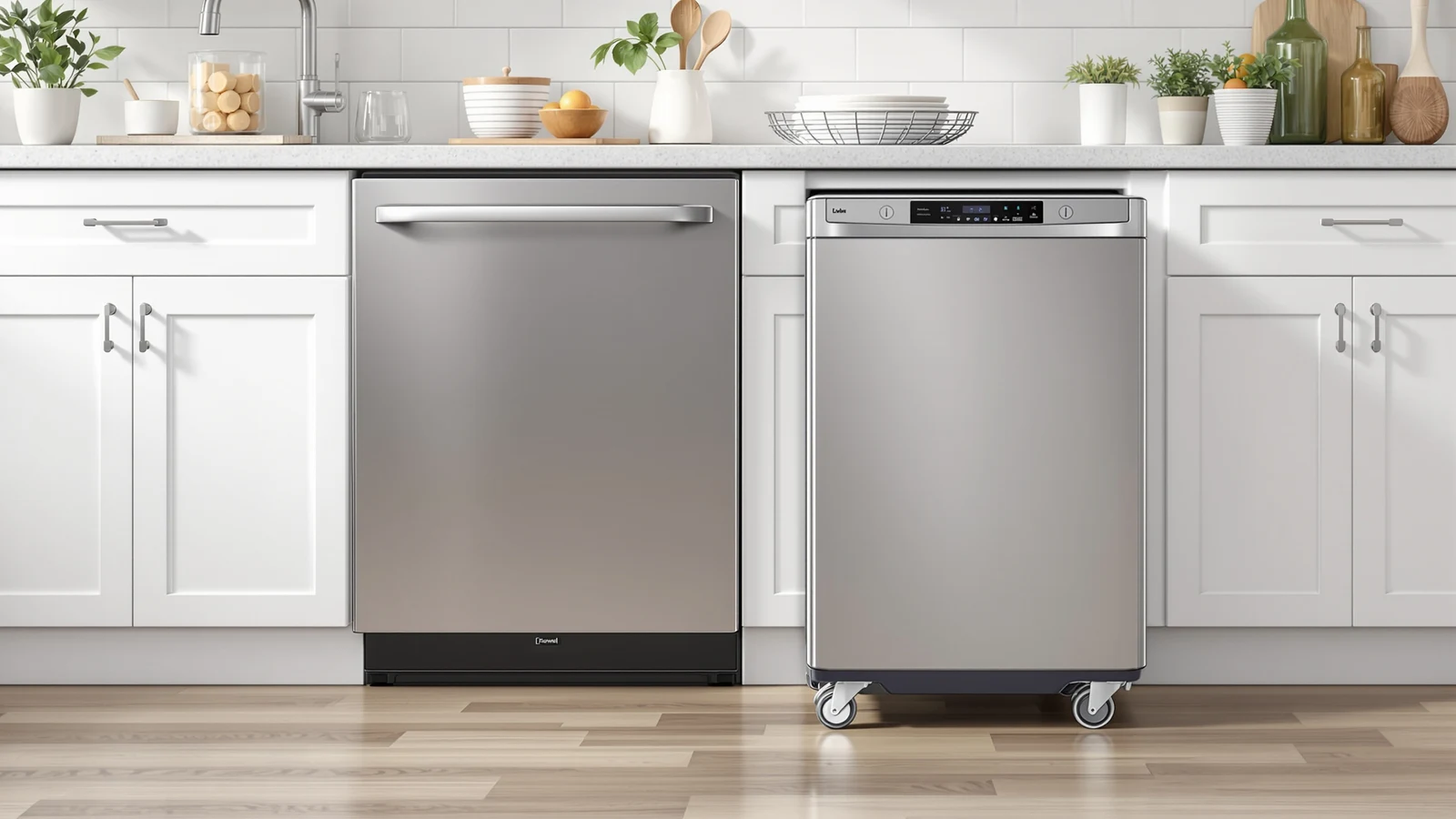
A 24-inch stainless steel built-in dishwasher beside a narrower 18-inch portable dishwasher on casters, side by side in a kitchen

Reader-supported: we may earn a commission when you buy through the links on this page, at no additional cost to you. Prices move constantly — confirm the live price before you order.

Shoppers comparing "portable dishwashers" usually assume they're picking between similar machines at different price points. They aren't. An 18-inch unit — whether it rolls on casters or sits built into a cabinet opening at that narrower width — is sized around roughly 8 place settings, the figure KoolMore's 18-inch ADA panel-ready model states directly in its own listing title. A 24-inch built-in like the SUNVIVIPRO is rated for 14 to 16.

Quick answer: if you're comparing these two widths on capacity alone, the 24-inch machine wins by a wide margin — nearly double the place settings for, in this case, a lower list price. The catch is that the two machines don't compete for the same installation. One rolls to the sink and back; the other goes into a permanent cabinet cutout and stays there. Below, we work through the capacity math, why 24-inch units are the exception rather than the rule in this category, the cabinet opening a 24-inch machine actually needs, why price here runs backwards from what you'd expect, who the extra settings are actually for, and what changes about the install itself.

How this page is built

We compare published specifications, listing titles and live pricing for the specific machines named below. We do not physically test these machines, we do not run a testing lab, and we do not publish ratings we cannot verify — Amazon returns no rating or review count for this category, so there are no stars on this site. Where a spec isn't published for a given listing, we say so rather than guess at it, and we treat manufacturer capacity claims as claims, not measurements.

The number

8 place settings vs 14-16: what the gap means for a real week of dishes

A place setting is a defined unit, not marketing language: roughly a dinner plate, a side plate or bowl, a glass, a cup and saucer, and one person's cutlery — about ten items per setting. It's the standard the industry has quoted capacity against for decades, which is exactly why an 8-setting machine and a 14-to-16-setting machine are directly comparable, even though they come from entirely different product classes.

Eight settings, the figure the KoolMore KM-DW1852-PR lists for its 18-inch ADA panel-ready dishwasher, covers one real dinner for a family of four with almost nothing left over — no serving dishes, no pots, no next morning's breakfast bowls stacked on top. Run it once a day and you're washing on a tight schedule: load it after dinner, run it overnight, unload before the next meal creates more dishes than the rack has room for.

Fourteen to sixteen settings, what the SUNVIVIPRO 24-inch built-in is rated for, changes the math completely. That's enough for a full day's dishes for a family of four or five — breakfast, lunch dishes left in the sink, dinner for the whole table, plus the mixing bowls and serving dishes that an 8-setting machine simply has no room for. In practice it means most households can run the dishwasher once a day, or even skip a day, instead of timing every load around whether there's space left.

The place-setting number is a manufacturer claim measured with standardized crockery, not your actual dish set, so treat both figures as ceilings rather than promises — real capacity typically lands a bit under the stated number once oddly shaped bowls and large pots enter the rack. Even accounting for that margin, the gap between "tight daily load" and "skip a day if you want to" doesn't close.

Market shape

Why 24-inch units are rare in a category built around 18-inch and countertop machines

Search "portable dishwasher" and the results are dominated by two classes: countertop machines that sit on the worktop and run from a tank or faucet, and 18-inch freestanding units on casters that roll to the sink. A 24-inch built-in dishwasher — the SUNVIVIPRO being the example named in this comparison — shows up far less often, and that's not an accident of search results. It's a function of what each width is actually built to do.

18-inch and countertop machines exist specifically to serve kitchens that can't take a built-in: no dishwasher cabinet, no plumbing already run for one, a rental where cutting into cabinetry isn't allowed. That's the entire premise of the "portable" category — a dishwasher for a kitchen that was never designed around one. A 24-inch machine solves a different problem: it's the standard width of a normal, permanent, under-counter dishwasher in American kitchens. If a kitchen already has a 24-inch cabinet opening and the plumbing and power to match, the simplest and usually cheapest answer is a standard built-in dishwasher from the major appliance aisle — not a specialty 24-inch unit sold and marketed inside the portable-dishwasher category.

So a 24-inch listing in this category tends to serve a narrower slice of buyers than the 18-inch and countertop machines around it: someone who already has the cabinet opening, already has the plumbing, but for whatever reason — budget, timing, a landlord who specified a particular brand list — is shopping outside the big-box built-in aisle. That's a real but smaller audience than "I have no hookup at all," which is the audience the rest of this category exists to serve. Fewer buyers looking for exactly that combination means fewer listings built around it, which is the simplest explanation for why 24-inch units stay the exception rather than the rule here.

The cutout

Cabinet width, depth, and the cutout most kitchens weren't built for

This is where the two machines stop being comparable as a simple upgrade decision. An 18-inch portable — whether it rolls on casters or drops into a slim built-in opening — needs an 18-inch-wide space and nothing more structural than that. A 24-inch built-in dishwasher needs a dedicated 24-inch cabinet bay: a permanent gap in the lower cabinet run, sized to the industry-standard built-in dishwasher opening, with a water supply line, a drain connection and a dedicated electrical circuit already run to that spot, or room to run them.

Kitchens that were originally laid out around 18-inch or countertop portables — a common situation in older apartments, RVs and smaller rental units — typically don't have a spare 24-inch bay sitting empty. That space, if it exists at all, is usually occupied by a base cabinet with drawers, a trash pull-out, or the under-sink cabinet itself. Fitting a 24-inch built-in into a kitchen that wasn't planned around one means removing a cabinet, extending or rerouting the water and drain lines, and in some cases coordinating with an electrician for the circuit — the kind of work that's straightforward for a contractor during a renovation and a serious undertaking for a renter doing it after the fact.

This cutout question is exactly why dimensions deserve more attention than most listings give them; see our depth and cabinet clearance guide for how a few extra inches of depth or width quietly rules out a model that looked fine on paper. The practical takeaway here: before comparing place settings at all, confirm whether your kitchen actually has — or can realistically gain — a 24-inch dishwasher bay. If it doesn't, the capacity advantage of the SUNVIVIPRO or any 24-inch unit is moot, because it can't go in.

Money

Price doesn't scale with capacity here — and that's worth unpacking

If capacity and price moved together, the 14-to-16-setting SUNVIVIPRO should cost noticeably more than the 8-setting machines around it. It doesn't. At $489.99, the SUNVIVIPRO 24-inch built-in is priced below both 18-inch portables in this comparison: the SD-9263SSC at $599.99 and the KoolMore KM-DW1852-PR at $643.07. Nearly double the place settings, and it's the cheapest of the three.

Part of the answer is what you're actually paying for in each class. The 18-inch portables carry the cost of being mobile and self-contained: a cabinet-style exterior finished on all visible sides because it has to look presentable sitting out in a kitchen, casters and a locking mechanism, and a water-connection kit — hoses, a faucet adapter, a quick-connect coupler — built in, because the whole point of the machine is that it needs no permanent plumbing. The KoolMore's ADA panel-ready design and 52 dB rating add further engineering on top of that. A 24-inch built-in carries none of that overhead. It's designed to be hidden behind cabinetry, finished on the front only, with no casters, no faucet adapter kit, and no need to look good as free-standing furniture — because once it's installed, nobody sees it again.

Scale works in the built-in's favor too. 24-inch is the standard dishwasher width sold across the entire mainstream appliance market, which means far higher production volume and more manufacturing competition driving the entry tier down, even for a unit marketed through the portable-dishwasher category rather than a traditional appliance retailer. An 18-inch portable, by contrast, is a comparatively niche width built specifically for the smaller slice of the market that needs mobility — and niche width plus built-in mobility hardware is a more expensive combination to manufacture than people expect.

The number worth sitting with: on a pure price-per-place-setting basis, $489.99 ÷ 15 (the midpoint of 14–16) works out to roughly $33 per setting for the SUNVIVIPRO, against roughly $75 to $80 per setting for the 18-inch machines. That's not a close call — it's the built-in winning on both total price and capacity at once. The 18-inch machines aren't overpriced for what they are; they're priced for mobility and plumbing-free operation, a feature the SUNVIVIPRO doesn't offer at any price, because it isn't portable at all once it's installed.

The real question

Who actually needs 14-16 place settings vs who just thinks they do

Capacity envy is real, and it's easy to look at "nearly double the settings for less money" and assume bigger is simply better. For a specific slice of buyers, it is. For a larger slice, the 8-setting class is already more than enough, and the extra capacity solves a problem they don't actually have.

14-16 settings earns its keep for:

  • Households of four or more who currently run an 8-setting machine twice a day, or who hand-wash the overflow because the rack filled up after dinner.
  • Anyone who entertains or cooks in volume — holiday dinners, weekly batch cooking, serving dishes and large pots that eat an 8-setting rack's capacity in one go.
  • Buyers who already have the 24-inch cabinet bay, plumbing and electrical in place — for this group the SUNVIVIPRO's lower price and higher capacity make the decision easy, since the installation cost that usually offsets a built-in's savings has already been paid for by whoever built the kitchen.

8 settings is already the right size for:

  • One or two people, where a full 8-setting load already represents two or three days of normal dish accumulation, not one.
  • Renters and movers who need the machine to come with them — the entire reason the 18-inch portable class exists, and a job a 24-inch built-in cannot do once it's plumbed into a cabinet.
  • Anyone without a spare 24-inch cabinet bay, which, per the cutout problem above, makes the capacity question moot regardless of household size.

The honest version of this advice: capacity should be sized to how your kitchen actually fills up between washes, not to the biggest number on the spec sheet. A single person buying 14-16 settings because it was the better deal on paper will still only ever run it half full, which defeats most of the water and time savings a larger machine is supposed to deliver in the first place.

Installation

Dropping in a 24-inch unit vs rolling in an 18-inch portable

The two installs aren't variations on a theme — they're different categories of work, and that difference is the real reason this comparison matters more than the place-setting numbers alone suggest.

The 18-inch portable: no tools beyond the box

Both 18-inch machines in this comparison — the SD-9263SSC and the KoolMore KM-DW1852-PR — are built to connect without any permanent plumbing work. Unbox it, roll it to the sink, attach the faucet adapter that comes in the box, plug it into a standard outlet, and run it. No electrician, no plumber, and nothing about the kitchen itself changes: the cabinets, counters and outlets stay exactly as they were. That's the whole value proposition of this class, and it's why first-run advice like running a new portable empty before the first real load applies directly to both of these machines.

The 24-inch built-in: a permanent installation

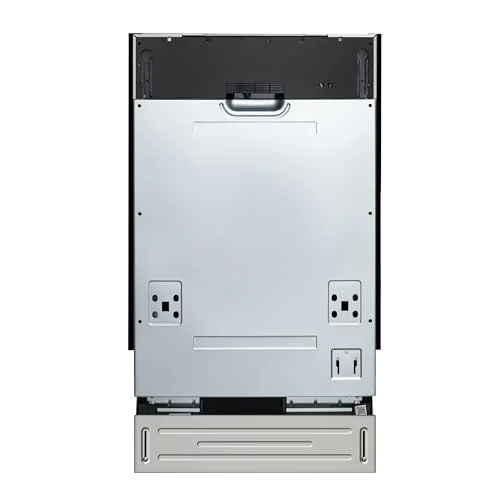
The SUNVIVIPRO is a different undertaking entirely. It needs to be slid into and secured inside a 24-inch cabinet bay, connected to a dedicated water supply line, hard-plumbed to a drain, and wired to its own electrical circuit — the standard requirements for any built-in dishwasher, this one included. If the cabinet bay, plumbing and circuit are already there from a previous dishwasher, installation is a matter of hours for someone comfortable with basic plumbing and electrical connections, or a standard job for an appliance installer. If any of those three things — bay, plumbing, circuit — isn't already in place, this becomes a renovation-scale project: cutting cabinetry, running new lines, and potentially pulling a permit depending on local code. Anything touching water supply lines, drain connections or electrical circuits is general information here, not a licensed trade instruction — a plumber or electrician should handle connections you're not confident about.

The practical filter: if you're choosing between these two machines and you don't already know, with certainty, that a 24-inch bay with working plumbing sits behind your cabinet doors, the 18-inch portable isn't just the safer choice — it may be the only one you can actually install this week.
At a glance

The three machines in this comparison

All figures are from manufacturer listings; prices are approximate and move frequently on Amazon.

DishwasherClassCapacityInstallPrice
SUNVIVIPRO 24″ Built-In24-inch built-in14–16 settingsPermanent cabinet bay$489.99Price
SD-9263SSC 18″ Portable18-inch portableNot stated in listingRolls to faucet, no plumbing$599.99Price
KoolMore KM-DW1852-PR 18″18-inch, ADA panel ready8 settingsRolls to faucet or built-in slot$643.07Price
The three machines

Where each one actually fits

01Most capacity

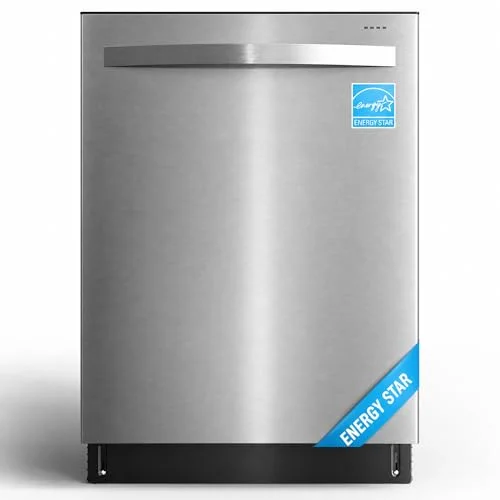
SUNVIVIPRO 24-Inch Built-In Dishwasher

Kitchens that already have a 24-inch cabinet bay, plumbing and circuit in place
24-inch built-in · 14–16 place settings · stainless steel · 8 wash programs · ENERGY STAR certified

This is the machine for the buyer who has the built-in infrastructure already and just wants the lowest-cost route to it. Fourteen to sixteen place settings is enough capacity that most households stop timing meals around rack space, and the eight wash programs and ENERGY STAR certification put it on par with mainstream built-ins twice its price. It is, flatly, not a portable appliance — once it's installed, it's installed.

The trade-offIt requires a genuine 24-inch cabinet opening with water, drain and electrical already run or ready to be run. If any of those three is missing, the install cost can erase the price advantage entirely.

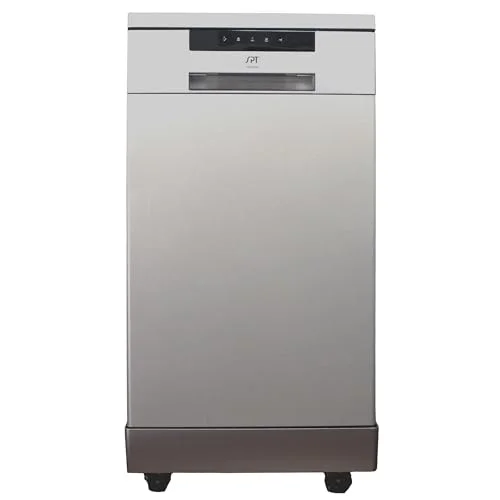
SUNVIVIPRO 24-inch built-in dishwasher in stainless steel
$490
14–16 settingsCheck price →
02Mobile, ENERGY STAR

SD-9263SSC 18-Inch Portable Dishwasher

Renters and kitchens with no spare cabinet bay, who still want certified efficiency
18-inch portable · stainless steel · ENERGY STAR certified

The SD-9263SSC's listing doesn't publish a place-setting count, which is worth flagging rather than guessing past — what it does state plainly is ENERGY STAR certification on an 18-inch frame, which matters in a class where plenty of listings carry no efficiency certification at all. It rolls to the faucet, connects without tools beyond the included adapter, and asks nothing of your cabinetry.

The trade-offWithout a stated place-setting figure in this listing, capacity-conscious buyers should check the current Amazon listing directly before assuming it matches other 18-inch machines in this category.

SD-9263SSC 18-inch portable dishwasher in stainless steel
$600
ENERGY STARCheck price →
03ADA panel ready

KoolMore KM-DW1852-PR 18-Inch Dishwasher

Kitchens needing accessibility compliance, or anyone who wants a quieter 18-inch machine
18-inch, ADA panel ready · 8 place settings · 52 dB rated · UL and ENERGY STAR certified

Of the two 18-inch machines here, this is the one with a stated capacity — 8 place settings, right in the listing title — plus a 52 dB noise rating and both UL and ENERGY STAR certification. ADA panel-ready construction means it can accept a custom front panel to blend into cabinetry, a detail that matters for anyone installing it as a built-in slim unit rather than a free-rolling portable.

The trade-offAt $643.07 it's the most expensive machine in this comparison despite having the smallest stated capacity — the ADA-ready construction and certifications are what you're paying the premium for, not extra place settings.

KoolMore 18-inch ADA panel-ready dishwasher in stainless steel
$643
8 place settingsCheck price →
The decision

Buy this one if…

Buy the 24-inch built-in if

All of these are true

You have a 24-inch cabinet bay with water, drain and electrical already run, or budget set aside to have them run. You're staying in this kitchen, since the machine isn't coming with you. And your household genuinely fills an 8-setting rack more than once a day. Miss the cabinet-bay requirement and the comparison is over before it starts — the capacity and price advantage can't be used.

Buy an 18-inch portable if

Any one of these is true

You're renting, or expect to move. You don't have a spare 24-inch cabinet bay, or aren't sure. You want zero plumbing or electrical work beyond plugging it in. Or your household is one or two people, where 8 settings already covers two to three days of normal dish accumulation rather than one.

The honest bottom line

On paper, the SUNVIVIPRO wins this comparison on every number that matters — more capacity, lower price, real certification. In practice, most people shopping "portable dishwasher" are shopping it specifically because they lack what a 24-inch built-in requires: a dedicated cabinet opening and the plumbing to match. For that larger group, the comparison was never really close, because one of the two options was never actually available to them. The smaller group who do have the cabinet bay already in place should treat this less as a hard choice and more as confirmation that the built-in is the better buy.

FAQ

Common questions about 24-inch vs 18-inch capacity

How many place settings does a 24-inch built-in dishwasher actually hold?

The SUNVIVIPRO 24-inch built-in is rated for 14 to 16 place settings, roughly double the 8 settings the KoolMore 18-inch model lists. A place setting is a defined unit — about a dinner plate, side plate or bowl, glass, cup and saucer, and one person's cutlery — so the two figures are directly comparable even though the machines are different widths and classes. Treat both as manufacturer claims measured with standardized crockery rather than guaranteed real-world capacity.

Why is the SUNVIVIPRO cheaper than the 18-inch portables despite holding more?

The 18-inch machines carry extra manufacturing cost for being mobile and self-contained — a finished exterior on all sides, casters, a faucet-adapter kit and the plumbing-free connection system that lets them run without a hookup. A 24-inch built-in is designed to be hidden behind cabinetry and finished on the front only, with no mobility hardware, and it's made at far higher volume since 24-inch is the standard dishwasher width across the mainstream appliance market. Lower manufacturing overhead and higher production scale outweigh the larger tub.

Can I install a 24-inch built-in dishwasher if I currently use a portable?

Only if there's a genuine 24-inch cabinet bay available, or you're prepared to create one. A built-in needs a dedicated water supply line, a drain connection and its own electrical circuit — requirements an 18-inch portable sidesteps entirely by connecting to a faucet and a standard outlet. If the bay and connections already exist from a prior dishwasher, installation is straightforward for an appliance installer; if they don't, it becomes cabinetry and plumbing work, and any connection you're not confident making yourself should go to a licensed plumber or electrician.

Who actually needs 14 to 16 place settings instead of 8?

Households of four or more that currently run an 8-setting machine more than once a day, frequent entertainers who need room for serving dishes and large pots, and anyone who already has the 24-inch cabinet infrastructure in place and would otherwise pay more for less capacity. One or two people rarely fill an 8-setting rack in a single day, so for that group the larger machine mostly means running it partly empty rather than saving real time.

Keep reading

Next, from this site