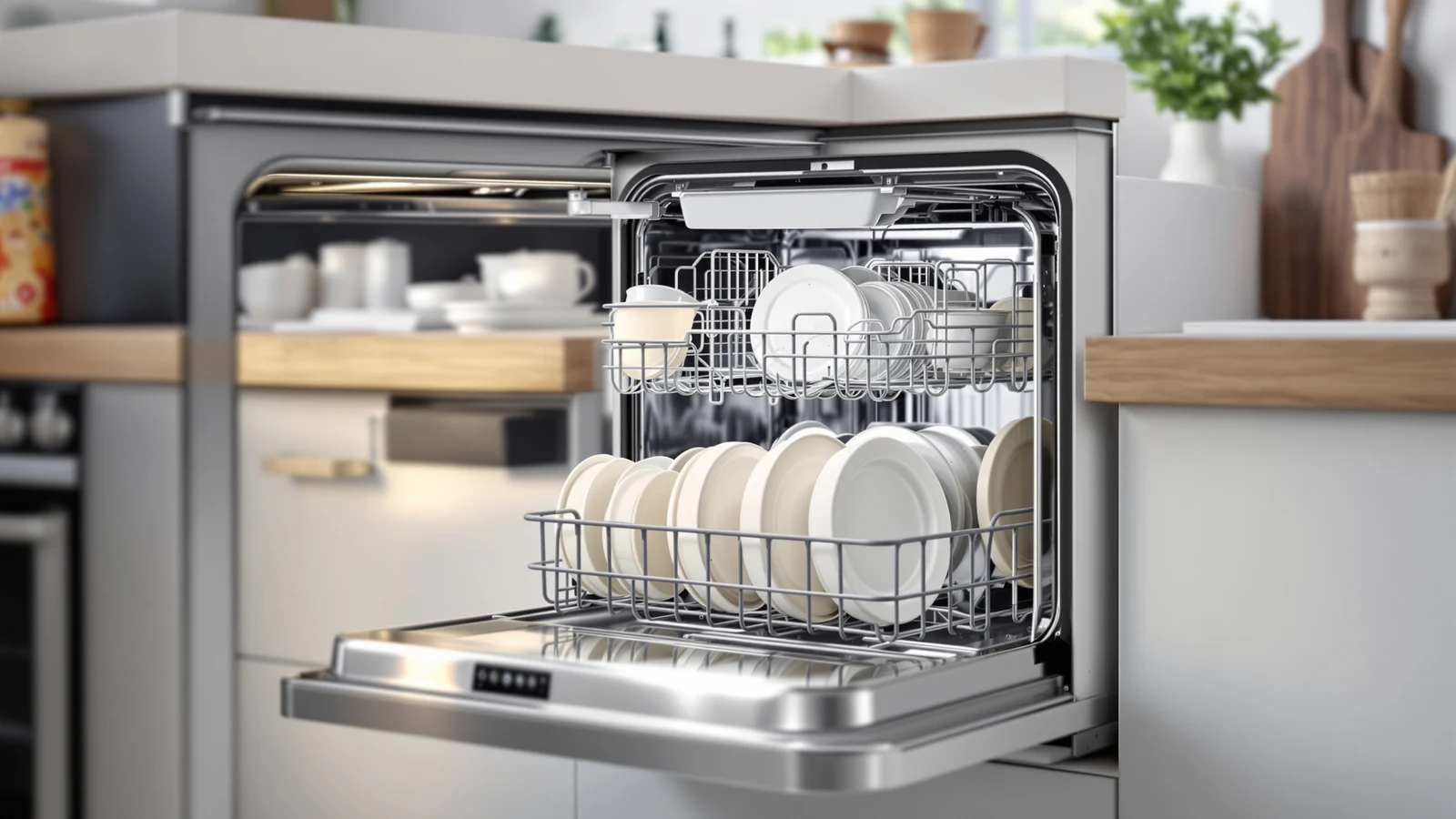
01Glass door, more programs
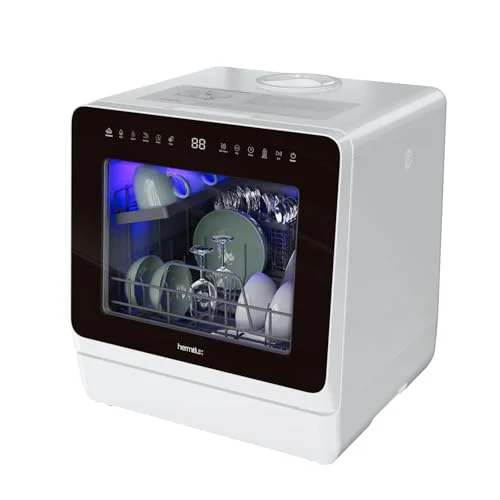
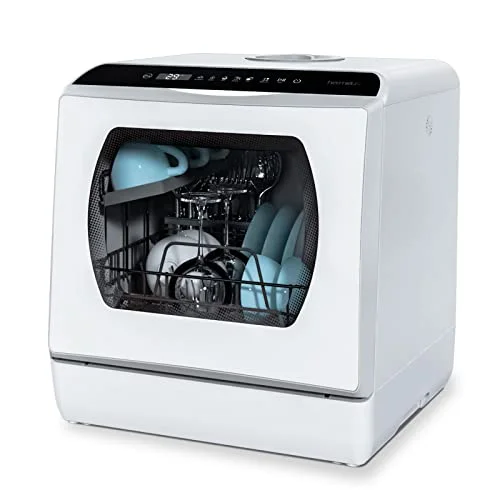
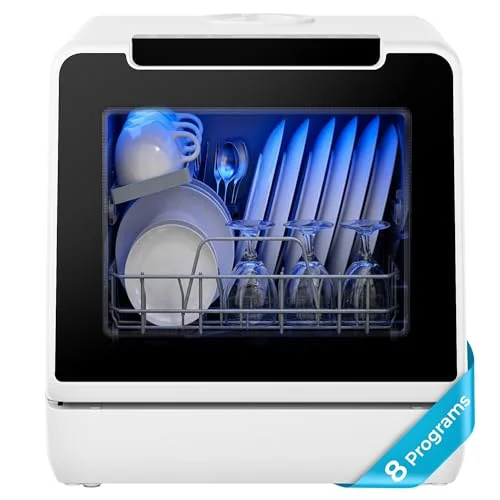
Hermitlux Countertop Dishwasher, Black Glass Door, 10 Functions
For anyone who wants the window and the deepest cycle list of the four
Countertop · Black Glass Door · 7 washing programs · 10 functions
This is the Hermitlux lineup's larger glass-door machine: a 7-program wash list sitting under a stated 10 functions, which on a countertop dishwasher this size usually means the base cycles plus options like a delay timer or extra rinse layered on top, rather than 10 separate wash types. It's the only one of the four built around both the window and the longer programme list, which makes it the pick if you want to watch the machine run and have more than a handful of cycles to pick from.
The trade-offAt $299.99 it's the most expensive of the four, and the listing doesn't give a tank size or place-setting count the way the plainer EUHOMY listings do — check the current listing for those specifics before you buy.