Best Portable Dishwashers
Guide · UV and Hygiene cycles

UV or Hygiene cycle? Two different claims.

A handful of portable dishwashers advertise a UV light, a Hygiene program, or both. They are not the same feature, they don't do the same job, and the spec sheet usually tells you which one you're actually getting — if you read past the marketing name on the control panel.

By Ilane Tall · Updated October 7, 2026 · Research-based.

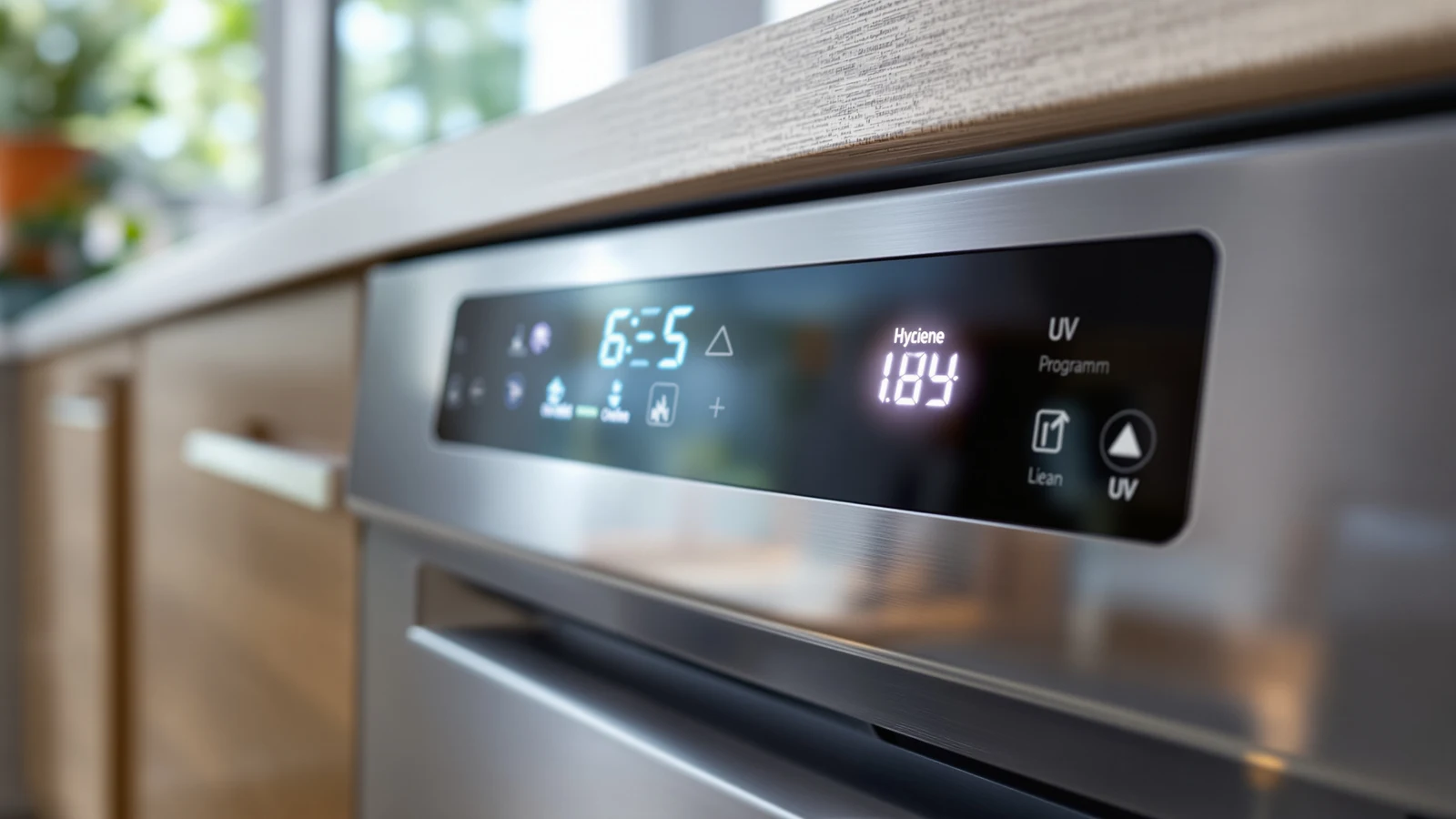
Close-up of a portable dishwasher control panel with a hygiene cycle setting, glasses visible inside through the open door

Reader-supported: we may earn a commission when you buy through the links on this page, at no additional cost to you. Prices move constantly — confirm the live price before you order.

"UV Hygiene" is printed on a handful of portable-dishwasher control panels and sold as one feature, but it is almost always two unrelated claims stapled together by a marketing team. One claim is about light: a UV bulb or LED inside the tub, switched on separately from the wash. The other claim is about heat: a program that runs hotter and longer than Normal, intended to do more than a standard wash against grease, residue and the things that collect on a cutting board or a baby bottle. A machine can have either, both, or — more often than the name suggests — just the second one with a flattering label on it.

That distinction matters because the two claims rest on completely different kinds of evidence. A cycle temperature is a number you can read off a spec sheet and compare directly: a Hygiene program that runs at 162°F is hotter than Normal, and that's a fact, not a promise. A UV sanitizing claim is a different kind of statement — it's about germ-killing efficacy, which depends on exposure time, bulb output and what's actually blocking the light inside a loaded tub, none of which a consumer spec sheet discloses. It's the same kind of gap we found when we looked at smart features and WiFi claims on these machines: a name on the control panel and a verified spec are not the same thing. Below: what each claim actually says for the three machines in our database that carry one of these settings, where the setting is genuinely useful, and where it's a line on a feature list doing more work than the hardware behind it.

How this page is built

We compare published specifications, what the product listing claims, and general facts about how dishwashers and UV sanitizing work. We do not physically test these machines, we do not run a testing lab, and we do not publish ratings we cannot verify — Amazon returns no rating and no review count for this category, so there are no stars on this site. Where a judgment is ours rather than a specification, we say so plainly.

The split

UV light and a Hygiene cycle are not the same feature

Claim one: a high-temperature wash program

This is the more common of the two, and the more verifiable. A Hygiene, Sanitize or Baby-Care cycle is, mechanically, the same wash process as Normal — spray arms, detergent, a pump — run at a higher water temperature and usually for longer. Hot water does real, well-understood work: heat denatures proteins and breaks down grease faster than cool water, and a longer soak gives chemistry more time to work on residue that a quick cycle leaves behind. None of that is exotic. It's the same principle a commercial dish-sanitizing rinse relies on, just at a smaller scale and a lower temperature than a commercial unit would use.

The useful thing about this claim is that it comes with a number. The COMFEE' Mini Dishwasher lists a 162°F High-Temp function as part of its spec sheet — a stated temperature you can compare directly against another machine's Normal cycle, which typically runs closer to 120–140°F on this class of appliance. A number like that is a claim we can repeat, because it's the kind of figure a manufacturer puts on a spec sheet rather than a marketing page.

Claim two: a UV light inside the tub

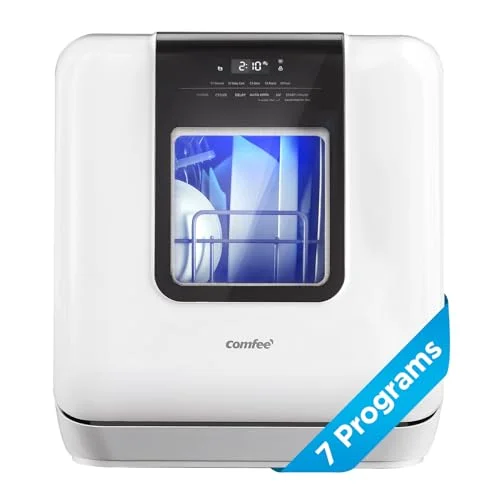
The second claim is about light, not heat. Some listings in this category use "UV Hygiene" as the name of a cycle, which invites the reader to assume there's a UV bulb cycling through the wash. The COMFEE' Countertop Dishwasher with 6L tank lists "UV Hygiene" among its seven programs and also lists an Auto Door Open function — but its published spec sheet, the one we have in our database, does not break out a UV emitter's wavelength, exposure time, or an independent efficacy test. That's not an accusation that the feature doesn't exist; it's a statement of what is and isn't on the sheet in front of us. We report the program name because the listing uses it, and we are explicit that we can't verify a UV sanitizing claim the way we can verify a stated cycle temperature.

This is the core problem with "UV Hygiene" as a label: it borrows credibility from two different fields. A thermometer reading is physics anyone can confirm with a probe. A UV-C disinfection claim is a function of dose — intensity multiplied by exposure time, inside a specific geometry — and a listing bullet point almost never discloses enough of that to let a buyer judge it. Treat the two halves of the name separately, because the evidence behind them isn't remotely equal.
The picks

What the spec sheet says for each machine

The only figures on this page are the ones published for these three models. Where a spec isn't listed, we say so instead of guessing.

01Stated temperature

COMFEE' Portable Mini Dishwasher Countertop (Minilite)

The one machine here with a published cycle temperature
Countertop, mini · 1.32 Gal built-in tank, no hookup needed · 6 programs · 360° dual spray · 162°F High-Temp · air-dry function

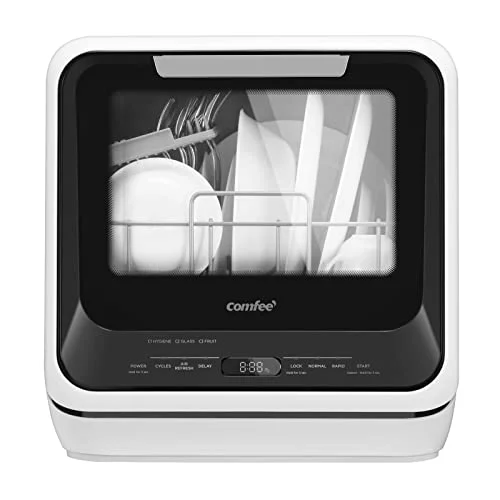
This is the machine on this page that gives us an actual number to work with. The listing states a 162°F High-Temp function as a named part of its program set, and that figure sits well above the 120–140°F range typical of a Normal cycle on a compact countertop dishwasher. Whatever else you think about a "hygiene" claim, a published temperature is something we can state as fact rather than paraphrase as a feeling — it's either on the spec sheet or it isn't, and here it is. Pair it with the air-dry function listed for the same model, and the practical case is straightforward: for a load of plastic containers or a cutting board that's been under raw chicken, run the hotter program and let the air-dry finish the job, rather than defaulting to Normal because it's quicker.

What we can't sayThe listing doesn't give a cycle length for the High-Temp program specifically, so we don't state one. If cycle duration matters to your routine, check the current listing or the included manual before you buy.

COMFEE' Portable Mini Dishwasher Countertop with built-in water tank
$229.99
162°F statedCheck price →
02The UV-named program

COMFEE' Countertop Dishwasher with 6L Tank (Miniplus Auto Door Open)

Buyers who want the extra program — with the UV part treated as a label, not a verified claim
Countertop, more interior space · 6 L built-in tank · 7 programs including "UV Hygiene" · Auto Door Open · for apartments, dorms & RVs

This machine's listing names a "UV Hygiene" program as one of seven cycles, alongside the Auto Door Open feature that pops the door at the end of a cycle to vent steam — itself a meaningfully useful spec, since these machines mostly dry with residual heat and air rather than a heating element. We're repeating what the listing states: a program carries that name. We are not repeating a UV output figure, an exposure time, or an independent sanitizing-efficacy test, because none of those appear on the spec sheet we have for this product. If the UV half of the claim matters to your decision — say, because you specifically want a light-based disinfection step — that's a question for the current Amazon listing and the manufacturer's documentation, not something we can confirm or deny from the data in front of us.

What we can't sayNo published UV wavelength, bulb wattage, or exposure duration is in our database for this model, so we don't assign the "UV Hygiene" name any sanitizing performance figure of its own.

COMFEE' Countertop Dishwasher with 6L tank and UV Hygiene program
$337.99
7 programsCheck price →
03A different lever on hygiene

HAVA Countertop Dishwasher with Water Softener

Buyers for whom "clean" is a water-chemistry problem, not a temperature problem
Countertop · integrated water softener · softener setting by local water hardness · optimized ECO mode · enhanced energy efficiency

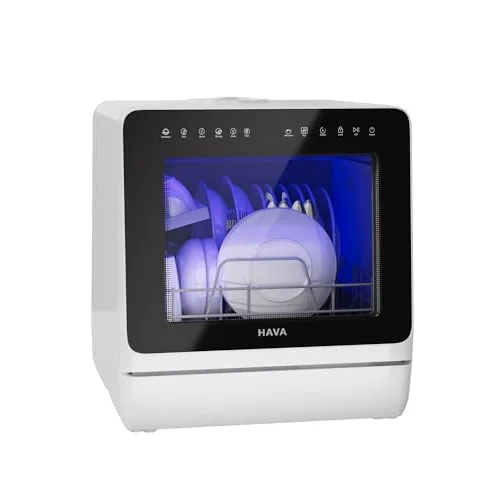
This machine doesn't carry a UV or named Hygiene program in our database, and we don't invent one for it. We include it here because it approaches the same underlying problem — getting dishes genuinely clean rather than just rinsed — from a different angle: hard water leaves a mineral film on glassware and on the heating surfaces inside the machine, and a film is exactly the kind of residue a hotter cycle or a UV light does nothing about. An integrated softener, set to match your water hardness, addresses a cause that neither heat nor light touches. If your water is soft already, this spec buys you nothing; if it's hard, it may matter more than either of the other two machines' named cycles.

What we can't sayThe listing doesn't state a specific cycle temperature for this model's programs, so we don't compare it directly against the 162°F figure above.

HAVA Countertop Dishwasher with integrated water softener
$313.65
Softener built inCheck price →
At a glance

The three machines, side by side

Figures are manufacturer specifications as listed. A blank cell means the spec isn't published, not that it's zero.

DishwasherNamed hygiene featureStated temperatureWater sourcePrice
COMFEE' MiniliteHigh-Temp function162°F1.32 Gal tank$229.99Price
COMFEE' Miniplus"UV Hygiene" program (named, not independently specified)Not stated6 L tank$337.99Price
HAVA with Water SoftenerNone named — softener addresses hardness insteadNot statedTank or faucet$313.65Price
Practical use

Where a hotter cycle earns its place

A high-temperature program isn't a feature you need every load. It's useful for a specific, recurring short list of items where the extra heat and extra time address a real risk rather than a cosmetic one.

  • Cutting boards. A plastic or composite cutting board that's handled raw meat or poultry picks up residue in surface scoring that a quick, cooler cycle may not fully clear. Running it on a hotter, longer program — rather than Normal — is the kind of use case a Hygiene or High-Temp setting is built for.
  • Baby bottles and feeding items. This is the textbook case manufacturers themselves point to when they name a cycle "Baby Care." Bottle parts, nipples and small feeding accessories benefit from the combination of heat and dwell time more than a dinner plate does, which is why this use case shows up explicitly in product copy for machines in this category.
  • Reusable containers and lids. Silicone and hard-plastic food storage absorbs odor and oil residue over repeated use. A hotter program does more to break that residue down than a standard wash, and it's a lower-stakes, lower-frequency use than cutting boards or bottles — worth reaching for a few times a month rather than every load.

What a hotter cycle changes beyond temperature is worth stating plainly: it typically means a longer cycle and more water heated per load, because getting water to a higher temperature and holding it there takes more energy and more time than a cooler, faster wash. None of the three machines here publishes a side-by-side cycle-length or water-use comparison between their standard and high-temperature programs, so we don't state exact numbers — but the general direction is consistent with how water heating works in any appliance: hotter and longer costs more, not less, per cycle. If you're running one of these machines off a limited water or power supply, on a boat or in an RV, that trade-off is worth weighing before you make the Hygiene cycle your default.

Our top picks

If you're shopping specifically for a hygiene-style cycle

Reading the spec sheet

What we can verify versus what we can't

Verifiable from a spec sheet

Treat these as facts

A stated cycle temperature, like the Minilite's 162°F figure, is a number the manufacturer commits to in writing and that a thermometer could in principle confirm. A program name appearing in the listed cycle list is also verifiable — we can confirm the listing says "UV Hygiene" is one of seven programs, because that's text on the page, not a performance claim. Price, tank capacity, and the presence of features like Auto Door Open fall in the same category: they're stated, checkable facts.

Not verifiable from a listing

Treat these as unconfirmed

A UV sanitizing or disinfection claim is not verifiable from a consumer product listing, because the dose that actually matters — intensity times exposure time, accounting for what blocks the light inside a loaded tub — is never disclosed at this price point. We also can't verify review sentiment, since Amazon's API returns no rating or review count for these products, and we won't paraphrase opinions we don't have data for. Where a listing's program name implies a tested outcome without backing it with a figure, we repeat the name and decline to repeat the implication. The same caution applies to a lot of this category's spec sheets — see our breakdown of what's actually in the box versus what the listing implies for another example of the gap between a bullet point and a verified fact.

FAQ

Common questions about UV and Hygiene cycles

Does a UV light in a dishwasher actually kill germs?

UV-C light can inactivate many microorganisms under the right conditions — that's established science used in water treatment and some medical equipment. Whether a specific countertop dishwasher's UV feature delivers a meaningful dose inside a loaded tub is a separate question, and it's one that consumer listings in this category don't answer with disclosed wavelength, intensity or exposure-time figures. We treat "UV Hygiene" as a program name on the spec sheet, not as a confirmed disinfection outcome, because we don't have the data to confirm it either way.

Is a Hygiene or High-Temp cycle the same as "sanitized"?

Not necessarily, and the word "sanitize" has a specific meaning in commercial food-service equipment that consumer countertop dishwashers generally don't test against or certify to. What a Hygiene or High-Temp program does, based on published specs like the Minilite's stated 162°F, is run hotter and typically longer than a Normal cycle — which does more real work against grease and residue than a cooler wash. Whether that meets a formal sanitizing standard isn't something the listing states, so we don't claim it does.

Does running the hotter cycle use more water and electricity?

None of the three machines in this guide publishes a direct water-use or energy comparison between their standard and high-temperature programs, so we can't give you an exact number. In general, heating water to a higher temperature and holding a cycle longer requires more energy per load than a shorter, cooler wash — that follows from how electric water heating works in any appliance, not from a specific test of these machines.

Should I run a Hygiene cycle every time instead of Normal?

Based on what the listings describe, these programs appear built for specific items — cutting boards, baby bottles, reusable containers — rather than as a replacement for Normal on everyday dishes. A longer, hotter cycle for every load means more time and more water heated per wash with little added benefit for a load of plates and glasses. Reserve it for the items where residue or grease is the actual concern.

Keep reading

Next, from this site