Best Portable Dishwashers
Guide · Cycle selection

Rinse-only or quick cycle? Know what you're skipping.

Every portable dishwasher in our database ships with a short program alongside its two-hour Normal cycle — and a fair number ship with a second, even shorter one that does not use detergent at all. Used on the right load, either one saves real time and real water. Used on the wrong load, it just dries dirty dishes faster.

By Ilane Tall · Updated October 10, 2026 · Research-based.

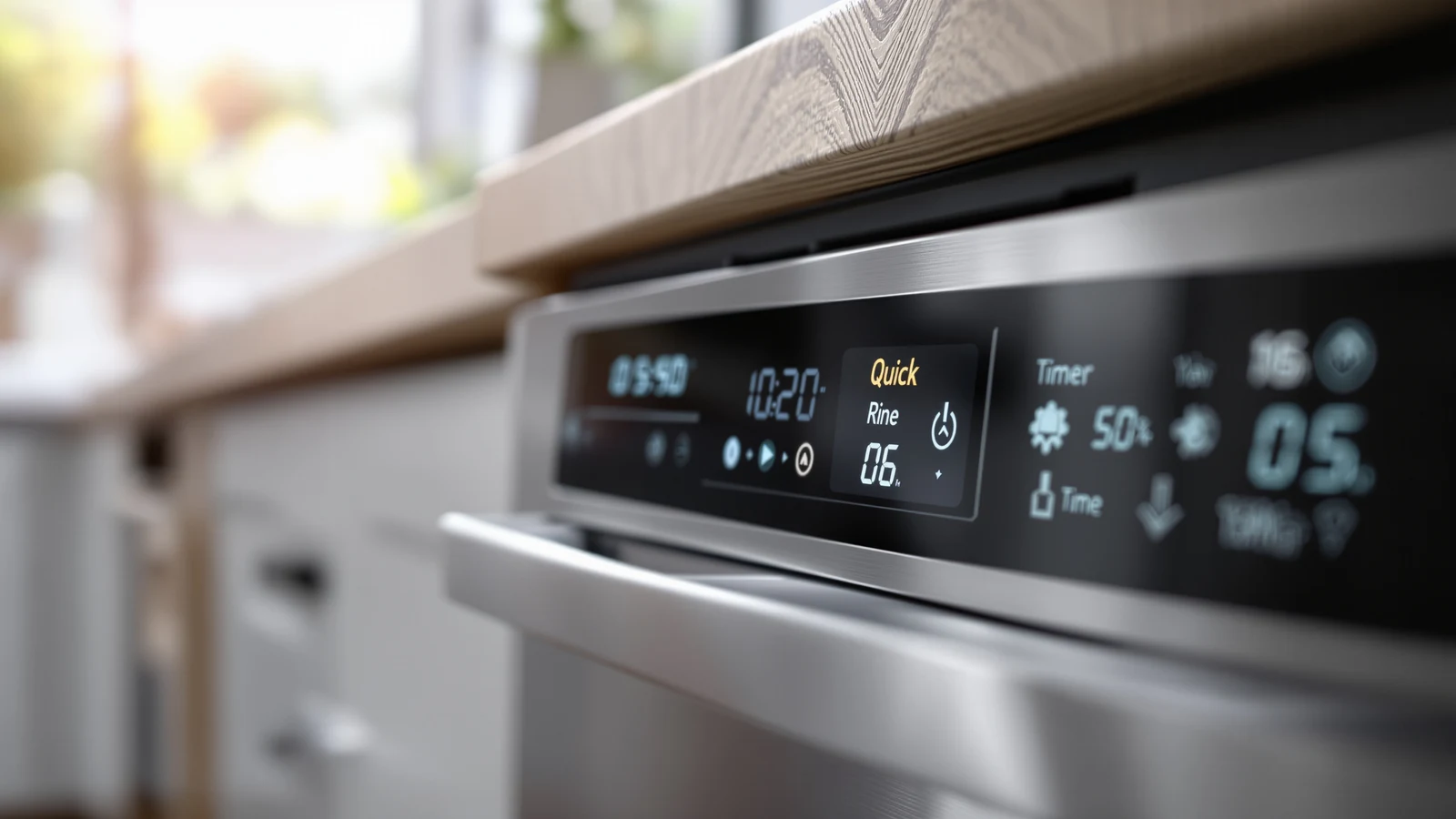
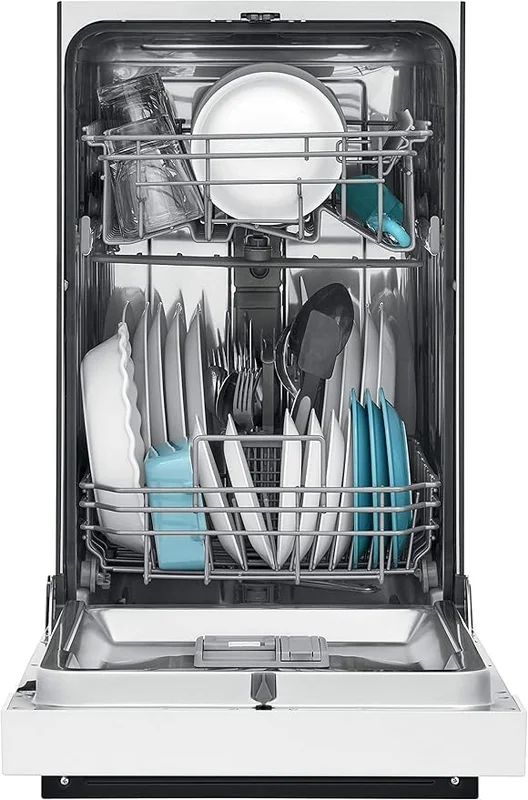
Clean glasses and lightly used plates in a portable dishwasher rack mid-cycle, representing a load light enough for a quick wash

Reader-supported: we may earn a commission when you buy through the links on this page, at no additional cost to you. Prices move constantly — confirm the live price before you order.

Portable dishwasher spec sheets are full of program names that sound interchangeable and aren't. "Quick wash," "Rapid," "Rinse," "Rinse only" and "Quick" show up across different control panels, and buyers reasonably assume they're all the same shortcut: a faster Normal. They're not. Some describe a genuinely shorter full wash — detergent, spray, rinse, done in under half an hour. Others describe a holding pattern: water and spray, no detergent, meant to keep food from drying onto a plate until a real cycle runs later that day.

The difference matters because the two fail differently. Run a true quick wash on a pan with baked-on sauce and you get a pan that looks rinsed and isn't clean. Run a rinse-only program expecting it to replace Normal and you get dishes that were never actually washed. This guide covers what each program mechanically skips, what four real portable and 18-inch dishwashers publish about their short cycles, when a quick cycle is the right call, and why the detergent dose that's right for Normal is often wrong for anything shorter.

How this page is built

We compare published program names, cycle counts, stated minute figures and temperatures straight off the manufacturer listings for the machines named below — plus general, non-product-specific facts about how dishwasher cycles are engineered. We do not physically test these machines, we do not run a testing lab, and we do not publish star ratings or review counts: Amazon's product data returns neither for this category, so there are none on this site. Where a program's exact cycle time isn't published, we say so rather than guess.

The mechanics

What a rinse-only or quick cycle actually skips

A full Normal or Heavy program on a portable dishwasher is long — commonly well over an hour, often close to two — because most of that time isn't spraying, it's waiting. The machine fills, heats the water to a wash temperature, holds it there through a soak phase so heat and detergent have time to break down dried starch and fat, drains, refills for a rinse, and often finishes with a heated or air-dry hold. Every one of those steps is a deliberate delay, not wasted motion.

A quick cycle shortens that sequence by cutting the soak and heat-and-hold phase down to almost nothing, running fewer fill-and-drain passes, and skipping or shrinking the drying phase at the end — the machine washes and rinses, then stops rather than holding heat to dry. It still uses detergent and still sprays; it simply doesn't give heat and chemistry the dwell time a greasy pan needs.

A rinse-only program is a different thing again. It's water and spray action with no detergent dose at all — not a faster wash, but a way to knock loose food off a plate and keep it from drying on before you run a real cycle. The clearest evidence that these are genuinely separate functions, not marketing names for the same shortcut, comes from the Honeywell 18-inch dishwasher, whose published program list includes both: pots & pans, normal wash, china, quick wash, rinse only, and energy saver, as six distinct selections on the same dial. If a manufacturer bothered to engineer and label both separately, they are not doing the same job.

The practical read: quick wash is for dishes that are lightly soiled but still need cleaning today. Rinse only is for dishes that don't need cleaning yet — they need to not get worse before the next full load.

By the spec sheet

Water and time saved, honestly quantified

None of the four machines here publish a per-cycle water figure for any program — that number simply isn't in the listing bullets, so we're not going to invent one. What manufacturers do publish, at least for one of our picks, is minutes, and minutes are a reasonable proxy for water: every fill-and-drain pass a dishwasher skips is water it didn't pump, heat or drain, so a cycle that runs in a fraction of the time is, by mechanical necessity, using a fraction of the water passes.

The one hard number in this guide comes from the EUHOMY countertop dishwasher: its Quick program is rated at 29 minutes. Set that against the category norm — Normal and Heavy programs commonly run from around ninety minutes to a little over two hours, because of the heat-and-hold soak phase described above — and a 29-minute Quick program is roughly a quarter to a third of that, sometimes less. That's the actual trade on offer: a program that can finish, start to done, in the time Normal spends just getting the water up to temperature.

The COMFEE' 18-inch built-in dishwasher and the Honeywell above both list a Quick (and, for Honeywell, a separate Rinse Only) program among their six cycles, but neither states a minute figure for it. We'd rather tell you that plainly than back into a number that isn't on the spec sheet. Treat "quick" as reliably shorter than Normal on every machine that offers it, but only treat a specific duration as real when the listing states one.

When it works

When a quick cycle is genuinely enough

The soak phase a quick cycle skips exists to deal with food that has had time to dry, bake or set. Take that time away and the cycle stops being a problem the moment the load doesn't need it. Two situations reliably don't:

  • Lightly used glassware and cups. A water glass, a coffee mug with dried-on residue only at the bottom, a wine glass rinsed moments after use — none of this carries the kind of baked-on soil the soak phase is built for. Glass and most everyday ceramic also tolerate the shorter, cooler wash-and-rinse sequence without the risk a greasy pan runs.
  • A same-day rinse. Dishes loaded within an hour or two of use, before anything has had the chance to dry and bond to the plate, are mechanically a different problem than dishes that sat overnight. Food that hasn't dried doesn't need heat and dwell time to loosen it — a shorter spray-and-rinse sequence does the job a Normal cycle would otherwise spend an extra hour accomplishing.

The shared thread is dwell time versus soil. If nothing on the rack has had the chance to dry, bake or cake on, the phase a quick cycle removes was never going to do any work anyway — you're not cutting a corner, you're skipping a step the load didn't need. That's also why these programs suit the lightest-use households best: someone running one glass and one plate through daily, or a dorm room washing between meals rather than stockpiling a full day's dishes.

It's also worth knowing about anywhere water itself is the scarce resource — a boat or RV running off a limited fresh-water supply benefits from a program that, with fewer fill-and-drain passes, asks less of the tank between refills. We cover that on its own in our guide to portable dishwashers for camping and boats.

The picks

The picks, and their shortest published cycle

01Shortest published cycle

EUHOMY Countertop Dishwasher, 6 Programs

The only machine here with a published minute figure for its short cycle
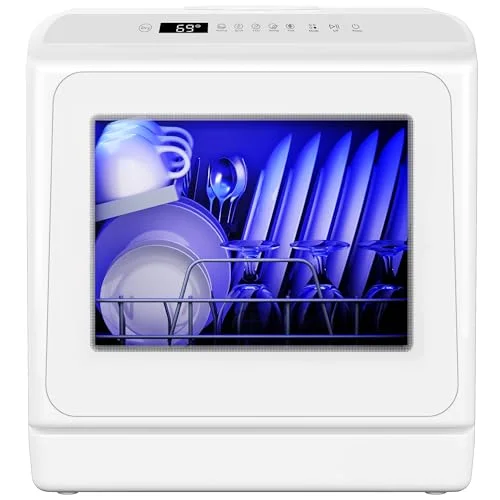
Countertop, Large · tank (5 L) or faucet · Normal, Quick, ECO, Baby Care/Heavy, Fruit, Dry · Quick: 29 min

Six named programs, and the one that matters for this guide states its own duration: Quick finishes in 29 minutes. That's worth taking as a manufacturer claim rather than a measurement, but it's also the only one of our four picks that commits to a figure at all — a spec sheet willing to be specific is easier to plan a load around. The same machine's Baby Care/Heavy program runs at 167°F, which tells you Quick almost certainly doesn't hold that kind of heat, consistent with what a short cycle gives up.

The trade-offCapacity is rated for 30-plus items with plates to 10.25 inches — comfortable for the lightly-soiled, same-day loads Quick is built for, tight for anything bigger.
EUHOMY countertop dishwasher with dual spray arms
$280
Quick: 29 minCheck price →
02Quick wash and rinse only, separately

Honeywell 18-Inch Dishwasher, 8 Place Settings

The clearest example of why quick and rinse-only are not the same program
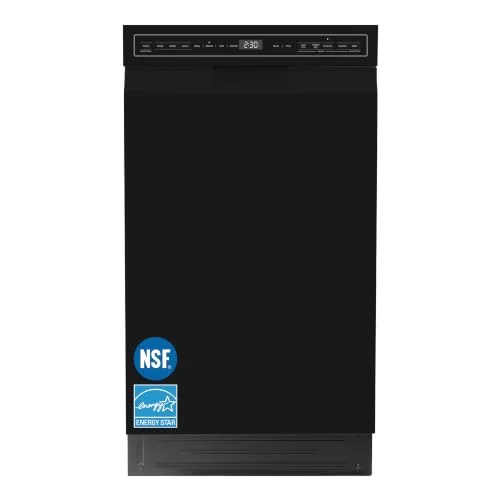
18 Inch, Built-In Style · 8 place settings · pots & pans, normal wash, china, quick wash, rinse only, energy saver · stainless tub · UL/Energy Star

Six programs, and this is the one listing that spells out quick wash and rinse only as two separate dial positions rather than folding them into one "fast" setting. That makes it the reference point for the distinction this guide is built on: quick wash still cleans, on a shortened schedule; rinse only holds dishes over, with no detergent step at all. Neither published duration is stated, but six distinct named programs — including a dedicated "pots & pans" cycle at the other end — says plainly that a short program was never meant as a substitute for a heavy one.

The trade-offNo specific cycle-time figures are published for quick wash or rinse only, so you're choosing the right program by name and intent, not by a stated minute count.

Honeywell 18-inch dishwasher in white
$400
Quick + rinse onlyCheck price →
03Quick, rinse and a detergent warning

COMFEE' 18-Inch Built-In Dishwasher

The listing that spells out why the detergent matters as much as the cycle
18-inch, built-in style · 8 place settings · Heavy, Normal, Eco, Delicate, Quick, Rinse · Heated Dry, Hi-Temp, Sanitize functions · Energy Star & NSF

Quick and Rinse sit alongside Heavy, Normal, Eco and Delicate — six programs plus three add-on functions (Heated Dry, Hi-Temp, Sanitize) layered on top of whichever base cycle you pick. No minute figure is published for Quick, but the listing is unusually direct about detergent: only dishwasher-specific detergent should go in, because regular liquid dish soap causes problems. That warning only gets more relevant on a shortened cycle with less time for anything to dissolve and rinse clear — the subject of the next section.

The trade-offLike the Honeywell, no stated duration for Quick or Rinse — budget conservatively and judge by the load, not a number on the box.

COMFEE' 18-inch built-in dishwasher with stainless steel tub
$399
Quick + RinseCheck price →

One more deserves a line precisely because its listing doesn't help here. The KoolMore 18-inch ADA panel-ready dishwasher publishes 8 place settings, a 52 dB rating and slide-out racks with a removable utensil basket — but no individual program names and no quick or rinse-only cycle mentioned anywhere in its bullets. We're not going to guess whether one exists on the control panel. If a short cycle matters to how you'll use the machine, check the control-panel photos on the listing itself before you buy rather than assuming every 18-inch dishwasher offers one.

At a glance

Published programs, side by side

All figures are manufacturer specifications; prices are approximate and move constantly on Amazon.

DishwasherShort-cycle programs listedShortest stated timePrice
EUHOMY CountertopQuick29 minutes$279.99Price
Honeywell 18-InchQuick wash, Rinse onlyNot published$399.99Price
COMFEE' 18-Inch Built-InQuick, RinseNot published$398.99Price
KoolMore 18-Inch ADANot listedn/a$699.00Price
Detergent

Why detergent amount should change for a quick cycle

Detergent, whatever form it comes in, is formulated to dissolve and distribute over a specific wash window. A standard pod or tab is built around the fill, soak and multiple rinse passes of a Normal or Heavy program — exactly the sequence a quick cycle shortens. Give that same pod a cycle with fewer fill-and-drain passes and less dwell time at wash temperature, and there's a real chance it hasn't fully dissolved before the machine moves on, which is why manufacturers across this category routinely recommend powder or gel, dosed smaller, for short cycles rather than a full-size pod meant for the long program.

The COMFEE' 18-inch dishwasher's listing makes a version of this point directly: it specifies dishwasher-specific detergent only, warning that regular liquid dish soap causes problems. That warning about detergent type compounds on a shortened cycle — the less time and water a program uses to rinse, the less margin there is for the wrong detergent, or the right detergent in the wrong amount, to show up as a film on the rack.

The practical rule: use less detergent on a quick cycle than you would on Normal, not the same dose. A full pod sized for a two-hour wash with multiple rinse passes is engineered to clear itself over that whole sequence; drop it into a 29-minute program and you're asking a shorter rinse to clear a dose built for a longer one. Powder or gel, measured by hand to a smaller amount, clears more reliably in less time than a pod does.

The exceptions

The loads that still need the full program, regardless of time pressure

None of the above changes what a quick or rinse-only cycle is for. Three categories of load still need the heat-and-hold soak phase a short program removes, no matter how little time you have:

  • Baked-on or dried food. Anything that's had time to set — a roasting pan, a pot with scorched sauce, plates left from the night before — needs the dwell time at wash temperature that only Normal or Heavy provides. A quick cycle's whole design premise is that nothing on the rack needs that phase; run it on a load that does, and the soil is often still there at the end.
  • Baby bottles and anything that needs real sanitizing heat. The EUHOMY's Baby Care/Heavy program runs at 167°F specifically because getting bottles and nipples properly sanitized takes sustained heat a 29-minute Quick program isn't built to hold. If a load needs that level of heat, the short program is the wrong tool regardless of how rushed you are — our guide to portable dishwashers with a UV or hygiene cycle goes further into what that extra heat and sanitizing step is actually doing.
  • Pots, pans and anything the manufacturer names separately as a heavy-duty cycle. Honeywell's own program list draws this line for you: "pots & pans" sits as its own dedicated selection, distinct from both normal wash and quick wash, which is the manufacturer's own admission that cookware needs a different program than everyday dishes — let alone the shortest one on the dial.

The honest shortcut here isn't a faster cycle on the wrong load — it's running the right cycle for what's actually on the rack and saving the short program for the dishes that were never going to need more.

FAQ

Common questions about quick and rinse-only cycles

Is a rinse-only cycle the same thing as a quick cycle?

No. A quick cycle is a shortened full wash — it still uses detergent, just with less soak time, fewer fill-and-drain passes and little or no drying phase. A rinse-only cycle uses no detergent at all; it's meant to knock loose food off dishes and keep them from drying on until you run a real wash later. The Honeywell 18-inch dishwasher lists both as separate programs on the same dial, which is the clearest evidence manufacturers treat them as different jobs.

Does a quick cycle use less detergent?

It should get less detergent than Normal, even though the dose isn't automatically adjusted by the machine. Pods are formulated to dissolve over a full-length wash with multiple rinse passes; a shortened cycle gives them less time and fewer passes to clear fully, which is why manufacturers in this category generally recommend powder or gel at a reduced dose for short cycles rather than a full-size pod.

Will a quick cycle dry my dishes?

Often only partially. Quick programs typically shrink or skip the heated-air drying phase that follows a Normal cycle, since that phase alone can take as long as the entire quick wash. Expect some residual moisture on plastics and glassware after a quick cycle, and plan to hand-dry or air-dry anything you need immediately.

Can I run pots and pans on a quick cycle?

Not if there's any baked-on or dried food involved. A quick cycle removes the soak phase that gives heat and detergent time to break down stuck-on grease and starch, which is exactly what cookware usually needs. Several manufacturers, including Honeywell, list "pots & pans" as its own dedicated program separate from both normal and quick wash — a clear signal that cookware is meant to run on the heavier cycle, not the fastest one.

Keep reading

Next, from this site