Best Portable Dishwashers
Honest take · Dishwasher lifespan

How long does a portable dishwasher actually last?

A compact dishwasher does the same job as a full-size one with a smaller pump, a smaller heater and a tub that often has to run more cycles to clear the same pile of dishes. That combination, not a secret flaw in any one brand, is why this category's reputation for a shorter life is mostly earned. Here is what actually wears out, what tub material changes, and when a repair stops making financial sense.

By Ilane TallUpdated October 9, 2026Research-based — no testing lab, no invented ratings

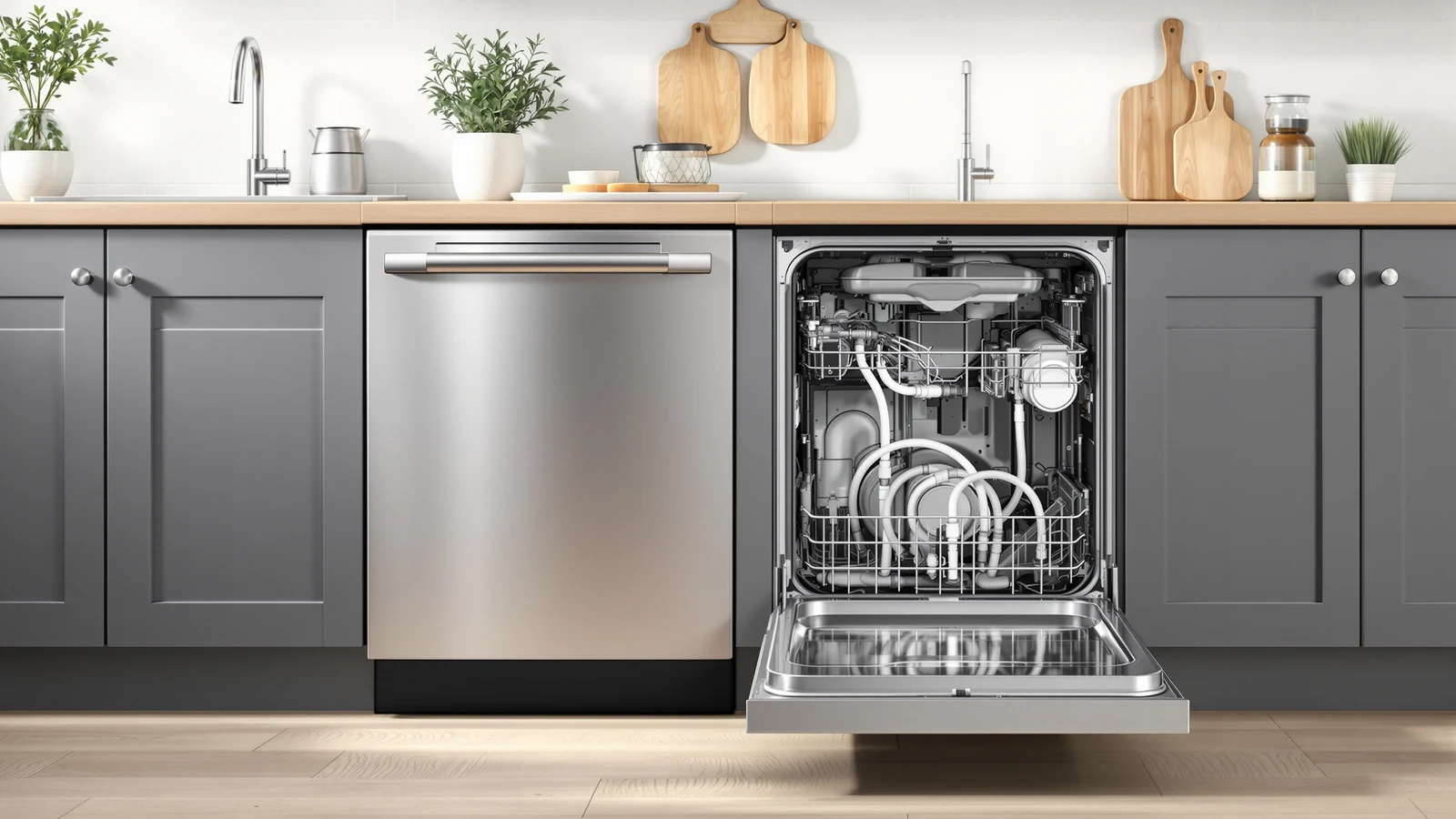
The open door of a small dishwasher showing a stainless steel tub, spray arm and heating element after years of use

Reader-supported: we may earn a commission when you buy through the links on this page, at no additional cost to you. We compare published specifications and prices — we do not run a testing lab, and we do not have review data to draw on for these products.

Ask how long a dishwasher lasts and most answers point at a single full-size figure, usually around a decade. That number comes from a 24-inch built-in with a full-size pump, heater and tub. A compact countertop machine or a narrower 18-inch built-in isn't a scaled-down version of the same appliance with the same lifespan, because its parts do proportionally more work per load, more often, with less headroom to absorb wear.

None of that makes the category a bad buy. It means the honest answer to "how long will this last" depends on four things: how hard the pump and heater work relative to their size, what the tub is made of, which part fails first, and whether the household keeps up with the habits that add real years rather than marketing years. We'll walk through each, using the four machines in our database with a published tub material, and close with a repair-versus-replace line for each.

How this page is built

We compare manufacturer specifications, listing titles and live pricing for the machines named below. We do not physically test these machines, we do not own them, and we do not publish star ratings or review counts because Amazon's product data returns none for this category — inventing a number, or paraphrasing review sentiment we have no access to, would be the same error as inventing a score. Any lifespan or wear claim below is either a published specification, a mechanical fact about how pumps and heaters behave under load, or clearly marked as our own judgment.
Why it wears faster

Why a compact dishwasher works its pump and heater harder

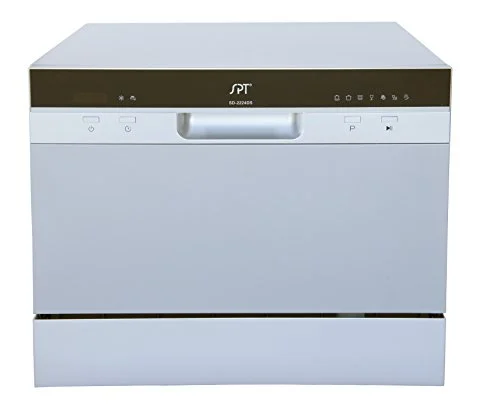
A full-size built-in holds roughly twelve to fourteen place settings and is designed to run once a day for a family. A compact countertop model, like the SPT SD-2224DS, is built around six place settings in a cabinet small enough to sit next to a kettle. The same household now needs two or three smaller cycles to clear the identical pile of dishes — so the pump and heater are starting, running and stopping two or three times as often, without being built any bigger to compensate. More cycles means more thermal cycling on the heating element and more total hours under load each month, regardless of how good any individual part is.

The 18-inch built-ins in our database sit between those two extremes. The Midea 18 Inch Built-in Dishwasher and the Sharp SDW4523MS, both listed at 8 place settings, hold closer to a full-size load than a countertop machine does, so the duty-cycle penalty is smaller — but a narrower chassis than a standard 24-inch built-in still means a smaller pump and a tighter cavity for the heater, a mechanical reality of the footprint rather than a defect of any one listing.

None of this is a reason to avoid the category. It's a reason to expect a compact machine's moving parts to wear on a different timeline than a full-size built-in's, weighed against what the smaller footprint buys in return — a machine that fits where a 24-inch built-in cannot. That trade-off is explored further in our guide to what a budget machine gives up.

Tub material

What the tub is made of, and why it matters in years, not months

A dishwasher tub alternates between hot water, detergent chemistry and rapid drying thousands of times over a machine's life. Two materials show up in this category: plastic, cheaper to mold and common at the bottom of the market, and stainless steel, which costs more but resists the specific wear a tub experiences — it doesn't absorb odors the way plastic can over years of use, tolerates heat cycling without the slow warping that lets a plastic door seal stop sitting flush, and doesn't discolor under sustained heat and detergent exposure.

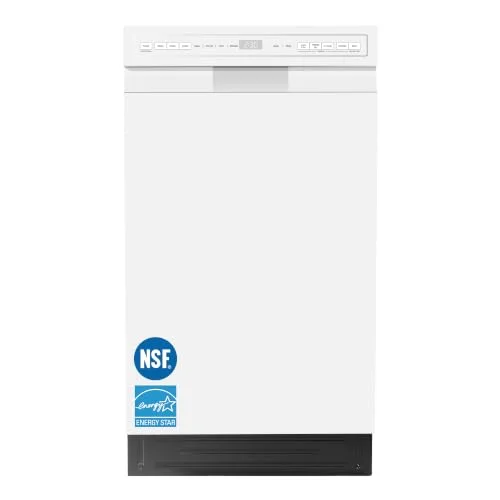
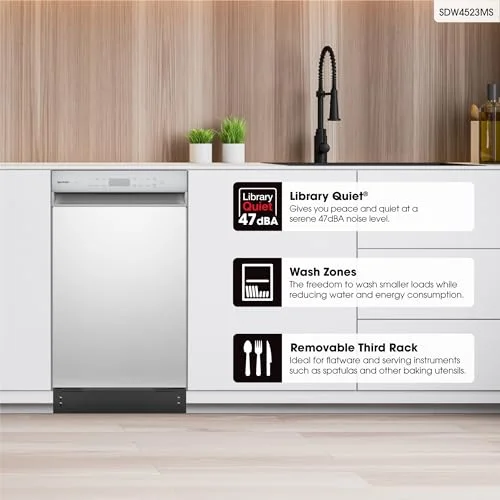
All four machines in this guide list a stainless interior or tub, worth noting because plenty of competing listings do not. The SPT SD-2224DS's title specifically calls out a stainless steel interior on a compact countertop chassis — easy to skip at that price point. The COMFEE' 18 Inch Built-in Dishwasher is Energy Star and NSF certified with a stainless steel tub, the Midea 18 Inch Built-in pairs its 8 place settings with a stainless tub, and the Sharp SDW4523MS lists stainless steel construction alongside its third rack and 47 dB rating.

Tub material changes the timeline of wear, not its mechanism. A plastic tub doesn't fail on day one any more than a stainless one lasts forever — but over years of heat cycling, plastic is the more likely place to see the door seal lose its shape first, showing up as a slow leak rather than a sudden failure. Stainless buys the tub more years before that becomes the limiting factor, which shifts the question back to the pump, heater and seals around them — covered next. Finish also factors into the decision in ways we cover separately in white or stainless: choosing a finish.

Failure points

The parts that fail first, based on what's doing the most work

Every dishwasher in this category, regardless of brand, shares the same handful of components doing the mechanical heavy lifting: a circulation pump pushing water through the spray arms, a heating element, a drain pump clearing waste water, a door gasket sealing the tub under pressure, and a water inlet valve controlling how much water enters. None of these are exotic or unique to any one listing here — they're the same component categories a full-size built-in relies on, just sized to fit a smaller cavity.

  • The heating element does the most repetitive thermal cycling of any part, heating and cooling on every wash, making it a common first point of failure industry-wide — especially on machines run more often because their capacity is smaller.
  • The circulation pump runs for most of a cycle and is most sensitive to anything left in the filter or caught in the spray arm, since debris forces it to work against resistance it wasn't designed for.
  • The door gasket is a wear item by design on every dishwasher — a rubber or silicone seal under repeated heat and pressure, with a service life measured in years of use rather than decades, regardless of tub material.
  • The drain pump tends to go next, usually from something it shouldn't have had to pump — food debris, a glass fragment, or hard-water scale restricting the impeller.
  • The water inlet valve is most directly affected by hard water, since scale buildup inside it is a slow, cumulative process that eventually prevents it sealing or opening fully.

Three of the five — the heater, pump and inlet valve — are affected directly by water quality and cycle count, and all three get a harder workout on a smaller machine run more often. That's the throughline of this article: lifespan here is less about brand and more about how hard a unit's duty cycle pushes a small set of shared parts.

Where each one sits

The four machines, and the repair-versus-replace line for each

01Cheapest to replace

SPT SD-2224DS Compact Countertop Dishwasher

The clearest "just replace it" case in this guide, by price alone
Compact countertop · stainless steel interior · 6 place settings · delay start · silverware basket · ENERGY STAR

At $282.96, this machine's duty cycle is the hardest-working of the four — fewer place settings per load means more total cycles to clear the same household's dishes, the mechanism described above. That makes it the plainest repair-versus-replace case here: a service call to diagnose and replace a heater or pump commonly costs a meaningful fraction of the machine's own price, before parts.

Our takeBelow roughly half the purchase price, a repair quote on a machine this inexpensive is a signal to replace, not fix — the math rarely favors the repair once labor is added to a part.

SPT compact countertop dishwasher with stainless steel interior
$283
Stainless interiorCheck price →
02Mid-price built-in

COMFEE' 18 Inch Built-in Dishwasher

A built-in chassis at a price where a single repair is still usually worth it
18-inch built-in · Energy Star & NSF certified · stainless steel tub

At $410.88, the COMFEE' holds a full built-in cavity rather than a countertop footprint, which generally means less frequent cycling relative to household size than the compact SPT above. NSF certification alongside Energy Star is a sanitation-standard claim worth noting separately from lifespan — it speaks to what the machine is built and tested to on day one, not how long any individual unit will run.

Our takeAt this price, a single repair — a heating element or a door gasket, say — is usually still worth doing once, since a built-in cavity replacement involves more than unplugging a countertop box.

COMFEE' 18-inch built-in dishwasher with stainless steel tub
$411
NSF certifiedCheck price →
038-setting built-in

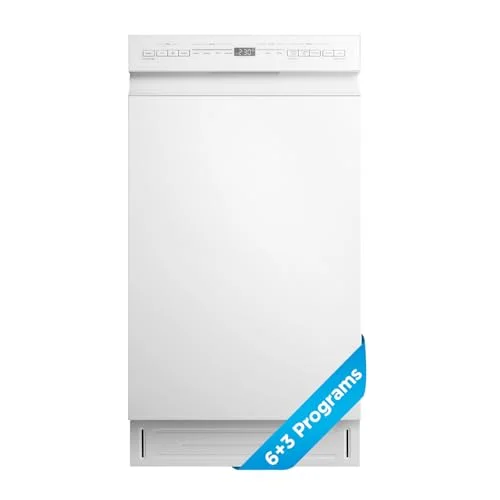
Midea 18 Inch Built-in Dishwasher

Near-full capacity in an 18-inch cavity, which eases the duty-cycle math
18-inch built-in · 8 place settings · stainless steel tub · ENERGY STAR

Eight place settings in an 18-inch cavity is close to what a standard 24-inch built-in holds, so the Midea's pump and heater aren't working nearly as hard per load as a countertop machine's to clear the same dinner. At $459.00, that lower duty cycle is what this price buys over the cheaper options here — fewer cycle-starts per month, the single biggest lever on how fast the heater and pump age.

Our takeThe repair case here is reasonable through the first several years of ownership, specifically because the lighter duty cycle means parts reach end-of-life later than on a smaller machine run harder.

Midea 18-inch built-in dishwasher with stainless steel tub, Energy Star variant
$459
8 place settingsCheck price →
04Priciest, best repair case

Sharp SDW4523MS 18-Inch Built-In Dishwasher

The machine where paying for a repair makes the most financial sense
18-inch built-in · stainless steel · 47 dB rated · third rack · 8 place settings · 6 wash cycles

At $699.99, the Sharp is the most expensive machine here by a wide margin, and that price shifts the repair-versus-replace math. A heating element or drain pump swap costs roughly the same labor and parts regardless of which of these four machines it goes into — so that fixed repair cost is a much smaller fraction of this unit's price than of the SPT's. The third rack and 47 dB rating are also features a buyer won't want to lose by replacing the whole unit over one failed part.

Our takeThis is the clearest "repair it" case in the guide on price alone — the gap between a typical service-call cost and the machine's own price is the widest here of the four.

Sharp 18-inch built-in dishwasher in stainless steel with third rack
$700
Third rackCheck price →
At a glance

The four machines, price and tub material side by side

All figures are manufacturer listing specifications; prices are approximate and move on Amazon.

MachineClassTub materialPlace settingsPrice
SPT SD-2224DS CompactCountertopStainless interior6 settings$282.96Price
COMFEE' 18″ Built-in18-inch built-inStainless tubNot specified$410.88Price
Midea 18″ Built-in18-inch built-inStainless tub8 settings$459.00Price
Sharp SDW4523MS 18″18-inch built-inStainless steel8 settings$699.99Price
Warranty

What a manufacturer warranty period actually signals

A warranty period is a manufacturer's own confidence interval, set by people with access to failure data nobody else has. A longer warranty costs real money in expected claims, so it's only offered when the expected failure rate inside that window is low enough to work in the manufacturer's favor. That's the honest way to read a warranty length: not a promise about how long the machine lasts after it expires, but a floor the manufacturer is confident the typical unit clears.

It's also, by definition, a statement about the early part of a machine's life — the stretch where manufacturing defects tend to surface, not the stretch years out where the wear described above starts to matter. A warranty silent on year eight isn't a gap; it's simply outside the window the number was meant to describe. Warranty length and terms vary by model and change over time, so the coverage period and what it includes — parts only, or parts and labor — is worth confirming on the current listing before buying any of the four machines above, rather than assuming parity between them.

A warranty is not a guarantee about the parts most likely to fail, from the section above. Door gaskets in particular are a wear item on almost every appliance warranty in this category, typically covered for a shorter window than the main mechanical components if covered at all — consistent with gaskets being the part most directly subject to gradual, use-based wear a warranty isn't designed to insure against.

Maintenance

The habits that add real years, not marketing years

None of the following is exotic or brand-specific — these are the habits that extend the life of any pump-and-heater appliance, and they matter more on a compact or 18-inch machine precisely because its parts have less margin to begin with.

  • Clean the filter on a fixed schedule. Trapped food debris is exactly what forces the circulation pump to work against resistance it wasn't designed for. A filter that never gets emptied is a direct route to an early pump failure.
  • Use rinse aid, especially on a machine that dries with residual heat rather than a dedicated element. Skipping it leaves mineral deposits that would otherwise rinse away, which accumulate inside the machine over repeated cycles.
  • Don't overload the rack. Blocking a spray arm forces the pump to push against a jam rather than its intended path — added mechanical load with no benefit to the wash.
  • Descale periodically if your water is hard. The inlet valve and heating element are both named above as components hard-water scale affects cumulatively; a periodic descaling cycle, run per the machine's own instructions, is the countermeasure.
  • Leave the door or lid cracked open between uses. A sealed, damp tub is where gasket degradation and odor both start; airing it out reduces the moisture exposure that accelerates wear on the seal.
  • Use the recommended detergent amount for a small machine, not a full-size dose. Overdosing a small tub leaves residue that affects both wash performance and the parts it settles on.

None of this turns a compact machine into a full-size one on the duty-cycle math above — but together these habits separate a machine reaching its realistic lifespan on schedule from one failing early over a solvable problem left to compound. What ships in the box to support this — filters, baskets, the manual — is covered in what comes in the box with a portable dishwasher.

FAQ

Common questions about portable dishwasher lifespan

Do portable and compact dishwashers really last less long than full-size built-ins?

Generally yes, and the mechanism is duty cycle rather than build quality: a smaller machine holds fewer place settings, so the same household runs it more often to clear the same pile of dishes, which puts more total starts, stops and heating cycles on a pump and heating element that are already sized down to fit a smaller cavity. An 18-inch built-in with 8 place settings, like the Midea or Sharp machines in this guide, narrows that gap versus a compact countertop unit because it holds closer to a full-size load per cycle.

Does a stainless steel tub actually make a dishwasher last longer?

It changes which part is likely to show wear first, more than it extends the machine's overall life on its own. Stainless resists the odor absorption, heat-cycling warp and discoloration that a plastic tub can develop over years of use, which means the tub itself is less likely to be the limiting factor — but the pump, heater and door gasket still wear on their own schedules regardless of what the tub is made from. All four machines in this guide list a stainless interior or tub.

What usually fails first on a small dishwasher?

The heating element and the door gasket are the two most common first failures industrywide, because the heater cycles thermally on every single wash and the gasket is a rubber or silicone wear item under repeated heat and pressure by design. The circulation pump, drain pump and water inlet valve typically follow, often accelerated by hard water, debris in the filter, or an overloaded rack rather than by age alone.

When does it make more financial sense to replace a portable dishwasher than repair it?

As a rule of thumb, if a service call's labor and parts cost approaches half or more of the machine's original price, replacement usually wins — which is why a $282.96 compact machine like the SPT in this guide is a near-automatic replace case for most failures, while a $699.99 built-in like the Sharp has much more room for a single repair to still make sense. Capacity and features you'd lose by replacing, not just price, are worth weighing too.

Keep reading

Next, from this site