Best Portable Dishwashers
Honest take · Running costs

What a portable dishwasher really costs to run.

Every listing in this category leads with water savings and says almost nothing about the bill. We priced out a cycle — water, electricity, detergent and rinse aid — checked what the ENERGY STAR label is actually worth in dollars on a machine this small, and worked out when a cheap one pays for itself against washing by hand.

By Ilane Tall · Updated August 18, 2026 · Research-based.

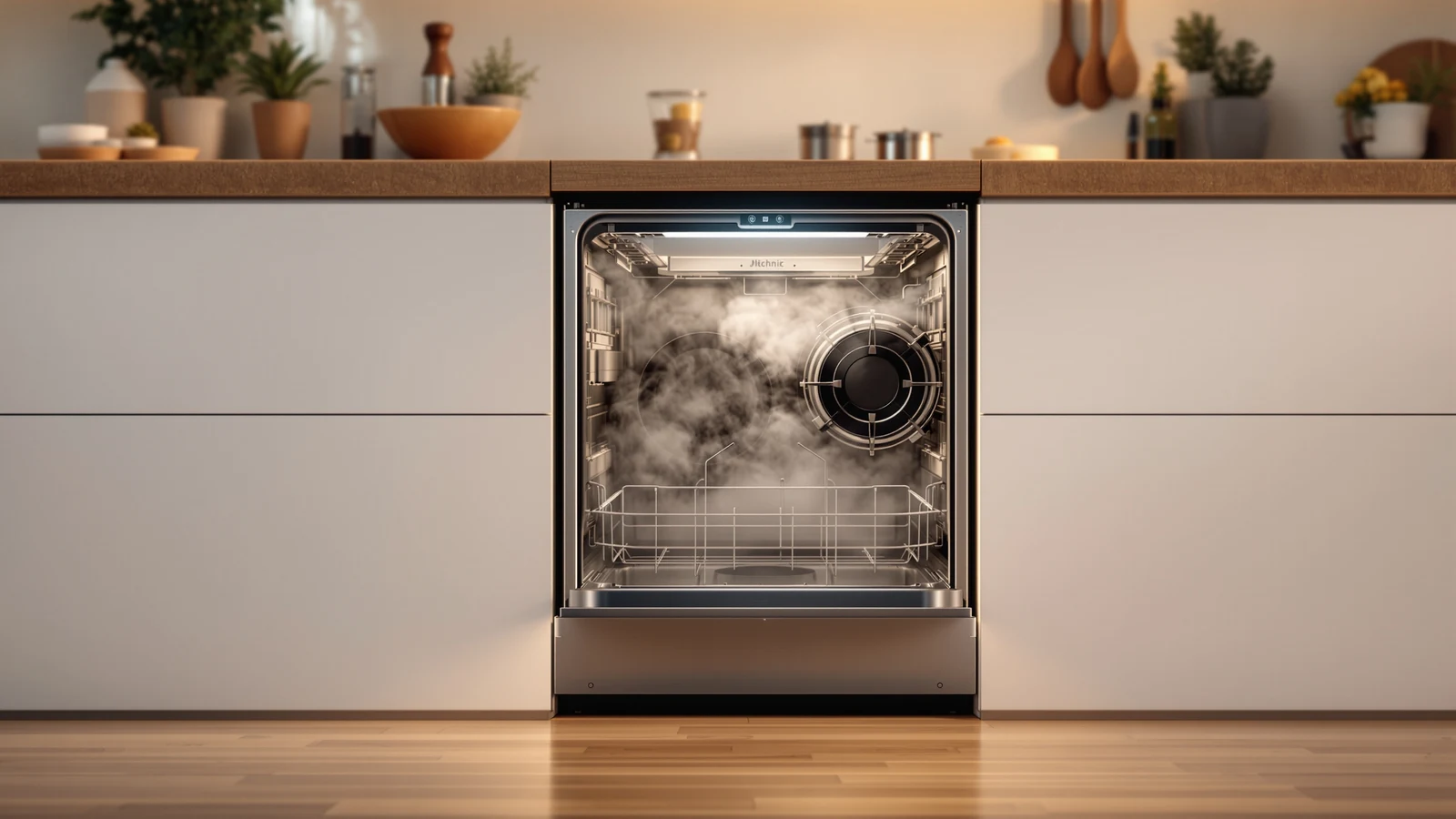
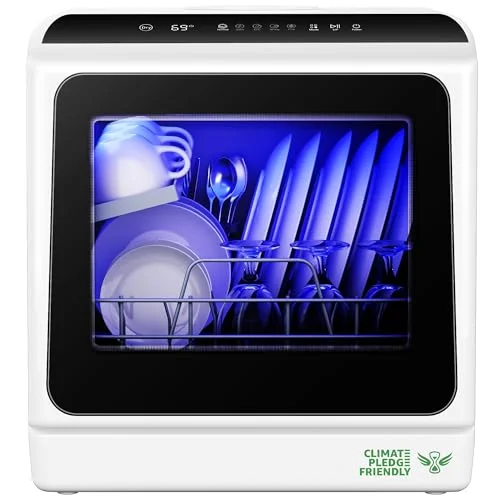
A countertop portable dishwasher running on a kitchen counter beside a utility bill and a calculator

Reader-supported: we may earn a commission when you buy through the links on this page, at no additional cost to you. We compare published specifications and live prices — we do not physically test these machines, we do not run a testing lab, and we do not publish ratings we cannot verify.

A portable dishwasher's marketing copy is almost always about water: "uses up to 80% less water than washing by hand." It never mentions the electricity bill, what a bottle of detergent costs per load, or whether the ENERGY STAR sticker is worth the extra money. Those three lines — water, power, detergent — are what a cycle actually costs, and only one of them is large enough to matter.

This is a companion piece to our full cost and water math, which works through the complete case for and against buying one. Here we go narrower on the running-cost side alone: what each line costs, what ENERGY STAR is worth in this category specifically, and when a cheap machine pays for itself.

How to read every number on this page

These are illustrative US figures for 2026, not measurements taken from a specific kitchen. Numbers pulled from a manufacturer's listing are labelled as claims; numbers we supplied ourselves are labelled as assumptions where they first appear. Change the rate or the frequency and the totals move — that's the point of showing the working rather than just the answer.

01 · Water

Water per cycle: the number that surprises people

Start with the specification that's easiest to verify, because it comes straight from a listing rather than a model we built. The Hermitlux countertop model states it uses 5 liters per cycle — about 1.32 US gallons — and the EUHOMY machine is built the same way: a 5-liter tank that you fill by hand, with "No Hookup" printed in the title because that tank is the entire water supply. A machine physically cannot use more water than the tank holds, so 1.32 gallons is close to a hard ceiling for any tank-fed cycle, not just an average.

5 L = 1.32 US gallons per cycle
Run it five times a week: 5 × 52 = 260 cycles a year → 260 × 1.32 gal = 343 gallons a year

That figure is exactly why the category's water-saving claims sound almost implausible — a kitchen faucet alone can put out 1.32 gallons in 44 seconds at the 1.8-gallon-per-minute flow rate US code allows, so the machine's entire cycle uses less water than under a minute of open tap.

The catch: the 5-liter figure only holds for tank mode. The COMFEE' six-place model has no tank at all — faucet-only — and the two SPT 18-inch machines here are the same, freestanding portables that connect to the tap rather than carrying their own water supply. Faucet-fed machines aren't rationed by a 5-liter reservoir, so a longer or hotter cycle can plausibly use more, even though none of the three listings publishes an exact gallon figure. Our breakdown of tank versus faucet models covers which machines fall into which camp.

02 · Electricity

Electricity: heating the water is nearly all of it

None of the five listings in this comparison publishes a kWh-per-cycle figure, so this line has to be built from physics rather than quoted from a spec sheet. Water is expensive to heat and cheap to move: the pump motor that circulates it draws a modest, steady wattage, but raising the temperature of several liters of water by dozens of degrees takes real energy, and it's the heating element — not the motor, not the control board, not the little fan that dries the dishes afterward — that accounts for nearly all of the electricity a cycle uses.

Heating 5 kg of water by 50 °C (90 °F): 5 kg × 4.186 kJ/kg°C × 50 °C = 1,046 kJ = 0.29 kWh (the physics floor, ignoring heat lost to the tub and the air)
Assumption used below: 0.5 kWh per cycle, padded above the floor for pump run-time and a heated or fan-assisted dry
Assumption: $0.17 per kWh, roughly the 2026 US residential average
0.5 kWh × $0.17 = $0.085 per cycle → 260 cycles a year × 0.5 kWh = 130 kWh → $22.10 a year

The padding above the physics floor is deliberate: the EUHOMY listing quotes 60 minutes of hot-air drying followed by up to 73 hours of ventilation — a claim, not a measurement, but the mechanism itself draws power, and heat-drying uses more than the bare minimum to boil the wash water.

The rate is the assumption most worth swapping for your own bill. Residential electricity runs under $0.13/kWh in parts of the South and over $0.30/kWh in California and the Northeast. At $0.30, the annual electricity line becomes about $39 instead of $22 — real on paper, still small against everything else a kitchen spends on. Limescale changes this line too: a heating element caked in mineral deposits takes longer to reach temperature, which is one more reason descaling on a schedule is a running-cost decision, not just a smell-prevention one.

03 · Detergent

Detergent and rinse aid: the line that actually adds up

This is the part the marketing never mentions, and it's the biggest of the three lines by a wide margin. Powder or gel detergent for a compact cycle runs roughly 10 to 12 cents a load bought in bulk, and rinse aid — which matters more here than on a full-size machine, since these dishwashers dry with residual heat and a fan rather than a dedicated heating element — adds another 3 to 5 cents. Pods are the wrong product for this category: several machines specify powder or gel because a pod sized for a 12-place built-in often won't fully dissolve in a five-liter, low-volume cycle, wasting detergent and leaving residue.

Detergent (powder/gel, bulk price): ~$0.10–0.12 per cycle
Rinse aid: ~$0.03–0.05 per cycle
Combined: ~$0.13–0.17 per cycle → at 260 cycles a year, roughly $34–44 a year

Put the three lines next to each other and the shape of the bill becomes obvious: detergent and rinse aid outspend electricity and water combined, sometimes by two to one. That's the opposite of what the phrase "portable dishwasher running costs" makes people picture, and it's the reason we've given the line its own section instead of folding it into a single "utilities" number the way some listings imply.

04 · The label

ENERGY STAR: what the label is actually worth here

ENERGY STAR is a certification, not an adjective — a manufacturer submits a model for independent testing against a federal procedure, and it only earns the label by beating the minimum energy and water standard by a set margin. Of the five machines here, that has evidently happened for three: the COMFEE' six-place countertop model and both SPT 18-inch portables carry "Energy Star" in their own listing titles. The EUHOMY and the Hermitlux do not, which we read as "not certified or not submitted," not "inefficient" — we have no data either way, so we won't imply one.

Here's the honest part. On a full-size built-in, ENERGY STAR is worth chasing on the electric bill alone, because baseline energy use is large enough that a double-digit percentage cut is real money over the machine's life. A portable is different: our own assumption above puts a non-certified cycle's electricity at about $22 a year. Even a generous 12% reduction — in the range ENERGY STAR has historically required over the federal minimum for dishwashers — is roughly $2.65 a year. Not a number that changes a purchase decision, and treating it as one would be dishonest in the other direction from ignoring it.

So why does it matter at all?

Two reasons, neither the electric bill. Certification is a trust signal — a third party actually tested the machine against a standard, more verification than most listings here get. And the water side of the standard is not trivial in absolute terms even when the dollars are small — a household on a well and septic system, or paying tiered rates, cares about gallons independent of cost. Buy for the certification if either reason matters to you; don't expect a dent in the power bill.

05 · The comparison

Versus hand washing, with the assumptions stated

Add the three lines from above and a tank-fed cycle costs roughly 23 to 27 cents to run: about 2 cents of water, 8.5 cents of electricity, and 13 to 17 cents of detergent and rinse aid. The honest question isn't whether that's cheap — it obviously is — but what it's cheap compared with, and the answer depends entirely on how the dishes would otherwise get washed.

Against a running tap (assumption: 1.8 gal/min faucet flow, about 9 minutes for a comparable load, half the flow hot at a 45 °F rise):
9 min × 1.8 gal = 16.2 gallons ≈ 12× the machine's 1.32 gallons
Water + sewer at $0.015/gal: 16.2 × $0.015 = $0.243 · hot-water electricity: ≈ $0.15 · a squirt of dish soap: ≈ $0.03
Total ≈ $0.42 per equivalent wash — well above the machine's ~$0.25
Against a filled, tap-off basin (assumption: 5 gallons total, half hot at the same 45 °F rise):
Water + sewer: 5 × $0.015 = $0.075 · hot-water electricity: ≈ $0.05 · dish soap: ≈ $0.03
Total ≈ $0.16 per equivalent wash — below the machine's ~$0.25, once detergent is priced in

Both boxes use the same rates and physics as the full water-and-cost model on this site, laid out side by side rather than re-derived. Against a running tap — how a lot of people actually wash — the machine is clearly cheaper. Against a careful, disciplined basin-and-tap-off routine, dishwasher detergent is expensive enough to erase the water and electricity savings, and the machine becomes the pricier way to get the same plate clean.

That split matters more than either number alone: the honest answer to "is a portable dishwasher cheaper than washing by hand" is it depends how you currently wash, and manufacturer claims of 75–80% water savings implicitly compare against the running-tap case, not the basin case.
06 · Payback

Payback: when a $270 machine pays for itself

The EUHOMY tank model in this comparison lists for $249; add local sales tax in most states and it lands close to $270 out the door, which makes it a fair stand-in for "the cheapest real machine worth buying" rather than a $170 novelty. The question a payback calculation actually answers is simple: how many cycles does it take for the money you save on utilities and detergent to add up to the purchase price?

Savings per cycle vs. a running tap: ~$0.42 − ~$0.25 = ~$0.17 saved
At 5 cycles/week (260/year): 260 × $0.17 ≈ $45 saved a year
Payback: $270 ÷ $45 ≈ 6 years

Against the more careful basin comparison, the machine doesn't save money at all — it costs a few cents more per load once detergent is counted, so there's no payback figure to calculate; it runs at a small ongoing loss in pure dollar terms. That's not a reason to skip buying one, but it means the payback clock only starts for people currently washing under an open tap.

None of this prices the roughly ten minutes a cycle saves against hand-washing an equivalent load, which is a real value even when it isn't a dollar one; our guide to machines under $300 weighs that time saving against the sticker price directly. Buy a portable dishwasher for convenience and hygiene — the ability to wash at 140–167 °F, hotter than hands can tolerate — and treat any running-cost saving as a bonus that only shows up if you were previously wasteful with the tap.

At a glance

The five machines, priced for running cost

All figures are manufacturer specifications or listing titles; prices move on Amazon — confirm live before you buy.

MachineWater sourceENERGY STARPrice
EUHOMY 6-Program, 40 dB5 L tank, no hookupNot stated$249.00Price
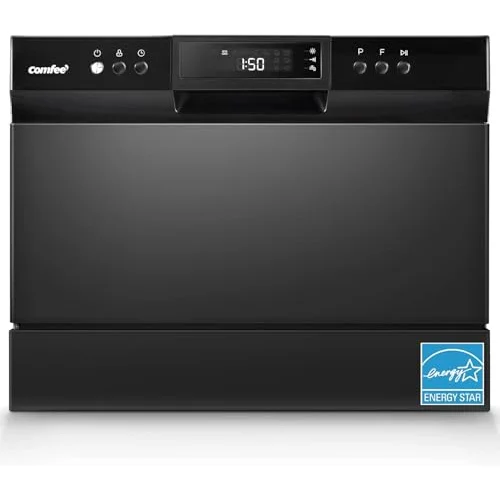
COMFEE' 6-Place CountertopFaucet onlyYes$278.98Price
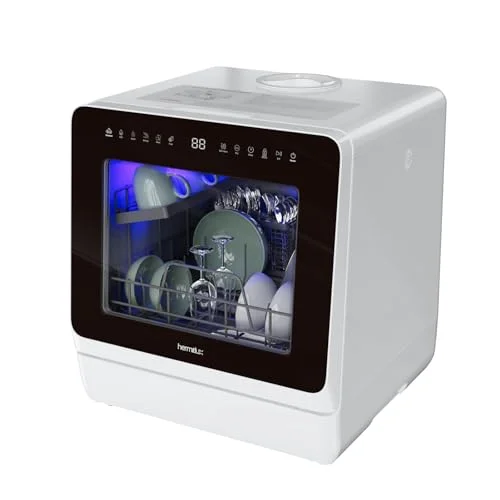
Hermitlux 7-Program5 L per cycle (stated)Not stated$299.99Price
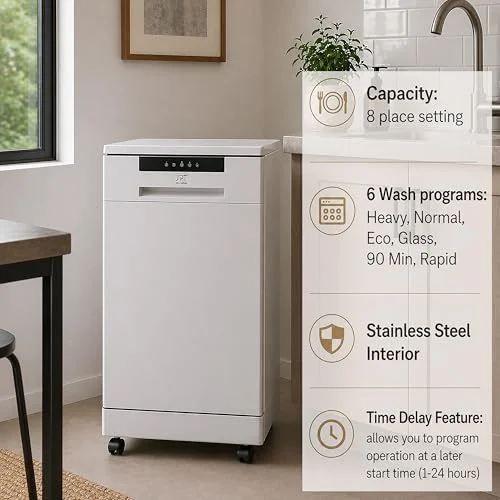
SPT SD-9263W 18″Faucet onlyYes$585.25Price
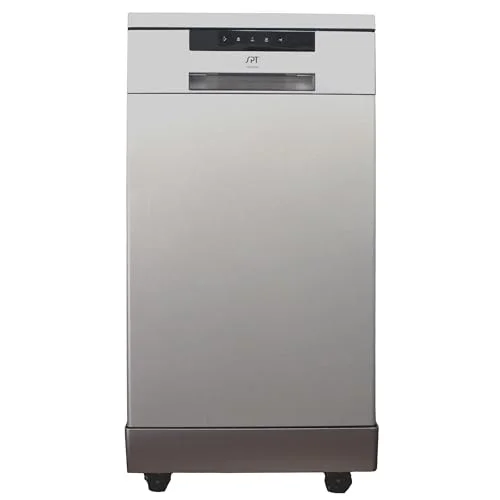
SPT SD-9263SSC 18″Faucet onlyYes$599.99Price
The cost-conscious shortlist

Three machines that illustrate the trade-off

01Cheapest to run

EUHOMY Countertop Dishwasher, 6 Programs, 40 dB

The machine this article's payback math is built around
5 L tank, no hookup · 6 programs · 40 dB rated · Large variant

Lowest sticker price of the five and the only one where the 1.32-gallon-per-cycle ceiling is guaranteed rather than probable, since it can't draw more water than its own tank holds. No ENERGY STAR claim on the listing, so we're not crediting it with certified efficiency — but it's also the cheapest way into the running-cost math worked out above.

The trade-offTank mode means filling it by hand before every cycle, and the listing states no place-setting figure, so plan around a small load rather than a full day's dishes.

EUHOMY countertop dishwasher with built-in water tank
$249
Tank, no hookupCheck price →
02Certified efficiency

COMFEE' Countertop Dishwasher, Energy Star, 6 Place Settings

The pick if the ENERGY STAR label itself matters to you
Faucet-fed, no tank · 6 place settings, 8 programs · ENERGY STAR certified

The only machine here that pairs a real place-setting count with a verified ENERGY STAR certification, which as the section above shows is worth more as a trust signal and a water-use figure than as a line on the electric bill. Faucet-fed rather than tank-fed, so it isn't bound by the 5-liter ceiling that caps the tank models' water use — and it isn't limited by it either.

The trade-offCosts about $30 more than the EUHOMY for a certification that, on our own numbers, saves only a couple of dollars a year in electricity. Buy it for the capacity and the trust signal, not the power bill.

COMFEE' six-place countertop dishwasher, ENERGY STAR certified
$279
ENERGY STARCheck price →
03Cost per place setting

SD-9263SSC: 18″ Portable Dishwasher with ENERGY STAR

Where the math changes once you count settings, not just cycles
Freestanding, faucet-fed · 18″ class · ENERGY STAR certified · Stainless steel

More than double the price of the EUHOMY, and the per-cycle running cost isn't dramatically different — the lines that dominate a cycle's cost are detergent and electricity, both roughly proportional to load, not machine class. What changes is how many place settings that cost buys: an 18-inch machine washes closer to a full day's dishes per cycle, so its cost per place setting run is lower even though its cost per cycle is similar.

The trade-offFaucet-only with no tank option, and the $600 sticker price pushes any payback calculation out past the point where it's a meaningful part of the buying decision — buy it for capacity and the ENERGY STAR water rating, not for a running-cost win.

SPT 18-inch portable dishwasher in stainless steel, ENERGY STAR certified
$600
ENERGY STARCheck price →

The Hermitlux 7-program model and the SPT SD-9263W in white belong in the same table: the Hermitlux is the one listing that states its 5-liter cycle volume directly, which anchors the water-per-cycle section, and the SD-9263W is the SSC's platform at about $15 less without stainless steel.

FAQ

Common questions about running costs

How much does it cost to run a portable dishwasher per cycle?

Roughly 23 to 27 cents on the assumptions used in this guide: about 2 cents of water and sewer for a 5-liter (1.32-gallon) tank cycle, about 8.5 cents of electricity at an assumed 0.5 kWh and $0.17 per kWh, and 13 to 17 cents of detergent and rinse aid. Detergent is consistently the largest of the three lines — swap in your own electricity rate and the total moves only slightly, because heating the water was never the expensive part.

Is the ENERGY STAR label worth paying more for on a portable dishwasher?

Not for the electric bill. Our own numbers put a non-certified cycle's electricity at about $22 a year, and even a generous 12% certified reduction is only around $2.65 a year — not enough to justify a price premium on its own. It's still worth something as an independently tested efficiency signal and for the water-use side of the standard, which matters in absolute gallons even when the dollar saving is small.

Is a portable dishwasher cheaper than washing dishes by hand?

It depends entirely on how you currently wash. Against a running tap — water flowing the whole time — the machine is clearly cheaper, using about 1.32 gallons against roughly 16 gallons for a comparable hand-washed load. Against a filled basin with the tap turned off, hand-washing uses less water and, once dishwasher detergent is priced in, can end up slightly cheaper overall than the machine.

How long does it take a portable dishwasher to pay for itself?

For a roughly $270 machine (after tax) compared against washing under a running tap, about six years on our worked numbers — assuming five cycles a week and utility rates near the 2026 US average. Compared against a careful, tap-off basin wash, there's no payback at all in pure dollar terms, since detergent costs slightly more than the water and electricity the machine saves. The stronger case for buying one is the time saved and the ability to wash at temperatures hands can't tolerate, not the utility bill.

Keep reading

Next, from this site